REVIEW · GREEK COOKING CLASSES
Santorini Farm-to-Table Cooking Class with a Local Chef, Christos
Book on Viator →Operated by Traveling Spoon · Bookable on Viator
Few places in Santorini teach you how to cook the island. This private, hands-on class with local chef Christos pairs garden-fresh ingredients with Artemis Karamolegos volcanic wines.
You’ll start with a short look at the on-site garden, then move to a modern cooking studio to make a 3-course-style meal from Santorini favorites. The best part is that it ends with you eating what you cooked, plus dessert and wine.
I love that you’ll cook a real Santorini menu, not just a tourist version of Greek food, and I love that you get practical recipes to take home. The one thing to plan for: there’s no hotel pickup, so you’ll need to get yourself to the meeting point.
In This Review
- Key highlights you’ll care about
- The Santorini farm-to-table setup: garden first, studio second
- Chef Christos and the private group advantage
- What you’ll cook: a real Santorini menu (plus a vegetarian swap)
- The pacing: 3.5 hours total, with about 1.5 cooking
- Pairing your food with Artemis Karamolegos volcanic wines
- The real value: you learn technique, not just ingredients
- Price and logistics: what $309 buys you
- Who should book this Santorini cooking class
- How to make the most of your class
- Should you book it?
- FAQ
- How long is the Santorini cooking class?
- Is this a private cooking class?
- What dishes will I make?
- Are alcoholic beverages included?
- Can you handle dietary restrictions?
- Where does the class meet?
- Is hotel pickup included?
Key highlights you’ll care about
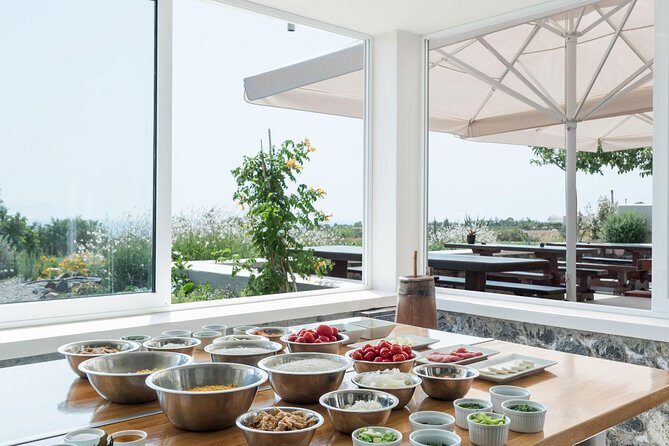
- Private group class: only your group participates, led by Chef Christos
- Farm-to-table start: a quick garden walkthrough before the cooking begins
- Hands-on menu: three Santorini specialties, with a vegetarian option on request
- Volcanic wine pairing: local wines from Artemis Karamolegos Winery included
- Eat where you cook: your meal follows right after, indoors or outdoors
- Recipes to keep: bring the dishes home in your own kitchen
The Santorini farm-to-table setup: garden first, studio second
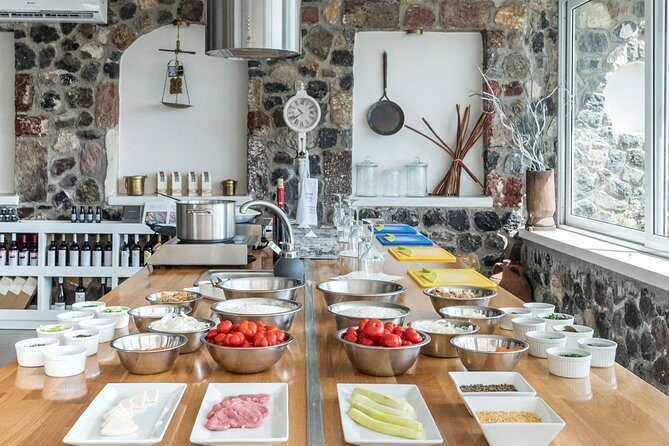
Santorini cooking can feel like “everyone makes the same Greek things.” This experience flips that. You begin with a brief tour of the on-site gardens where the ingredients for your menu are growing. It’s a simple start, but it changes how you cook: you see tomatoes, herbs, and other produce before you handle it.
Then you head to a modern cooking studio. That matters because the pacing is clear. You’re not stuck standing around watching someone else work. You’ll be at the station doing the prep and learning the technique as you go.
If you’re the type who likes to understand why food tastes the way it does, you’ll appreciate the way your host explains local practices and the role of ingredients on Santorini. It’s the difference between copying a recipe and actually getting the logic behind it.
You can also read our reviews of more cooking classes in Santorini


Chef Christos and the private group advantage
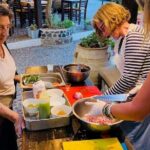
This is a private tour/activity, so it’s just your group. That small detail can make a big difference in how much attention you get. With only your group in the class, it’s easier to ask questions about knife work, timing, seasoning, or substitutions when you’re not sure.
Chef Christos is the named host, and he’s presented as both an expert and someone who enjoys meeting people. On days he’s not available, the experience runs with another equally passionate culinary chef. Same idea, new face.
A nice bonus from the experience details: they can accommodate dietary requests like vegetarian, vegan, lactose-free, and gluten-free if you tell them in advance. That’s not a vague promise; it’s specifically noted as part of how they operate.
What you’ll cook: a real Santorini menu (plus a vegetarian swap)
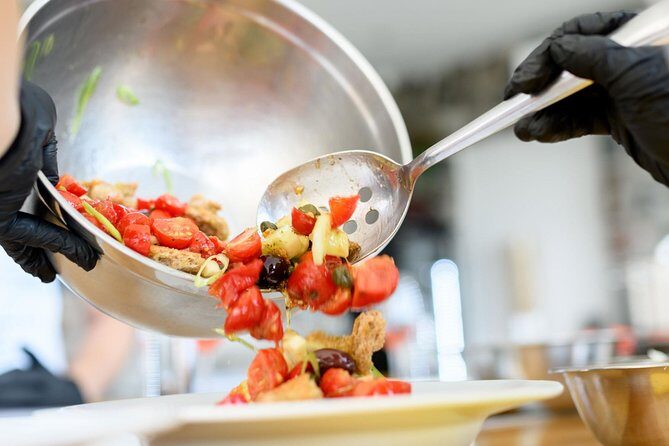
The menu is built around traditional Santorinian favorites. Depending on the exact course flow, you can expect three specialties such as:
- goat cheese salad
- split pea dip
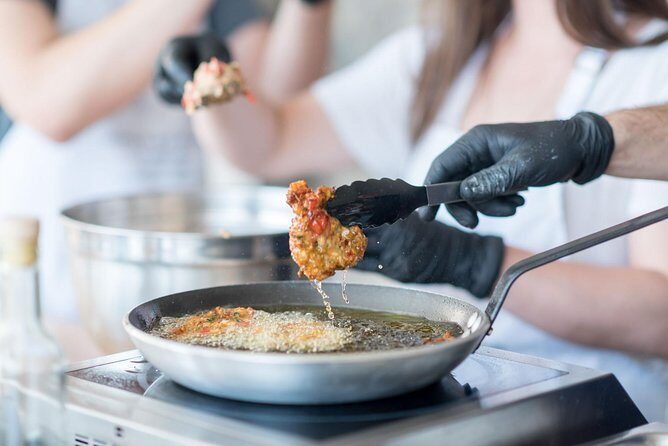
- tomato fritters
- pork in a sweet wine sauce (often described using Vinsanto)
- typical desserts
You might also cook dishes like fava and tomato fritters, then finish with dessert. If you’re vegetarian, the alternative is a local pasta made with homemade tomato paste and garlic, instead of the meat-focused dish.
What I like about this approach is that you get variety. You’re not locked into one “type” of cooking (like only dips or only mains). You’re practicing multiple textures: something creamy or spreadable (split pea dip), something crispy or fried (tomato fritters), and a main that uses Santorini’s sweet wine style.
And yes, there are sweet notes at the end. You’re not ending the meal feeling like you ate only savory food for three hours. Dessert is part of the plan.
The pacing: 3.5 hours total, with about 1.5 cooking
Plan on roughly 3 hours 30 minutes total. The cooking portion is about 1.5 hours, and then you sit down for the meal you made.
That structure is practical. If you’ve ever been stuck on tours where the “main event” is mostly waiting, this avoids that. You’ll work, you’ll eat, and the meal follows soon enough that the flavors feel fresh instead of cooled-off and rushed.
The meal itself is enjoyed in a restaurant setting—either indoors or outdoors depending on the weather. Since Santorini weather can swing quickly, it’s good that the plan adapts rather than forcing everyone into one setup.
One more practical note: come hungry. The food is meant to be a feast, not a snack, and the portions are described as plentiful in the overall experience feedback you’ll likely care about.
Pairing your food with Artemis Karamolegos volcanic wines
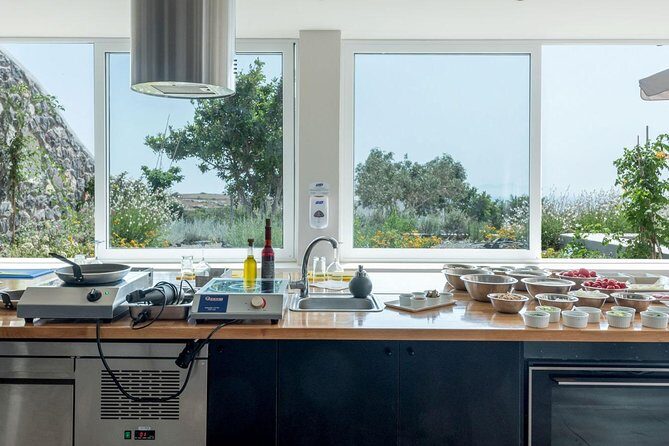
Wine isn’t an afterthought here. It’s built in. You’ll accompany your meal with wines from the Artemis Karamolegos Winery, and the experience is specifically described as using volcanic wines.
That pairing helps you eat like someone from Santorini, not like someone trying to recreate a Greek restaurant meal from memory. Sweet wine styles show up in Santorini cuisine, and the pork course uses that vibe (often described as Vinsanto-style).
If you don’t drink wine, it’s still worth noting that the tour data says alcoholic beverages are included. That’s great for people who want the full experience, but it’s a consideration for anyone trying to keep alcohol to zero.
You can also read our reviews of more tours and experiences in Santorini


The real value: you learn technique, not just ingredients
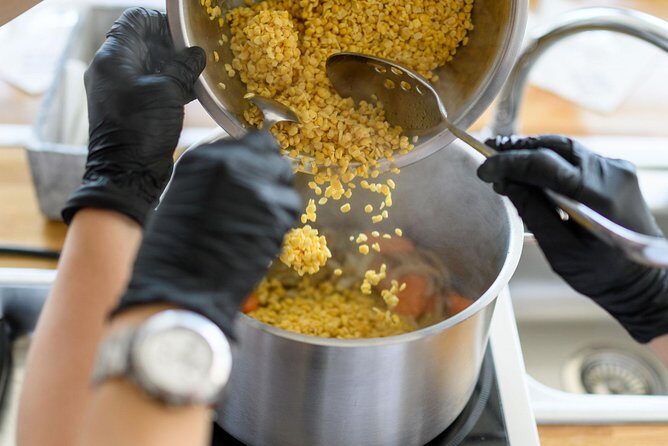
Here’s where this class earns its price beyond the menu list. You’re not only tasting Santorini flavors—you’re learning the steps that make them happen.
You’ll get a guided, hands-on experience, with your host explaining what you’re doing and why. That includes cultural context around the ingredients used. For food-focused travelers, those short explanations can turn the class into a story you carry home.
Another value piece: recipes to take home. That’s what makes this more useful than a “great meal” memory. You can reproduce at least part of what you made, even if you can’t get Santorini tomatoes at your local market.
For shopping-minded travelers, this also helps you spot what to look for when you’re back in your kitchen: the ingredients, the sauce styles, and the balance between sweet, savory, and acidity that’s common in Santorini cooking.
Price and logistics: what $309 buys you
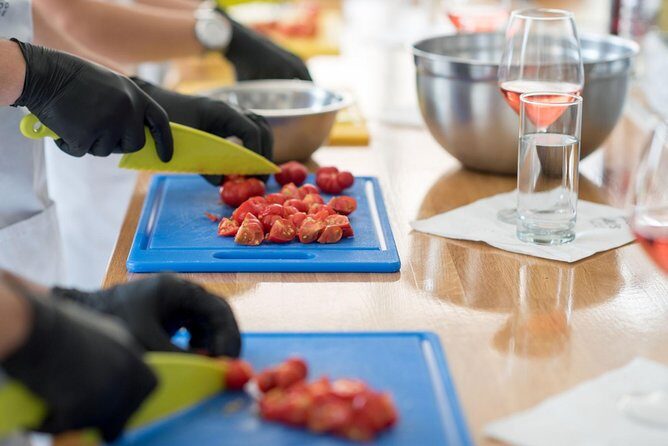
At $309 per person, this isn’t a budget activity. But it’s not priced like a cooking demo either.
You’re paying for:
- a private class led by Chef Christos (or an equally passionate substitute)
- a structured 3-course-style cooking outcome, plus dessert
- local wine included during the meal
- the garden-to-studio flow with ingredient focus
- gratuities included
Then there’s the practical side: no hotel pickup. That means the “true cost” isn’t just the ticket price—it’s also your transportation time and effort to the meeting point.
You’ll start at Aroma Avlis Exo Gonia 847 00, Greece, and the activity ends back at the meeting point. If you’re already staying nearby or you’re comfortable using local transit/taxis, you’ll feel this cost less. If you’re far from Exo Gonia, plan a little extra travel time.
Also, the experience is typically booked about 89 days in advance on average, which is a good sign it’s popular. If you’re traveling in peak season, earlier booking helps.
Who should book this Santorini cooking class
This is a great fit if you:
- want a hands-on cooking experience, not a passive tour
- care about Santorini-specific dishes like fava, split pea dip, tomato fritters, and Vinsanto-style pork
- enjoy cooking with a local chef who explains the why behind ingredients
- want a private setup for a more relaxed pace
- have dietary needs and can message them in advance
It’s also a strong choice for milestone trips. The experience setup supports celebration moments because it’s interactive and shared at your table.
On the other hand, it may not be ideal if:
- you strongly prefer cooking with no wine involved (wine is included)
- you don’t want to handle transportation to the meeting point (no hotel pickup)
- you’re only looking for a quick snack and not a full meal
How to make the most of your class
A few simple moves will improve your experience.
First, tell them about any dietary needs before you go. Vegetarian, vegan, lactose-free, and gluten-free requests are supported, but you need to inform them in advance.
Second, come with curiosity. Ask questions while you cook—about seasoning, timing, and ingredient swaps. That’s when the class stops being just “watch and copy” and turns into real learning.
Third, save room for the whole menu. The class ends with a meal and dessert, and the food is described as plentiful. Eat lightly beforehand or plan to treat this as your main dining event of the day.
Should you book it?
I’d book this Santorini farm-to-table cooking class if you want a grounded, local-food experience with real teaching and a satisfying finish. The combination of garden-fresh ingredients, a private chef-led class, and included Artemis Karamolegos volcanic wines is exactly the kind of trip memory that sticks longer than a single photo.
Skip it if you need hotel pickup, if alcohol is a hard no for your group, or if you only want a short activity. For everyone else, this hits the sweet spot: you cook, you eat, and you leave with a way to recreate the flavor at home.
If you’re deciding late, keep an eye on availability. The average booking lead time is around 89 days, and confirmation is provided after booking subject to availability. The good news is that free cancellation up to 24 hours before the start time is offered, so you can book with less stress.
FAQ
How long is the Santorini cooking class?
The total experience is about 3 hours 30 minutes. The cooking portion is about 1.5 hours, followed by the meal you helped prepare.
Is this a private cooking class?
Yes. It’s a private tour/activity, and only your group participates.
What dishes will I make?
You’ll make three traditional Santorini specialties. Options mentioned include goat cheese salad, split pea dip, tomato fritters, fava, and pork in a sweet wine sauce (Vinsanto). Desserts are also part of the experience. Vegetarian guests may prepare local pasta with homemade tomato paste and garlic.
Are alcoholic beverages included?
Yes. Local wine is included, paired with your meal. The wine is from Artemis Karamolegos Winery.
Can you handle dietary restrictions?
Yes. Your host can accommodate vegetarian, vegan, lactose-free, and gluten-free requests if you inform them in advance.
Where does the class meet?
The meeting point is Aroma Avlis Exo Gonia 847 00, Greece. The experience ends back at the meeting point.
Is hotel pickup included?
No. Hotel pickup and drop-off are not included.