REVIEW · AUDIO TOURS
Authentic Santorini: A Self-Guided Audio Tour of Oia
Book on Viator →Operated by VoiceMap Audio Tours · Bookable on Viator
Oia feels bigger when a local talks. This self-guided VoiceMap walk turns Oia’s cliff-top lanes into a story you can follow at your pace, with offline audio, maps, and GPS guidance. I especially love the way it nudges you toward the windmills and away from only the busiest photo corners.
The tour’s narration also has a human touch: you’ll hear a British woman with Greek roots, and she shares a family connection to Oia through her grandma, one of the few permanent residents. Directions are easy to follow, with auto-play GPS that keeps the next track ready when you’re on course. The one real drawback is simple: you must bring your own smartphone and headphones, and you’ll be walking steep, twisting paths.
Start this walk in the morning if you want breathing room. If you try to finish it at sunset, the crowds at the main overlook can swallow your time fast.
In This Review
- Key highlights I think you’ll care about
- Oia at walking speed: what this self-guided audio tour really delivers
- Price and value: $7.99 for a focused 1–1.5 hour route
- Before you start: VoiceMap setup, offline audio, and comfort basics
- Naval Maritime Museum area: warm-up stories near the waterline
- Cliff-top pathways and windmill backroads: the part that feels like a secret map
- Picture-postcard viewpoints: blue domes, the famous overlook, and the sunset reality check
- Ekklisia Agioi Apostoloi church: how the route uses sacred spaces as wayfinding
- Volcanic eruptions, earthquakes, and daily life: the history thread that ties it together
- Oia castle and cave houses: why the scenery has texture (not just views)
- Timing strategy: how to finish before the crush
- Who should book this self-guided Oia audio walk (and who might skip it)
- Should you book Authentic Santorini: A Self-Guided Audio Tour of Oia?
- FAQ
- How much does the tour cost?
- How long is the self-guided audio tour?
- Is the tour available in English?
- Do I need tickets for any museums or attractions?
- What’s included with the purchase?
- What do I need to bring?
- Where does the tour start and end?
- Can I cancel and get a refund?
Key highlights I think you’ll care about

- VoiceMap offline audio, maps, and geodata so you’re not dependent on spotty signal.
- GPS-guided, auto-playing tracks help you stay oriented in Oia’s maze of lanes.
- Windmill and backroad routing that’s designed to get you off the most obvious path.
- Church stops with local context, including Ekklisia Agioi Apostoloi.
- Castle viewpoints plus cave houses, so you see more than just the famous skyline.
- Best timing is early, because the sunset crush can interrupt your progress.
Oia at walking speed: what this self-guided audio tour really delivers

This is a self-guided tour, not a bus tour. You download the VoiceMap app, load the audio route, and then you walk the Oia streets while your phone guides you with audio and map prompts. It’s built for people who like to explore in fragments: pause for a view, keep moving, double back if something catches your eye.
In practice, that matters in Oia because the village is all angles. Streets climb, alleys fold, and stairways pop out of nowhere. An audio tour helps you make sense of where you are—especially when you’re trying to see landmarks like the windmills and church domes without being stuck in a group schedule.
You’re also not paying for entrances. The tour is about what you can see from the walk itself and what the narration connects for you—history, island life, and why this place looks the way it does.
You can also read our reviews of more guided tours in Santorini



Price and value: $7.99 for a focused 1–1.5 hour route
At $7.99 per person, this is one of the cheaper ways to add depth to Oia. You’re not buying a ticket to a museum. You’re paying for a guided route in your pocket—offline, in English, and with lifetime access once you’ve downloaded it.
The real value comes from how much ground you cover without planning. You get:
- a sequence of stops that takes you past key viewpoints and landmarks
- background context as you walk, so you’re not just staring
- a route designed to steer you toward less obvious lanes
At this price, I’d treat it like a practical upgrade, not a must-do. If you already know Oia well and only care about snapping photos, you might skip it. But if you want your walk to feel intentional instead of random, $7.99 is a very easy decision.
Before you start: VoiceMap setup, offline audio, and comfort basics

This tour runs through the VoiceMap app for Android and iOS and includes lifetime access to the audio. You also get offline access to audio, maps, and geodata, which is a big deal in Santorini—signal can be unpredictable as you move around cliffs and narrow streets.
What you need to bring:
- a smartphone
- headphones (not included)
- a charged battery (you’re using GPS and audio)
From there, plan your body as much as your route. Oia is hilly and the cliff-edge paths can feel like stair after stair. The tour is described as suitable for most travelers, but “most” still means you should wear shoes that are steady on stone.
One more timing tip: confirmation comes at booking time, and the tour is available essentially all day long. That gives you flexibility, but it also means you control the outcome—start when you want, then make a smart choice about sunset.
Naval Maritime Museum area: warm-up stories near the waterline

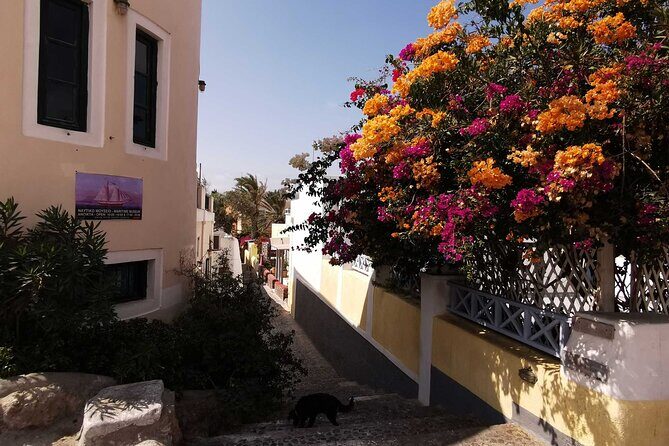
Your walk begins near the bus stop to Fira on an unnamed road in Oia, and the route passes by the Naval Maritime Museum area. You’re not paying for a museum visit here. Think of it as a contextual warm-up: you start your Oia story while you’re already near the village’s relationship with the sea.
This kind of early stop is useful because it sets the tone. Instead of starting with the most famous cliff-view first, you get a sense of how Oia’s identity is tied to maritime life. Even if you don’t go inside anything, the narration can make your later views feel more grounded.
If you do decide you want museum time later, keep your schedule flexible. The audio tour itself does not include tickets or entrance fees en route, so you’ll be choosing that separately.
Cliff-top pathways and windmill backroads: the part that feels like a secret map
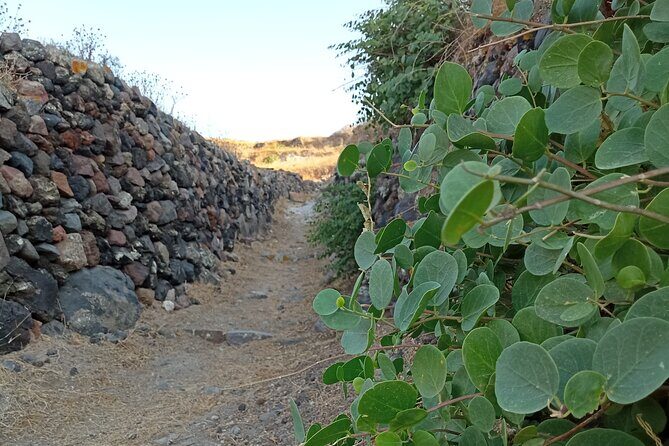
One of the strongest reasons to take this tour is the routing. It takes you through Oia’s cliff-top pathways and into hidden backroads where you can find the area’s famous windmills without only relying on the main lanes.
Walking these twists and turns is exactly where a self-guided tour pays off. Oia can feel like a maze because streets bend and viewpoints appear in sudden bursts. The GPS and track progression help you avoid that frustrating loop of walking somewhere you already passed.
What you’ll likely notice as you go:
- more frequent “wait, how did I get here?” moments
- smoother navigation than trying to wing it with screenshots
- quicker access to windmill views that aren’t right on top of the biggest crowd
If you hate walking just to walk, you’ll still be glad for the reason behind it. The route isn’t random. It’s set up so each section leads to a payoff.






Picture-postcard viewpoints: blue domes, the famous overlook, and the sunset reality check

Oia’s postcard look is real, but the timing is everything. This audio route includes major photo moments like blue-domed church views and the kind of overlook that people often flock to for sunset.
Here’s the practical advice I’d give: if your goal is to complete the whole walk, don’t aim to “start when the sky starts changing.” The sunset crowds at the famous viewing area can slow you down so much that you’ll stop halfway, whether you want to or not. The tour is designed to be completed on foot with audio timing in mind, so crowd bottlenecks directly affect your experience.
I also like that the narration talks about both recent past and ancient context as you move through these stops. It turns your photos into something you understand. You see the shapes—then you learn why those shapes matter.
Also, remember: this is a walking tour. If you get absorbed by the view at the overlook, you might sacrifice finishing later stops on schedule.
Ekklisia Agioi Apostoloi church: how the route uses sacred spaces as wayfinding

Another meaningful stop on the route is Ekklisia Agioi Apostoloi. Churches in Greek islands aren’t just architecture. They’re landmarks, meeting points, and a sense of local rhythm—especially when you’re walking through neighborhoods instead of riding past them.
This stop also helps break up the “big view, then big view” cycle. After windmills and wide panoramas, a church-focused segment slows you down. The narration connects it to island life and the community’s long-term experience, which makes the church feel less like a background prop and more like a piece of how people live.
If you’re the type of traveler who likes to feel the village’s daily fabric—not just its scenery—this church stop will land well.
Volcanic eruptions, earthquakes, and daily life: the history thread that ties it together

One of the tour’s best features is the story behind Oia’s look and layout. As you walk, you hear how locals lived on the island as it shifted from a small settlement to a top tourist destination. You also get context on how volcanic eruptions and earthquakes shaped the village’s character and community.
This is valuable because it changes how you interpret what you’re seeing. The cliff edges, the stone structure choices, and the village’s “built-on-the-edge” feeling aren’t just aesthetics. They’re responses to the island’s natural behavior over time.
When history is woven into a walking route, it’s easier to remember. You’re not cramming facts in a museum room. You’re walking past the physical setting where those forces and decisions show up.
Oia castle and cave houses: why the scenery has texture (not just views)
Toward the later part of the walk, you’ll pass Oia’s castle and hear its history while you walk past cave houses. This is where Oia shifts from pure “wow” views into something more textured.
Cave houses are a reminder that survival and comfort have always mattered here. You’re not only seeing decorative architecture. You’re seeing how people sheltered themselves and adapted to the island’s geology.
Meanwhile, the castle segment adds another layer. You’re walking through a village shaped by defense, observation, and the practicality of living on a dramatic edge. Even if you can’t spend long at every spot, the narration helps you connect the dots quickly.
If you like your travel with a little structure—start, learn, look, move—that’s exactly how this portion works.
Timing strategy: how to finish before the crush
This is the section that makes or breaks your day.
If you want the full experience, start well before sunset. The main overlook area gets crowded fast, and crowd density can make a 60–90 minute audio tour feel much longer. When foot traffic bottlenecks, you can’t “push through” without sacrificing the very reason you booked an audio walk: to enjoy the stops.
A good plan looks like this:
- Start earlier in the day so you can complete the route at a comfortable pace.
- Expect the route to take its time if you stop for photos.
- Treat the sunset view as optional if you’re trying to finish every segment.
This tour gives you the tools to pace yourself. Your job is choosing the time window that lets you use them.
Who should book this self-guided Oia audio walk (and who might skip it)
This audio tour suits you if:
- you enjoy self-paced walking tours with story narration
- you want windmills, blue domes, castle areas, and cave houses in one loop
- you like to explore a maze of streets with GPS help
- you’re traveling with flexibility and don’t want to coordinate a group
You might skip it if:
- you only care about a single sunset viewpoint and nothing else
- you dislike walking hills and stairs
- you’re not willing to download an app and bring headphones
It’s also a nice match for people who like “local perspective” without the formality of a guided group. The narration style is personal, and the route emphasizes how locals shaped Oia into what it is today.
Should you book Authentic Santorini: A Self-Guided Audio Tour of Oia?
Yes, if you want a smarter way to walk Oia. At $7.99, you’re buying orientation, context, and a route that takes you to key landmarks like windmills, church views, Oia castle, and cave houses—without tickets or a strict group schedule.
Just be realistic about sunset. If your day revolves around arriving at the famous overlook right at the peak moment, you may not complete the whole tour. If you can start early and treat sunset like a bonus rather than a deadline, this is a strong value add to your Santorini trip.
FAQ
How much does the tour cost?
It costs $7.99 per person.
How long is the self-guided audio tour?
Plan for about 1 hour to 1 hour 30 minutes.
Is the tour available in English?
Yes, the audio tour is offered in English.
Do I need tickets for any museums or attractions?
No. The tour does not include tickets or entrance fees for museums or other attractions en route.
What’s included with the purchase?
You get lifetime access to the tour in English, the VoiceMap app for Android and iOS, and offline access to audio, maps, and geodata.
What do I need to bring?
You need your own smartphone and headphones.
Where does the tour start and end?
It starts near the bus stop to Fira on an unnamed road in Oia (847 02) and ends near The Museum Project Oia on Nik. Nomikou in Oia (847 02).
Can I cancel and get a refund?
No. This experience is non-refundable and cannot be changed for any reason.
If you want, tell me what time of day you’re in Oia and what sights you care about most, and I’ll suggest an ideal way to pace this walk around the crowd flow.