REVIEW · PRIVATE
Santorini: Private 4-Hour Cultural Villages Sightseeing Tour
Book on GetYourGuide →Operated by Santorini Road Trips · Bookable on GetYourGuide
Four hours, three villages, and a time machine. This is the kind of Santorini day that swaps big-view photo stops for village streets and story-rich Akrotiri ruins. I really like how the route flows from hilltop fort life in Pyrgos to the tucked-away cave-housing feel of Megalochori. And I also like that the tour wraps with the Bronze Age site you cannot really appreciate from far away.
One thing to plan around: the tour is a walk-and-climb experience, so it’s not a fit if you have mobility issues or heart problems. You’ll want comfortable shoes, and you’ll be happiest if you like wandering narrow lanes at an easy pace rather than racing for timed tickets.
In This Review
- Key things I think you’ll care about
- Why this 4-hour Santorini loop beats the usual Oia-and-Fira grind
- Pickup, timing, and what “private” really means
- Pyrgos village: Venetian fortress shapes and top-of-the-island views
- Megalochori: the traditional village where cave homes still matter
- Emporio: Venetian-era defenses, castle streets, and volcanic outlooks
- Akrotiri archaeology: the Bronze Age city preserved in volcanic ash
- The value question: is $330 per group worth it?
- Guides and drivers: what you should look for in the day
- Practical stuff that will make the day easier
- Who this tour fits best (and who should think twice)
- Should you book this Santorini villages plus Akrotiri tour?
- FAQ
- How long is the Santorini private cultural villages tour?
- What places does the tour include?
- Is Akrotiri admission included?
- Is pickup and drop-off included?
- For cruise ship passengers, is the cable car ticket included?
- What meeting point should cruise passengers use?
- What should I bring?
- Is the tour suitable for people with mobility impairments or heart problems?
Key things I think you’ll care about
- Private, customizable route: You can tailor the order and focus as you go.
- Pyrgos hilltop views: Venetian fortress vibes with wineries, chapels, and cave-house details.
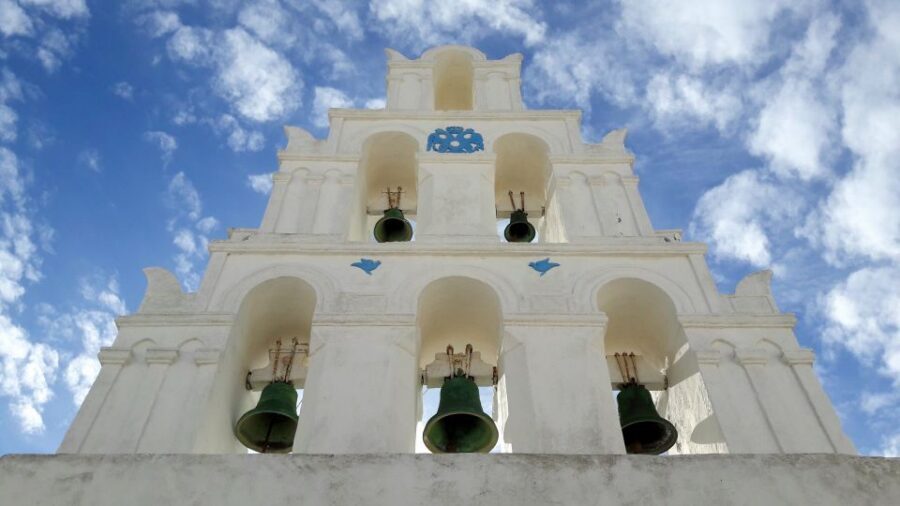
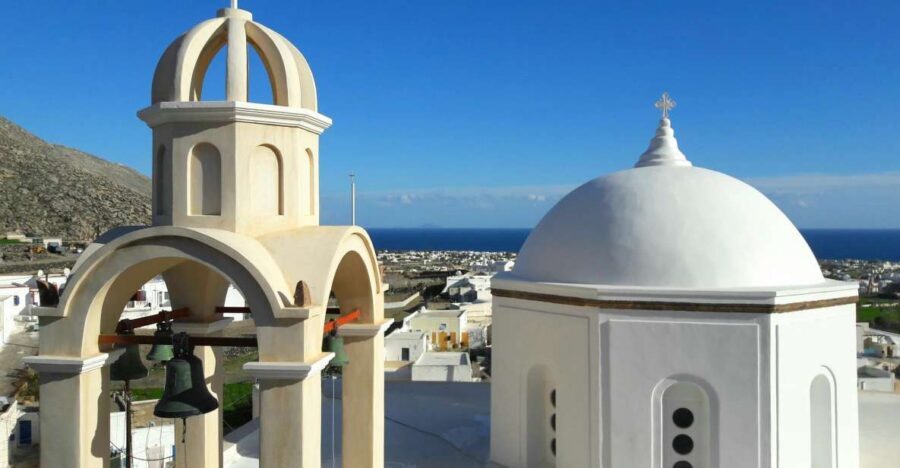
- Megalochori’s cave homes: Whitewashed houses, tiny alleys, bells, blue-domed churches, and underground life.
- Emporio and its Venetian castle: Old-school pirate-defense layout and photo-worthy volcanic overlooks.
- Akrotiri in volcanic ash: A major Bronze Age settlement preserved under eruption material.
- Door-to-door pickup: Hotel/airport/cruise port pickup plus drop-off, with English live narration.
Why this 4-hour Santorini loop beats the usual Oia-and-Fira grind
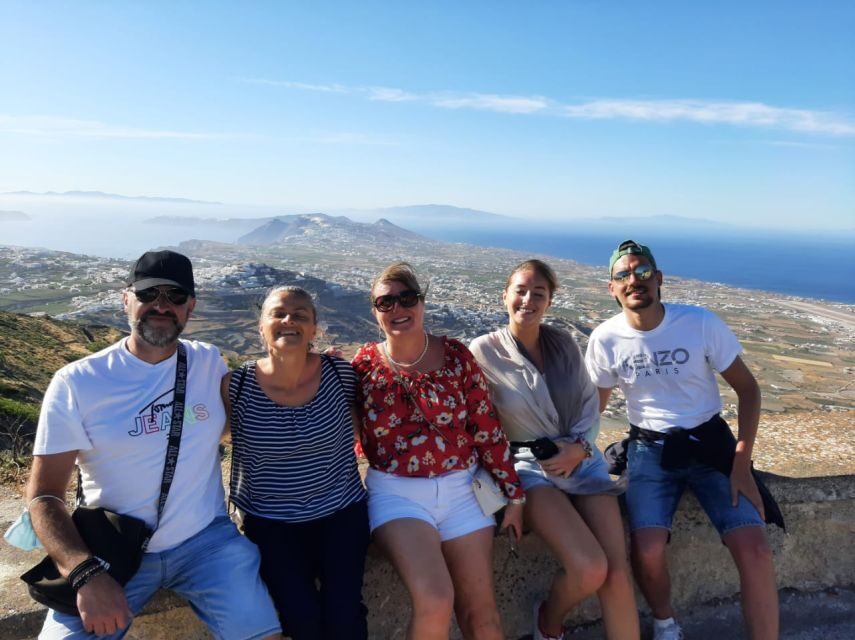
Santorini can be hypnotizing from the caldera rim. But if you only bounce between the headline towns, you miss the parts that explain how people actually lived here. This tour is built for the middle ground: villages with real street texture, layered architecture, and quiet spots where the wind and the sea are present even if the crowds aren’t.
What makes the 4 hours feel like a gift is the pacing. You’re not spending the day parked at a single lookout. Instead, you’re moving through distinct neighborhoods—Pyrgos, Megalochori, and Emporio—each with their own reason to exist. Then you finish with Akrotiri, which turns everything you see in the villages into something deeper.
You can also read our reviews of more private tours in Santorini



Pickup, timing, and what “private” really means
You’ll get pickup and drop-off from your hotel, airport, or cruise port, depending on where you’re starting. For many people, that’s the whole point: less logistics, fewer taxis, and more time spent where it counts.
It’s also private in the practical sense. You’re not stuck reacting to another group’s shopping stops or photo breaks. Your guide can adjust the day based on what you care about most—history, architecture, viewpoints, or just strolling at a relaxed pace. The itinerary is described as flexible for a reason: Santorini roads and viewpoints work best when you can adapt on the fly.
If you’re arriving via cruise ship, there’s one special thing to know. After tendering from the ship to the cruise port, you take a short cable car ride up to the main town of Fira (the cable car ticket is not included). Your driver meets you at the top exit with a sign holding your name. It’s a clear setup, but do plan your timing around that tender-and-cable flow.
Pyrgos village: Venetian fortress shapes and top-of-the-island views

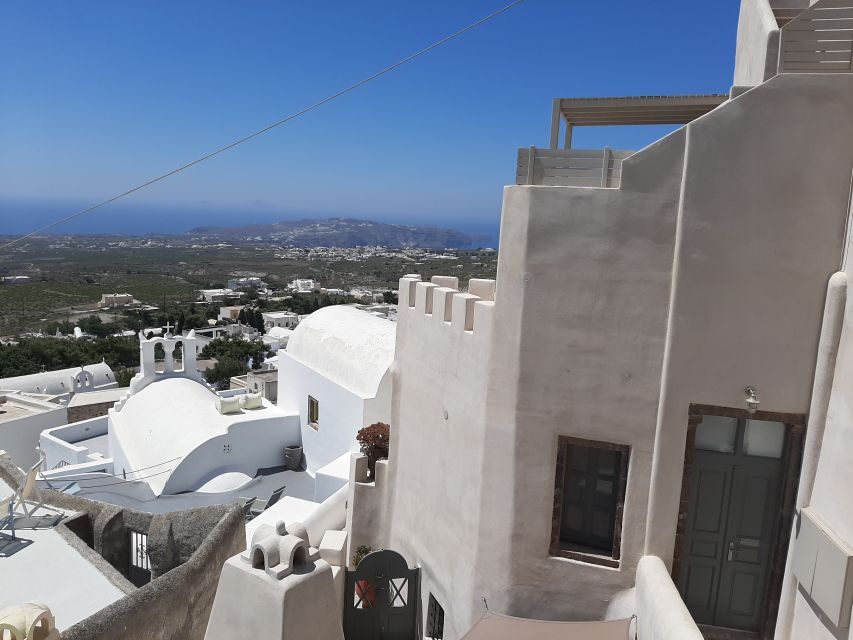
Pyrgos is one of those Santorini stops that feels like it was designed for slow walking. It sits up on a hill and is described as the island’s historic monument, with a Venetian castle presence in the layout and ruins.
Here’s what I like about it for you: Pyrgos isn’t just pretty. It’s structured. You’ll notice how the settlement is built into small alleys and circle-shaped roads. That kind of urban planning wasn’t accidental—it’s the result of people strengthening their position when outside threats were real.
As you explore, you’ll likely spot the mix that makes Santorini feel like a living place, not a postcard. The tour notes vineyards around the area, plus chapels and churches, and even narrow cave houses with balconies. You’ll be able to take photos that feel different from the usual caldera icons, because the viewpoint comes from elevation and stone streets rather than from a single cliff edge.
Possible drawback: Pyrgos is on a hill. Even if the walking is not marathon-level, you’ll want comfortable shoes and a calm pace. If you don’t like climbing, you may prefer shorter stops or rely on your guide’s flexibility.
Megalochori: the traditional village where cave homes still matter
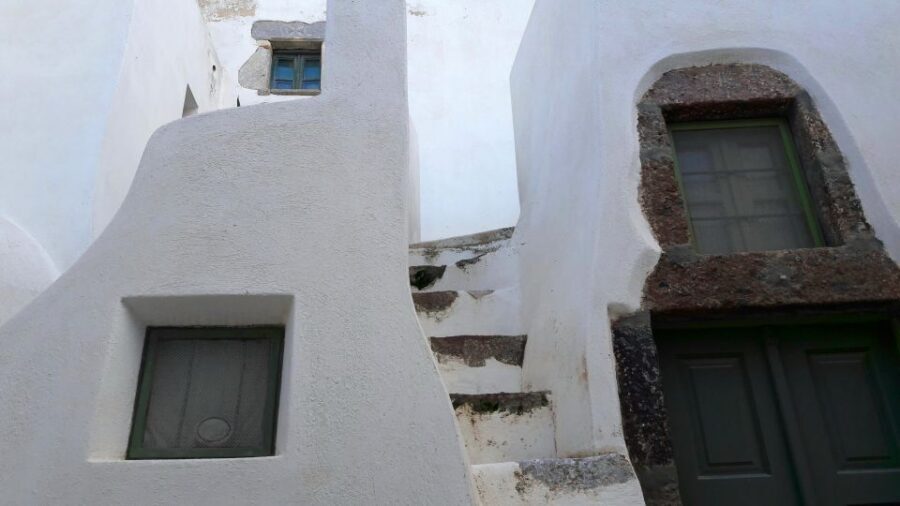
Megalochori is the quieter, more old-world cousin in this lineup. The description focuses on a traditional settlement made up of hundreds of small white houses, with narrow pathways, tower bells, and blue-domed churches. That combination can read like a brochure—until you slow down and realize it’s about daily life and how communities adapted to the island’s geology.
The standout detail here is the underground cave houses. Santorini isn’t just volcanic scenery; it’s volcanic survival. Cave homes are part practical storage, part comfort from heat, and part tradition. When you walk the streets and see those underground spaces referenced by the village layout, you start to understand why these settlements look the way they do.
Megalochori is also described as non-touristic compared with the headline towns. That matters. You’re not just looking at pretty buildings—you’re strolling in an environment that feels more like a neighborhood. In a short tour day, that can be the difference between collecting sights and actually getting a sense of pace.
If you love architecture, this is where your eyes will work the hardest. The tour highlights “exquisite architecture” and tiny alleys, which usually means you’ll want to take your time at corners and doorways. For best results, go for comfortable steps rather than quick clicks.
Emporio: Venetian-era defenses, castle streets, and volcanic outlooks

Emporio is presented as an entryway to another era and the island’s commercial center during Venetian occupation. That’s a big claim, but you’ll feel what it means when you explore the village layout.
The key idea: houses built side by side in small streets so communities could protect themselves against pirates. It’s an urban design story—less about individual monuments, more about how a village organized its defense. When you walk the narrow pathways, you understand why you’re not seeing wide-open squares or airy promenades here. You’re seeing built-in protection.
The tour also includes the Venetian castle area. You’ll walk its paths and take photos overlooking the volcanic landscape. Even though caldera views are the usual obsession, Emporio gives you a different angle: instead of standing on a rim town, you’re seeing the volcanic environment as the backdrop for village life.
Possible drawback to consider: Emporio’s appeal is about texture and wandering. If you want constant major viewpoints every few minutes, you might find the vibe more grounded than dramatic. The payback is that you’ll come away with a more complete mental map of Santorini beyond the Instagram circuits.






Akrotiri archaeology: the Bronze Age city preserved in volcanic ash
The last stop turns the day from village strolling into deep time. Akrotiri is described as a prehistoric settlement preserved in volcanic ash—one of the most important archaeological sites in Greece. The story is simple and powerful: it prospered for centuries, then was wiped out by a major volcanic eruption, and the ash preserved what people built.
Why this matters for you: it adds a framework. The cave houses and the defensive settlement patterns you saw in the villages start to feel connected to the island’s physical reality. Akrotiri isn’t just another ruin. It’s the rare case where you can picture a whole community because so much was preserved in the eruption layer.
Practically, you’ll have admission included in the tour price. There’s also mention of skipping the ticket line. That’s not a small detail—when you’re on a time-limited 4-hour schedule, saving minutes can keep the experience from turning into a scramble.
This is also where your live guide earns their keep. With live English commentary, you’re not just walking through structures; you’re getting the story behind what you’re looking at. And that story is what helps Akrotiri stick with you after you leave Santorini.
The value question: is $330 per group worth it?
At $330 per group (up to 1) for a 4-hour private tour, it can feel expensive if you’re comparing it to group buses. But you’re not paying just for transportation. You’re paying for a whole bundle.
Here’s how that math usually makes sense:
- Door-to-door pickup and drop-off saves you time and hassle.
- Live English commentary means you’re not guessing what you’re seeing.
- Akrotiri admission is included, so you’re not adding another line-item surprise.
- Bottled water and hand towels are thoughtful for a short day when you’re walking.
- Private pacing lets your guide adjust the order and focus.
If you’re traveling alone, it may be hard to justify purely on cost. If you’re the type who hates wasting time figuring out local logistics, this tour can actually be a bargain compared to the effort of stitching together a DIY route with tickets and transfers.
On the flip side, you should treat the price as a signal. This is for people who want a guided route with minimal friction, not for bargain hunters who don’t mind doing homework.
Guides and drivers: what you should look for in the day

The best thing about this tour style is the human factor. You get a live English guide, and the narrative quality can genuinely change how much you take in.
From past experiences, names like Dimitrius and Irene show up as guides delivering knowledgeable, friendly narration. Drivers such as Argyris and Michele have also been praised for being helpful and going the extra mile with local-side stops and photo opportunities.
You can’t control who you’ll get. But you can control how you prepare. Ask early in the day what you most want out of the stops—views, architecture, or history—and then let your guide steer you toward that.
Practical stuff that will make the day easier

Bring comfortable shoes. The tour is built around walking streets, narrow lanes, and archaeological paths. Also bring sunglasses. Even when the day feels mild, sun glare can hit hard on Santorini.
A couple of comfort notes to keep you happy:
- Expect walking on uneven village streets and archaeological terrain.
- Hydration is covered with bottled water, but you’ll still want to move at a pace that feels good for you.
- If you’re sensitive to physical strain, take the mobility note seriously. This isn’t described as suitable for mobility impairments, and people with heart problems should avoid it.
One more helpful detail: hand towels are included. That sounds small until you’re hot, sweaty, and trying to enjoy photos without fuss.
Who this tour fits best (and who should think twice)
This tour is ideal if you want a balanced Santorini day: villages plus Akrotiri, with live narration and minimal logistics. It’s a good match for couples and solo travelers who like walking and want a guide to connect the dots between streets, defense layouts, and the volcanic story.
It’s also a strong pick if you’re short on time. Four hours is enough to feel like you visited multiple sides of Santorini, not just one scenic district.
Think twice if:
- You have mobility challenges or need step-free routes.
- You have heart problems.
- You’re traveling with unaccompanied minors—this experience does not allow unaccompanied minors.
Should you book this Santorini villages plus Akrotiri tour?
Yes, if you want to see Santorini beyond the usual rim-town routine and you’re happy spending your time walking real streets with a guide. The value is strongest when you care about story and context, not just views—Pyrgos for fortress geometry, Megalochori for cave-life architecture, Emporio for Venetian-era protection, and Akrotiri for the Bronze Age preserved in ash.
No, if you only want easy, low-walking sightseeing or if your health needs make this kind of walking day a bad idea. In that case, you’d be better off choosing a route that matches your mobility needs more closely.
If you decide to go, do yourself a favor: wear your best walking shoes, keep your questions ready for the guide, and take your time on the village corners. That’s where Santorini stops being scenery and starts being a place.
FAQ
How long is the Santorini private cultural villages tour?
It’s a 4-hour private tour.
What places does the tour include?
The tour includes Pyrgos, Megalochori, Emporio, and the Akrotiri archaeological site.
Is Akrotiri admission included?
Yes. Admission to the Akrotiri Archaeological Site is included.
Is pickup and drop-off included?
Yes. Pickup and drop-off are included from your hotel, airport, or cruise port, depending on where you start. Pickup is described as optional, with the driver meeting you at a vehicle-accessible closest point or at arrivals terminals for airport/ferry pickups.
For cruise ship passengers, is the cable car ticket included?
No. The cable car ticket is not included for cruise passengers and costs €6 EUR per person per ride.
What meeting point should cruise passengers use?
After tendering to the cruise port and taking the cable car up to Fira, you meet your driver at the top cable car exit where the driver holds a sign with your name.
What should I bring?
Bring comfortable shoes and sunglasses.
Is the tour suitable for people with mobility impairments or heart problems?
No. The tour is not suitable for people with mobility impairments or people with heart problems.