REVIEW · GREEK COOKING CLASSES
Oia: Greek Cooking Class and Lunch with a Local Grandmother
Book on GetYourGuide →Operated by Grandma Cooking Class · Bookable on GetYourGuide
Cooking with a Santorini grandma feels like home. In Oia, Areti is a 68-year-old yiayia with nearly a lifetime on the island and 27 years running a restaurant in town, so the class feels personal rather than scripted. What I like most is that you’re working in a private kitchen right in the heart of Oia with fresh, organic ingredients, not in some generic demo setup.
You’ll also walk away with real substance: a hands-on 4-course meal (appetizers, salad, main, dessert) plus a glass of wine, and the menu can be adjusted for vegan, vegetarian, and gluten-free diets. The only downside to think about is that this is interactive by design, with everyone given tasks, so it’s not ideal if you want to sit back and watch.
In This Review
- Key things that make this class worth your time
- Entering Oia the local way: meeting Areti by Karma Restaurant
- The heart of the experience: a private home kitchen where you actually help
- What you’ll cook: a 4-course meal built around Greek building blocks
- Appetizers and salad: training your palate first
- Main course: learning the core technique behind Greek comfort food
- Dessert: finishing with island-style sweetness
- The wine and the meal rhythm: eat with your own hands still on you
- Dietary options that don’t feel like an afterthought
- The take-home value: recipe cheat sheets you’ll actually use
- How much it costs and whether it’s fair value
- Logistics that matter: walking, timing, and language comfort
- Who should book Areti’s class, and who might not
- Should you book this Oia Greek cooking class with Areti?
- FAQ
- How long is the cooking class?
- Where do I meet the host?
- How many people are in the group?
- What’s included in the price?
- Can the menu be adapted for dietary restrictions?
- What languages are used during the experience?
- What is the cancellation policy?
- Is there a pay-later option?
Key things that make this class worth your time
- Areti’s Oia background: nearly lifelong island living plus 27 years owning a restaurant
- Small group size: limited to 6 participants, so you get one-on-one guidance
- Hands-on cooking: you do the chopping, mixing, and assembling while learning technique
- 4-course lunch with wine: you eat what you make, not just a small tasting
- Dietary customization: vegan, vegetarian, and gluten-free options can be accommodated
- Take-home support: recipe cheat sheets, and in some sessions, leftovers packed up to go
Entering Oia the local way: meeting Areti by Karma Restaurant
The experience begins in the middle of Oia life. You meet outside Karma Restaurant, which is useful because you’re already in the right part of town for wandering before or after your class. The setting matters here: you’re not being bused out to a workshop in the outskirts. You’re starting where people actually live, eat, and walk.
Timing is straightforward: the class runs about 3 hours, and start times vary by availability. That length is important because it gives you enough time to shop mentally (you’ll be working with fresh ingredients), cook, and still settle into a shared meal without it feeling rushed.
Language support is also practical. Areti (or a greeter) can work with English, French, and Greek, so you shouldn’t feel left out if you don’t speak Greek. You’ll still want to be ready to use your senses—smell, texture, taste—because cooking tips land best when you’re doing the steps at the same time.
You can also read our reviews of more tours and experiences in Oia.



The heart of the experience: a private home kitchen where you actually help
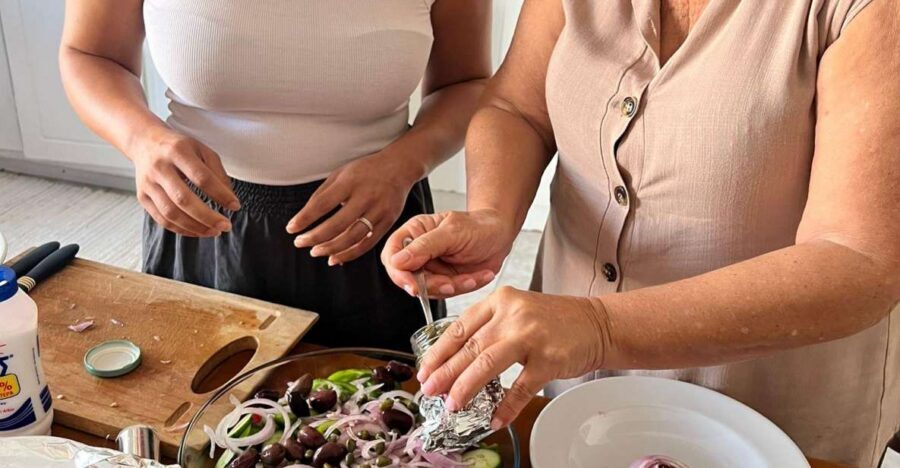
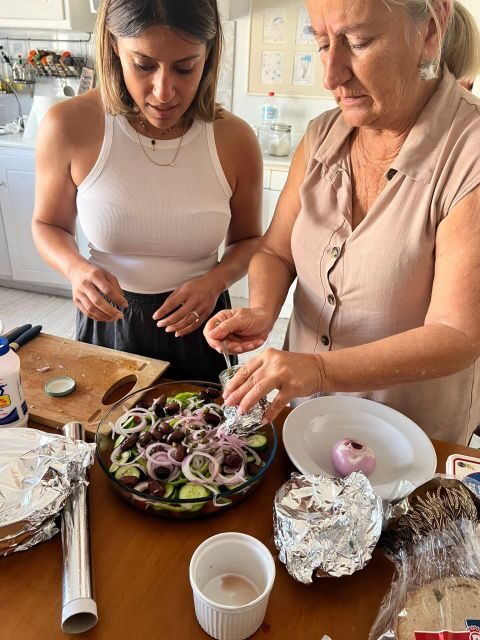
A lot of cooking classes say hands-on. This one is hands-on in a real way. In Areti’s kitchen, you’re not stuck as a spectator. You’ll take part in prepping and assembling the dishes, and the group setup (up to 6 people) makes it easier for her to delegate tasks and check in.
One reason this works so well is Areti’s teaching style. Many guests point out that she loops everyone into the process, so even if you’re a beginner, you’re given a job that makes sense. She’s also known for guidance during the steps, not just a lecture at the start, and that’s where the value lives.
Group size can even be very small. Some sessions have run with only a couple of participants, which means you get more time per person and more back-and-forth while you cook. If you’re the type who hates being one voice in a crowd, this format is a plus.
What you’ll cook: a 4-course meal built around Greek building blocks
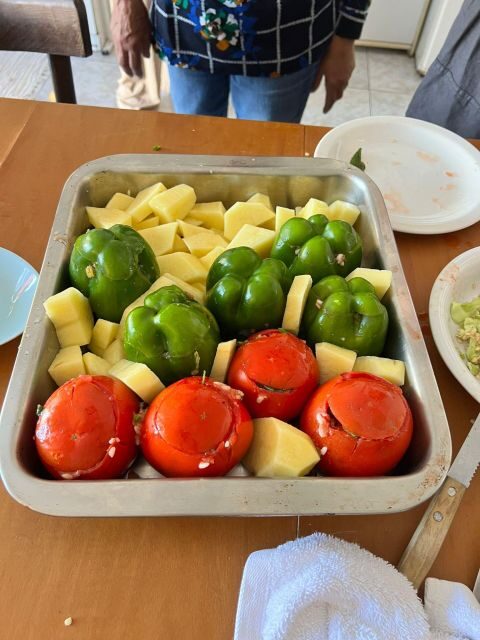
You’ll cook a 4-course menu: appetizers, salad, a main course, and dessert. The exact dishes can vary, but the class is built around the flavors that make Greek food feel instantly familiar: olive oil, herbs, fresh produce, and the kind of seasoning that doesn’t rely on complicated tricks.
From the menu examples people mention, you might see dishes such as:
- meatballs in tomato sauce
- fava beans
- Greek salad
- eggplant salad
- stuffed eggplants
- tzatziki
That list is helpful because it shows the range of what you’ll learn. You’re not only making one sauce or one salad. You’re getting practice with different textures—creamy dips, tangy salads, saucy mains, and veggie-forward components.
You’ll also cook alongside fresh, organic ingredients. That phrase can sound like marketing, but the practical effect is simple: better produce makes the flavors easier to understand. When tomatoes taste like tomatoes, you learn what you’re aiming for. When eggplant turns tender and sweet instead of watery, you learn how time and heat change the result.
Appetizers and salad: training your palate first
Starting with appetizers and salad is smart. You build momentum early, and you start tasting while your skills are still fresh. Salad courses also teach you how Greek salads are less about mixing random things and more about balance—acid, salt, oil, and herbs working together.
Main course: learning the core technique behind Greek comfort food
The main course is where the class earns its keep. Many of the dishes people mention are comforting but not heavy on fuss: tomato-based sauces, bean dishes, eggplant recipes, and classic cooling sides like tzatziki. What you’re really practicing is how to make flavor with foundational ingredients, and how to adjust seasoning as you go.
You can also read our reviews of more tours and experiences in Oia

Dessert: finishing with island-style sweetness
Dessert is part of the 4-course meal, but the specific recipe isn’t guaranteed from the details provided. Still, it matters that it’s included and that it’s cooked in the same home-kitchen style as the rest of the menu.
The wine and the meal rhythm: eat with your own hands still on you
You’ll have a glass of wine with lunch, which fits the rhythm of a longer, unhurried meal. This isn’t a quick snack stop. It’s closer to a community lunch where you cook, eat, and trade notes while your dishes come together.
Some guests also mention extra sips like moonshine in their sessions, but that isn’t listed as a guaranteed inclusion in the core details. Plan on the wine, and treat any additional drinks as a bonus if they happen.
What I like about the meal setup is that you’re eating right after cooking, while the technique is still fresh in your mind. That helps you remember what to replicate later at home. You’re tasting your own work, not someone else’s version, which makes the recipe cheat sheets much more useful later.
Dietary options that don’t feel like an afterthought
This class can be tailored for vegan, vegetarian, and gluten-free diets. That’s more meaningful than it first sounds. Greek cooking often leans on bread, dairy, and wheat-based items, so you need a kitchen that can adjust without turning the meal into a bland compromise.
In practical terms, customization usually means swapping ingredients and adjusting which dishes make it into your set. Since your meal is a full 4 courses, you’re not just getting one side dish that fits. You’re getting a structured menu.
If you’re traveling with dietary needs, this is a big plus because it reduces the stress of finding separate meals in Oia. Instead of hunting for safe options on your own, you can focus on cooking and taste.
The take-home value: recipe cheat sheets you’ll actually use
One of the best parts is that you receive recipe cheat sheets to recreate the food at home. “Cheat sheet” is the right wording because it suggests practicality over fancy presentation. You’ll want that after you’re back in your own kitchen and you’re trying to remember the steps without guessing.
Guests also mention that you may be provided with notepads and pens, which is a smart detail. When you’re working with spices and timing, writing down what you see and what you’re told makes later cooking easier. Even if you cook often, having someone explain the why behind a texture or seasoning level can help you fix small mistakes quickly.
And in some sessions, people report taking leftovers packed up. Even if that doesn’t happen every time, it’s a good sign that the meal tends to be plentiful enough to go home with more than you can finish on the day.
How much it costs and whether it’s fair value
At $153 per person for about 3 hours, this isn’t a budget activity. But it also isn’t just a “watch and snack” class. Your ticket includes:
- the cooking instruction
- a full 4-course meal
- a glass of wine
- recipe cheat sheets
- dietary customization (when needed)
- a small group setting (max 6)
In a high-cost place like Oia, that combination can work out as good value compared with piecing together multiple paid experiences: a guided food experience plus a substantial lunch elsewhere plus recipe support.
The real value is in the transfer. You’re not only buying dinner. You’re buying technique—how to season, how to build flavor, and how to handle core Greek ingredients like eggplant, tomato, herbs, and dairy-based sauces.
Logistics that matter: walking, timing, and language comfort
Because the meeting point is outside Karma Restaurant, you’re set in the center of Oia. That’s convenient, but Oia is walk-heavy. Give yourself a little buffer so you arrive relaxed, not out of breath.
Duration is 3 hours, so plan your day with space around it. If you schedule back-to-back activities, this one can feel squeezed. If you treat it like your main morning/lunch plan, it flows much better.
Language support is English, French, and Greek, which is helpful if you’re traveling as a couple or with friends and don’t all speak the same language. Even with language differences, cooking is visual. You’ll still pick up technique from what you see and do.
Who should book Areti’s class, and who might not
This is a great fit if:
- you want a home-kitchen food experience instead of a showroom
- you enjoy learning by doing, not only by watching
- you care about classic Greek flavors and want to understand the basics behind them
- you have vegan, vegetarian, or gluten-free needs and want a full meal plan
It may be less ideal if:
- you want a mostly passive experience. Everyone is given tasks, and it’s interactive by design
- you’re short on time and can’t spare a 3-hour block
- you’re looking for a long sightseeing day. This is about cooking and lunch, not touring
Should you book this Oia Greek cooking class with Areti?
If you like food you can recreate, this is an easy yes. A small group (up to 6) plus a full 4-course lunch plus recipe cheat sheets gives you tangible outcomes, not just a memory. The fact that Areti is an experienced Oia restaurant owner with deep local roots makes the class feel grounded in how people actually cook on the island.
I’d book it sooner rather than later if you value dietary customization, prefer a more personal pace, or want your Oia trip to include something that feels lived-in. If you’re okay doing active prep and tasting as you go, you’ll likely come away happier than you expected and with enough notes to cook Greek food back home without guessing.
FAQ
How long is the cooking class?
It lasts about 3 hours.
Where do I meet the host?
The meeting point is outside Karma Restaurant.
How many people are in the group?
It’s a small group limited to 6 participants.
What’s included in the price?
The price includes the cooking class, a 4-course meal, a glass of wine, and recipe cheat sheets.
Can the menu be adapted for dietary restrictions?
Yes. The menu and recipes can be customized for vegan, vegetarian, and gluten-free diets.
What languages are used during the experience?
The host or greeter works in English, French, and Greek.
What is the cancellation policy?
Free cancellation is available up to 24 hours in advance for a full refund.
Is there a pay-later option?
Yes. You can reserve and pay later, keeping travel plans flexible.