REVIEW · ICONIC VILLAGES TOURS
Megalochori: Lost Atlantis 9D Experience Museum Entry Ticket
Book on GetYourGuide →Operated by Santorini Lost Atlantis IKE · Bookable on GetYourGuide
Atlantis meets a volcano in one hour. At Megalochori’s Lost Atlantis museum, the 9D experience makes Santorini’s disaster feel physical, with water sprays, bubbles, smoke, wind, and simulated ash. You’ll also meet an animated hologram of Plato, who guides you through the idea that this island’s past may explain the Atlantis story.
I love the mix of storytelling and hands-on tech. You get interactive videos and panels that connect the myth to Minoan-era Santorini, plus augmented-reality “virtual windows” that show everyday life in the lost city.
The main thing to consider is that it’s built for a short visit—plan on about an hour. If you’re craving classic archaeology, this can feel like a fast stop (and there’s no food or drink included).
In This Review
- Key highlights worth planning around
- First stop in Megalochori: what this museum is really like
- Getting oriented with guides at every exhibit
- The Atlantis evidence story: where myth meets Santorini’s volcano
- The biggest Atlantis diorama: why it’s more than just a model
- Augmented-reality virtual windows: seeing everyday life in layers
- Interactive fresco and Plato’s path to the idea
- The 9D eruption simulator: the show you should expect to feel
- Geological hologram: seeing Santorini’s timeline become visible
- Lava-walk and Atlantis costume photos: the fun you can keep
- How long it takes and how to avoid rushing
- Price and value: is $16 a good deal for one hour?
- Who should book, and who might prefer something else
- Should you book the Lost Atlantis 9D museum ticket?
- FAQ
- How long does the Lost Atlantis 9D experience take?
- Where is the meeting point?
- What is included in the ticket?
- Is food or drink included?
- What languages are available in the exhibits?
- Is there staff help in English?
- Is it wheelchair accessible?
- Are pets allowed?
- Can I cancel and get a refund?
Key highlights worth planning around
- 9D eruption theater with sensory effects like water, wind, and simulated ash
- Largest Atlantis diorama in the world, great for close-up wandering
- Augmented-reality virtual windows showing daily life in time with AR
- Plato hologram Q&A style with the Santorini origin theory
- Geology hologram tracing Santorini’s evolution from prehistoric times to today
- Costume and photo moments plus a lava-walk style attraction
First stop in Megalochori: what this museum is really like
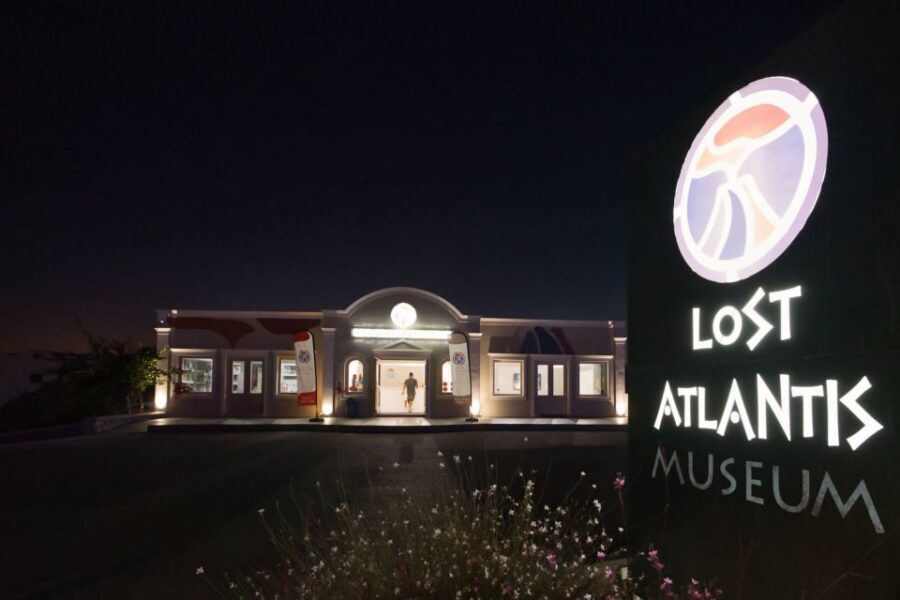
This isn’t a quiet museum where you speed-read plaques. It’s a purpose-built, show-and-station experience that treats the Atlantis myth like a mystery you can walk through. You’ll spend about one hour moving through a sequence of exhibit rooms, guided at each stage.
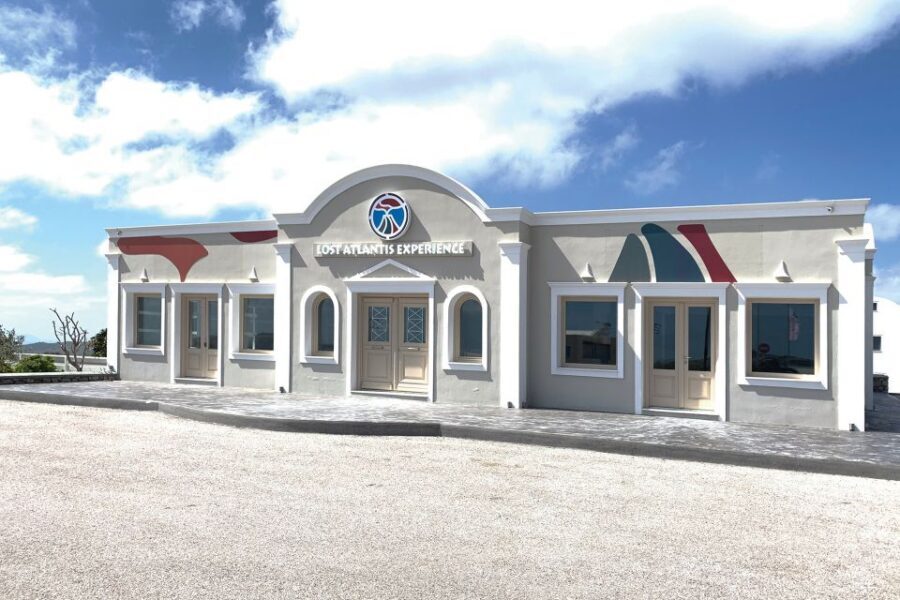
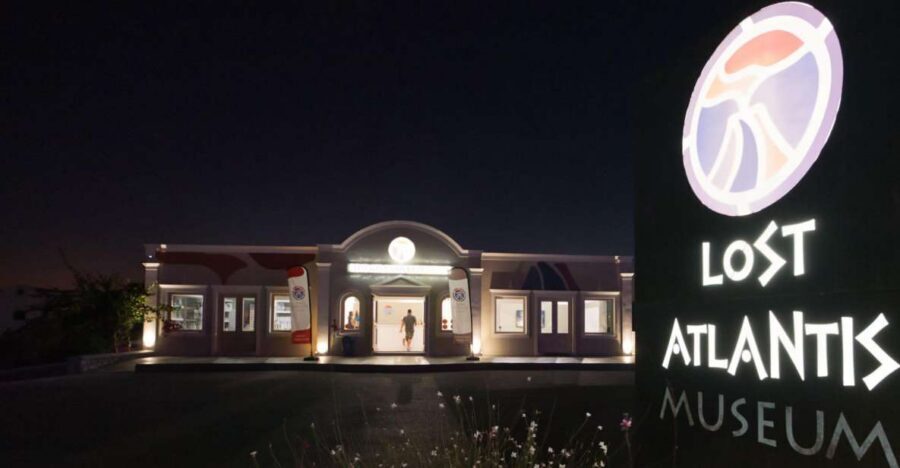
The location helps too. The entrance is at Lost Atlantis (Megalochori area), on the road opposite the large Denaxas supermarket. If you’re using local buses, there’s a stop very close by, which makes this an easy add-on day plan before or after other Santorini sights.
The vibe is family-friendly, but it’s not only for kids. The big win is that the museum explains the Atlantis claim using real anchors—Minoan history, volcano activity, and geological storytelling—then wraps it in modern tech you can actually interact with.
You can also read our reviews of more tours and experiences in Santorini


Getting oriented with guides at every exhibit
One of the simplest reasons this works is that you don’t have to figure things out alone. There are guides at the exhibits, so you’re not standing there trying to interpret buttons and screens.
That matters because a lot of the displays rely on multi-step interactions: you press, look, listen, then move on when the story advances. When a guide is nearby, you’ll get more out of the time you spend inside, especially if you’re visiting with kids or you just want the experience to flow without stress.
Language support is strong as well, but it’s worth knowing how it’s split:
- The exhibits feature descriptions in 8 languages: Greek, English, French, German, Italian, Spanish, Turkish, and Chinese.
- The host or greeter side is English and Greek.
So even if you’re not speaking Greek, you should still be able to follow the stations.
The Atlantis evidence story: where myth meets Santorini’s volcano
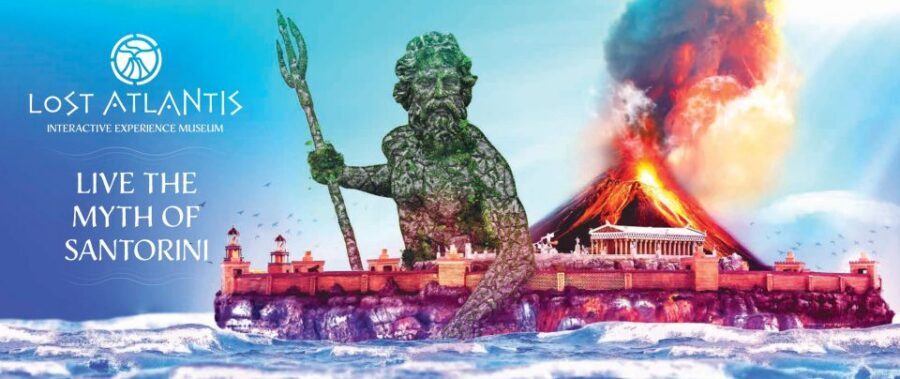
The museum’s core promise is tying the legend of Atlantis to the island’s volcanic and geological past. You’ll watch interactive videos and work through panels that present the case that links Plato’s Atlantis story to the kind of destruction that could have shaped Santorini’s history.
The way this is designed helps you connect the dots faster than you would by reading alone. Instead of treating Atlantis as pure fantasy, the museum uses the volcano disaster framework—earthquake, tsunami, and eruption—to explain why the myth would feel plausible to ancient writers.
This is also where you’ll start seeing the museum’s repeated pattern: story first, then visuals you can test with your senses. It’s more like a guided concept tour than a traditional exhibit loop.
The biggest Atlantis diorama: why it’s more than just a model
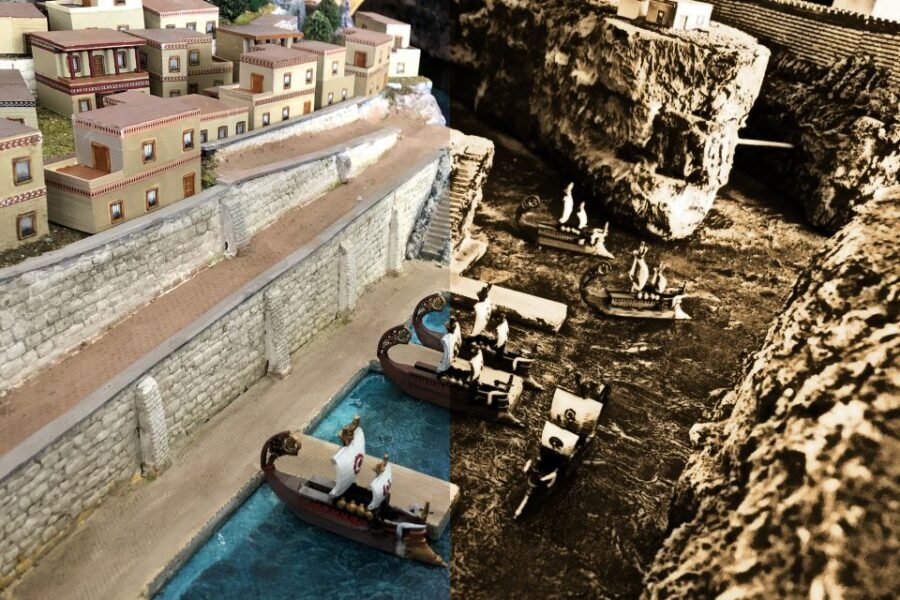
Yes, it’s the largest Atlantis diorama in the world. But the real reason it earns attention is how it slows you down. A large scale model gives you room to look at details without needing to be close to fragile objects or glass cases.
Plan to spend a few minutes just wandering the view angles. The diorama helps you understand what Atlantis might have looked like as a living city, not just as ruins or legend.
And it sets up the next section: the museum pushes past sightseeing into “life in the city” storytelling. The diorama isn’t the finish line. It’s the platform.
Augmented-reality virtual windows: seeing everyday life in layers
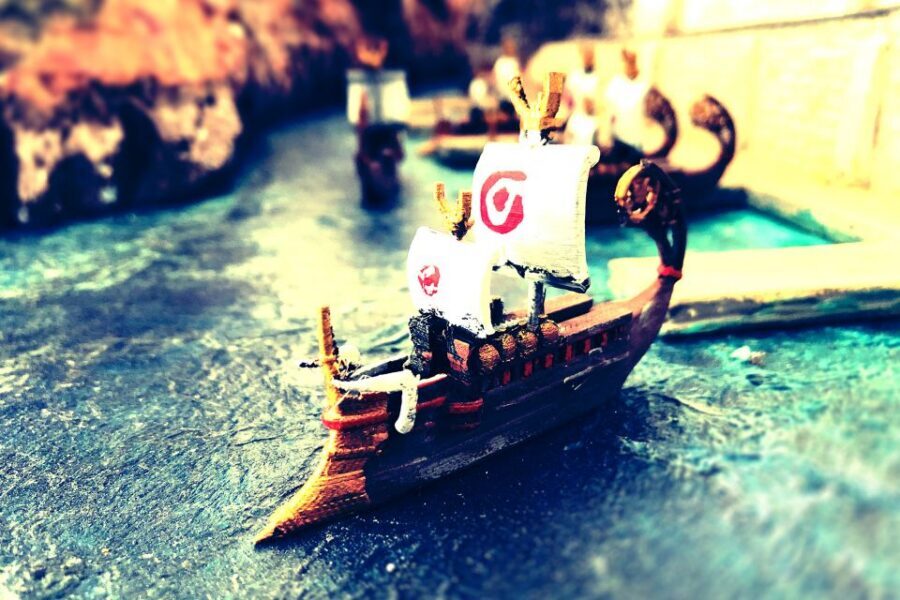
This is one of my favorite formats in the whole museum because it’s playful and useful. Through virtual windows with augmented reality, you experience everyday moments as if the city is inhabited.
AR can be hit-or-miss in places, but here the concept matters: it’s not random special effects. The windows are meant to support the museum’s central claim—Atlantis as an actual society—by showing daily-life scenes you can connect to the diorama.
It’s a good match for different ages. Kids tend to enjoy the “watch it change” factor, and adults like that it puts story context onto something you can visually anchor.
If you’re traveling with limited time, this station is one I’d prioritize, because it turns the story from information into something you can see happening.
You can also read our reviews of more museum experiences in Santorini


Interactive fresco and Plato’s path to the idea
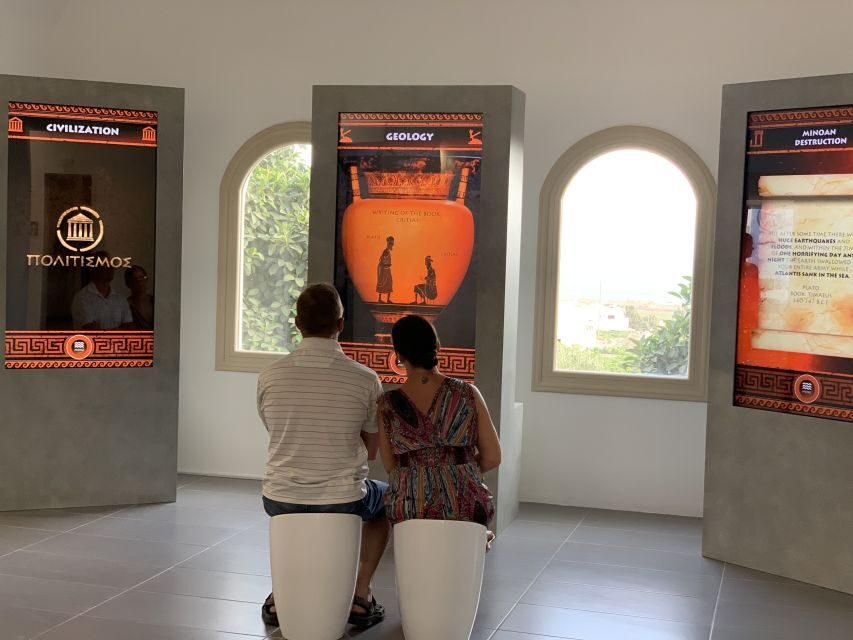
Another standout is the museum’s focus on Plato himself—not just the myth. You’ll follow Plato’s journey through an interactive fresco, which connects his inspiration to his writing about an ideal city.
Then the museum takes it further: Plato himself comes to life via an animated hologram. The idea is simple and clever. You’re not only hearing about Plato’s philosophy; you’re interacting with it, asking him about his ideas and the theory that Santorini could be the Atlantis origin.
This is where the museum becomes more personal. The Atlantis story can feel abstract. Adding Plato’s voice turns the whole thing into a conversation, not a lecture. It’s also a fun shift from pure technology toward philosophy and storytelling.
The 9D eruption simulator: the show you should expect to feel
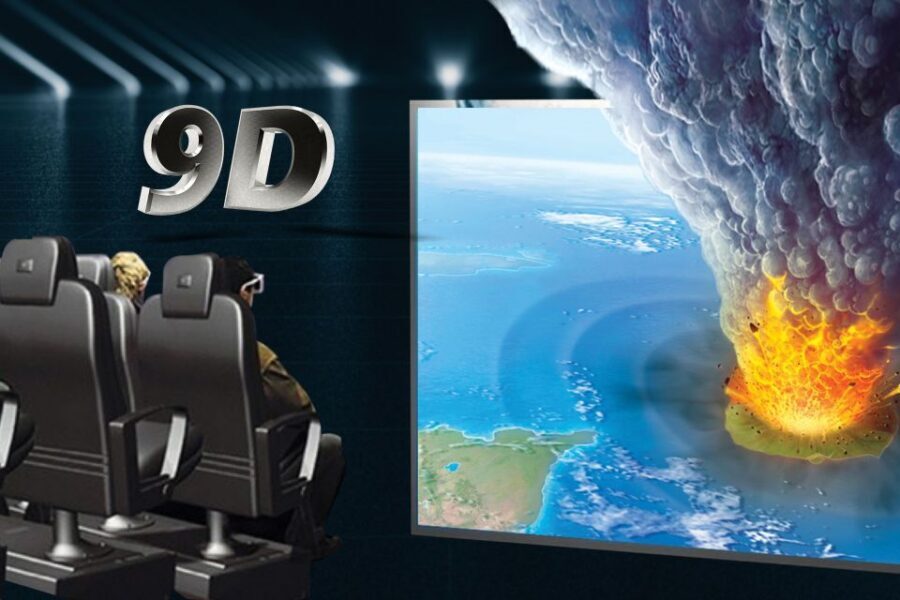
The 9D experience is the headline event, and it earns that role. The museum stages earthquake, tsunami, and volcanic eruption destruction with sensory effects designed to make you feel the sequence.
Based on how the experience is described, you should expect things like:
- water sprays and bubbles
- smoke and simulated ash
- wind and other physical cues
So bring your expectations accordingly. This isn’t a calm, sit-and-watch planetarium. It’s a movie designed for body feedback—think “hands and face first,” not just eyes.
If you’re sensitive to strong effects (water spray or loud, dramatic sound), you may want to go in with that knowledge. Still, the theatre format is part of what makes this ticket a value: you’re buying a short, high-impact show, not just reading about events you already know.
Geological hologram: seeing Santorini’s timeline become visible
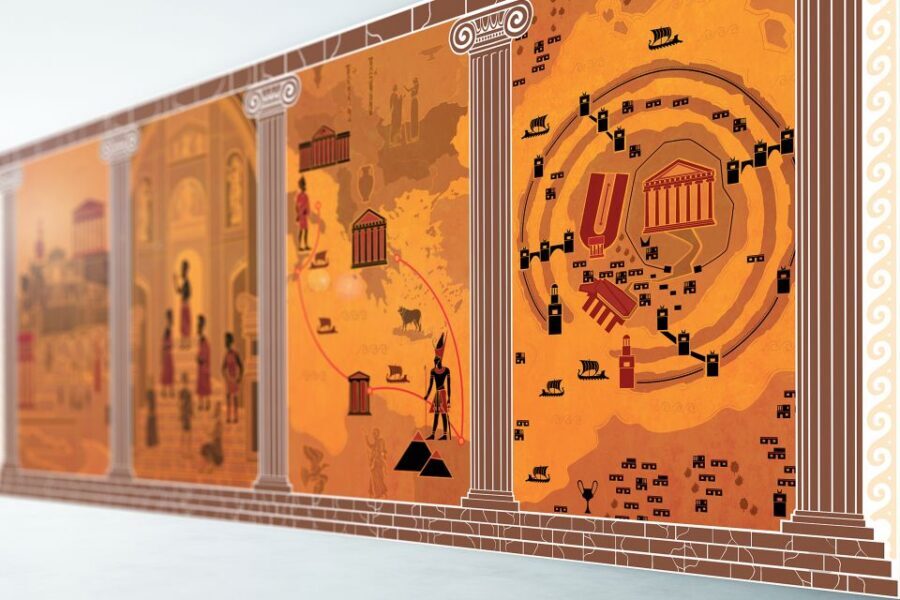
After you’ve felt the disaster, the museum helps you understand the long game. You’ll see a holographic representation of Santorini’s geological evolution, from prehistoric eras up to today.
This section is valuable because it gives the story a timeline shape. The Atlantis myth might be the theme, but the volcano is the engine. Seeing how the island changes over time makes the myth-to-geology link easier to understand.
It’s also a great “reset” after the 9D theatre. Your senses are still on, but now you shift to visuals that feel more explanatory and less dramatic.
Lava-walk and Atlantis costume photos: the fun you can keep
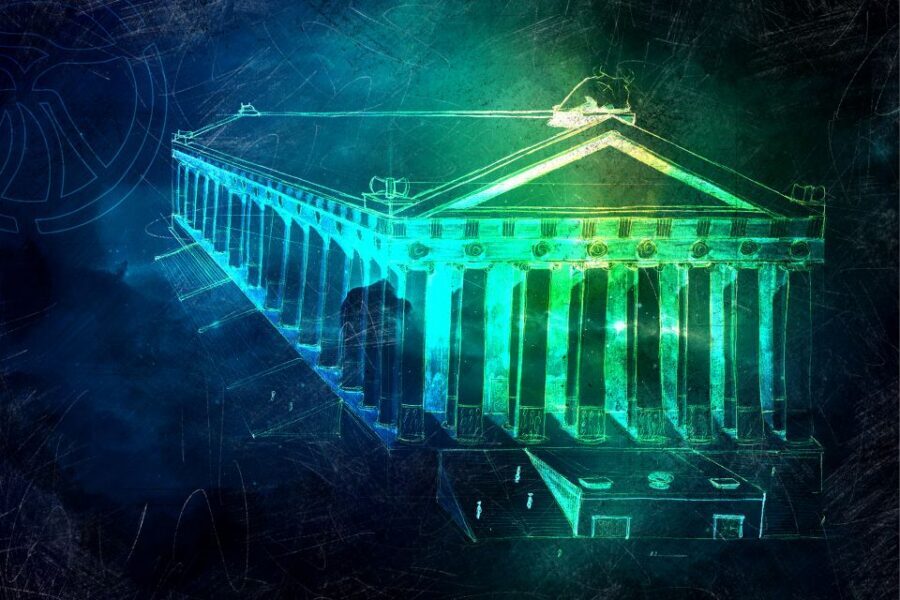
If the museum feels like it’s building toward a role-play moment, that’s intentional. Included among the attractions is the chance to walk on lava inside an active-volcano style setup. You can also get dressed up as a citizen of Atlantis and take pictures.
These bits aren’t the deepest part of the experience, but they’re exactly the kind of low-pressure fun that makes the museum memorable. They also help if you’re traveling with kids, since it gives them something to do besides watching screens.
Just don’t expect this to replace outdoor exploring. It’s theatre-and-tech fun inside, and it’s best as a companion to other Santorini stops.
How long it takes and how to avoid rushing
The ticket is for about one hour, and the museum moves you through exhibits with guides present at stations. In practice, your pace depends on how much you stop to read, watch, and take pictures.
If you want the best flow:
- Don’t plan a second timed activity immediately after. Give yourself a buffer.
- Prioritize the 9D theatre, the AR virtual windows, and the Plato hologram. Those are the most experience-driven parts.
- Leave time to circle back to the diorama. It’s the kind of thing you’ll understand more after you’ve heard the story.
Also note what you can’t bring. Pets aren’t allowed, and oversize luggage isn’t permitted. If you’re arriving with a lot of gear, plan to travel light.
Price and value: is $16 a good deal for one hour?
At about $16 per person, this museum plays in a different category than long, sit-down tours. You’re paying for a compact bundle: interactive exhibits, a hologram-style talk with Plato, augmented-reality moments, and a full sensory 9D show.
For me, the value math works when you want:
- modern, high-production storytelling
- a short indoor activity with big sensory payoff
- a myth-meets-volcano explanation you can process quickly
If you’re only looking for quiet history reading, you might feel like you’ve paid for theatre effects more than scholarship. But if you want a fun, structured hour that keeps most people engaged, it’s priced like a smart add-on rather than a full-day commitment.
Who should book, and who might prefer something else
This ticket fits best if you:
- like hands-on museums and tech-based exhibits
- want a break from the sun in Santorini
- enjoy myths when they come with a real-world explanation framework
It’s also a solid choice for families. Kids often light up during the show-and-effect parts, and the museum is built for that kind of attention span.
You might think twice if you:
- already know Atlantis legends deeply and want long-form academic history
- prefer outdoor archaeology and sweeping views as your main experience
- need a longer activity window (this is designed around an hour)
Should you book the Lost Atlantis 9D museum ticket?
Yes, I’d book it if you’re spending time on Santorini and want a fast, high-impact stop in Megalochori. The museum’s strongest combination is the 9D eruption simulator plus the story stations that connect Plato’s Atlantis theory to Santorini’s volcano and geology.
I’d skip it only if you strongly prefer traditional museums with minimal tech, or if you’re trying to fill a full day. For a one-hour window, though, it’s a good use of time—especially if you want something that’s fun, structured, and different from the usual sightseeing circuit.
FAQ
How long does the Lost Atlantis 9D experience take?
The visit is listed as about 1 hour.
Where is the meeting point?
Lost Atlantis is located on Epar.Od. Firon-Ormou Perissis, Santorini 847 00, opposite the Denaxas supermarket.
What is included in the ticket?
The ticket includes the 9D experience and guides at the exhibits.
Is food or drink included?
No. Food and drink are not included.
What languages are available in the exhibits?
Exhibits have descriptions in Greek, English, French, German, Italian, Spanish, Turkish, and Chinese.
Is there staff help in English?
Yes. The host or greeter is listed as English and Greek, and there are guides at all exhibits.
Is it wheelchair accessible?
Yes, the activity is listed as wheelchair accessible.
Are pets allowed?
No, pets are not allowed.
Can I cancel and get a refund?
Free cancellation is available up to 24 hours in advance for a full refund.