REVIEW · HIKING & TREKKING
Hiking activity through the volcanic land of wonder
Book on Viator →Operated by Golden Ibex - Santorini private tours - Wine tours - cooking class · Bookable on Viator
One look down the caldera and you’ll understand the hype. This guided walk strings together Fira steps, the Patsouli viewpoint, and the route from Imerovigli to Oia with incredible panoramic photo stops and real-world volcanic and cultural explanations. The only drawback: it’s hilly, and you’ll need moderate physical fitness to enjoy it comfortably.
I especially like how this doesn’t waste time on check-the-box sights. You move through historic corners and cliffside streets while your guide ties what you see to how Santorini formed and how people lived across the island’s changing eras. Still, the lack of lunch means you’ll want to plan around snacks and water for the full stretch.
For the right pace, this is a smart way to see more of Santorini without turning it into a logistics project. It’s a private format too, so your group gets the full attention from the guide.
In This Review
- Key highlights at a glance
- A hike that reads like a Santorini geology lesson
- Starting in Fira: steps, shops, and a fast way to get out of the noise
- What makes the Patsouli stop special
- Firostefani cliff life: the church, the cypresses, and the “real” shape of the village
- Skaros and the restored section you can actually picture
- Imerovigli: the high-point views and the pirate-era observatory story
- Stavros and the red hill: volcanic ash walking for serious photo lovers
- The real benefit here: the geology becomes visible
- Oia without the rush: traditional village walk and 19th–20th century context
- Price and what $289.59 buys you (and what it doesn’t)
- Getting the pace right: moderate fitness, real breaks, and a hilly route
- Who this Santorini walk fits best
- The guide factor: biology-level explanations that make the island stick
- Booking advice: when to reserve and how to plan your day
- Should you book this Golden Ibex Santorini hike?
- FAQ
- What time does this Santorini hike start?
- How long is the tour?
- Where do I get picked up?
- Is this a private tour?
- What’s included in the price?
- Is lunch included?
- Is there any admission fee at the Imerovigli stop?
- Is the activity suitable for everyone?
Key highlights at a glance

- Patsouli viewpoint (Petros Nomikos Conference Center): the local spot called Patsouli is a major photo pause with caldera-to-harbor views
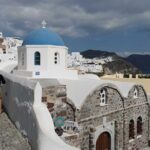
- Firostefani cliff streets and St. Gerasimos church: a long, narrow village feel plus tall cypresses around the church
- Skaros and restored cave-house areas: you’ll see the skafta courtyard shapes and rooflines from above
- Imerovigli’s high-point stories: including the name origin tied to an observatory era when pirates infested the Aegean
- Volcanic ash and the red-hill detour: a lunar-feeling walking section that’s built for stop-and-shoot moments
- Oia’s 19th–20th century village walk: time to slow down and understand day-to-day life beyond the postcards
A hike that reads like a Santorini geology lesson
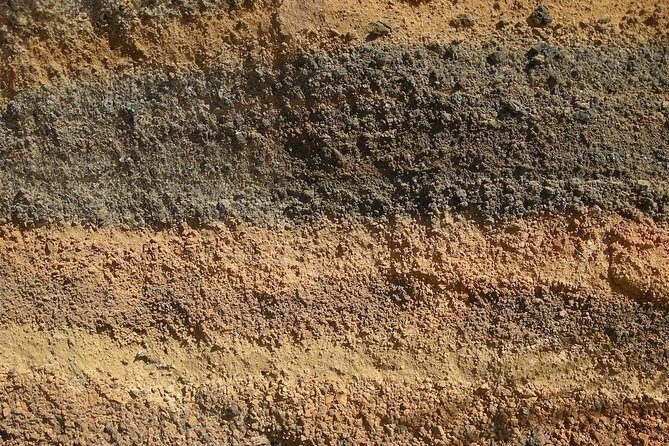
Santorini is famous for views. What makes this hike worth your time is how the guide turns those views into context. You’re not just walking from one viewpoint to the next—you’re moving across places shaped by volcanic activity, while hearing how locals adapted their homes and daily routines to cliffs, caves, and changing landscapes.
The trip is also structured for real viewing time. You get built-in pauses: a long scenic break at Stavros, time to relax and photograph, and a later walk through Oia where the focus shifts from big views to how people lived in the 1800s and 1900s.
This is also priced like a small, guided experience rather than a cheap group bus. At $289.59 per person, you’re paying for a private tour feel, hotel pickup/drop-off, and the guide-led interpretation that helps the stops click in your mind instead of blurring together.
You can also read our reviews of more hiking tours in Santorini
Starting in Fira: steps, shops, and a fast way to get out of the noise
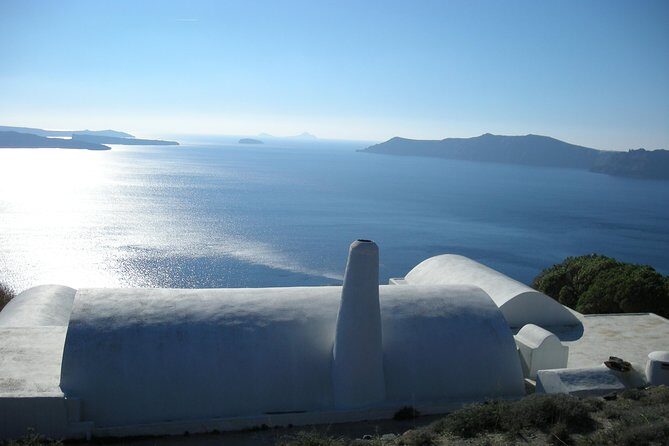
You begin in Fira at 8:00 am. The morning start matters because it helps you get moving early through the most active areas of the caldera capital, before the day’s crowds and heat slow you down.
Your first stretch takes you along the road toward Santorini’s northern part, then up a narrow street packed with steps and small shops selling souvenirs and jewelry. It’s a practical transition: you get your bearings quickly in Fira, then you follow signs toward the cable car area without having to navigate the maze yourself.
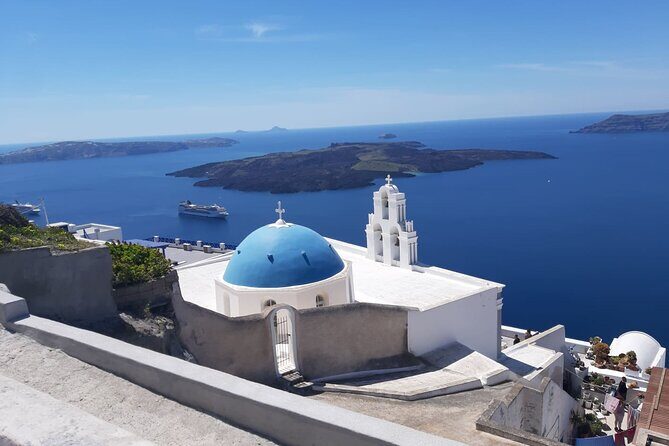
Once you pass in front of the cable car, the route continues to the Petros Nomikos Conference Center, known locally as Patsouli. This is your first big “why Santorini looks the way it does” moment.
What makes the Patsouli stop special
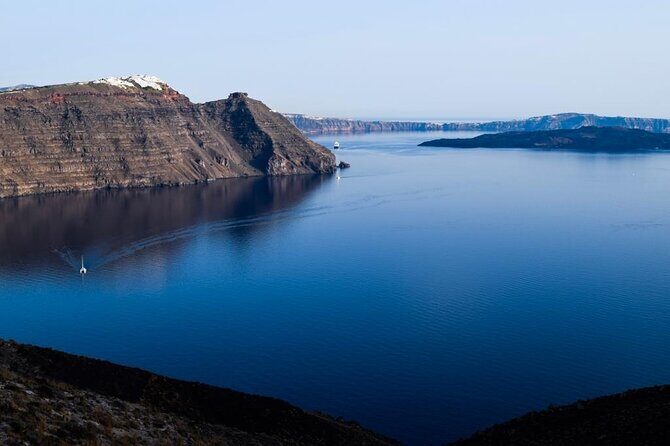
From Patsouli, the view reaches down over the road toward Yialos. The guidance here is more than photo-taking. It’s the kind of viewpoint where you can see how high the cliffside settlements sit above the sea, and how that geography shapes everything—from routes between towns to the way buildings cling to the caldera edge.
The vibe is also romantic in a very practical way. You’re positioned for photos and for a true pause, not just a quick glance while you keep walking.
Firostefani cliff life: the church, the cypresses, and the “real” shape of the village
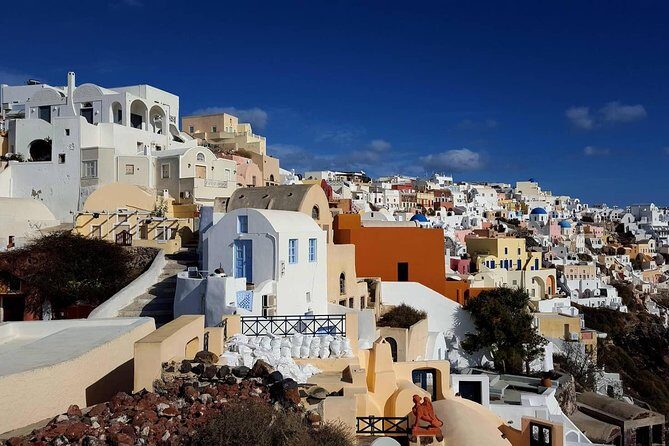
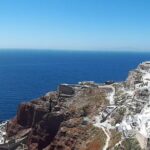
Next comes Firostefani, an extension of Fira that feels more like the island’s cliffside northern suburbs. It’s long and narrow, built right on the precipice, with a square, restaurants, hotels, and coffee spots.
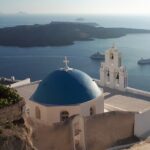
Your route reaches the square after about 800 meters, then you continue north through the village’s central section. One of the clearest landmarks here is the big church of St. Gerasimos, unusually surrounded by tall cypresses. It’s the sort of detail you might miss on your own, but on a guided walk it becomes a reference point—and an easy place to re-orient when the streets start bending around the cliff.
From here, you also get a picturesque look toward Mesa Yialos, with its little harbor view and stepping paths. The scenery isn’t just dramatic. It’s built into the walking experience, so you’re constantly seeing how people arranged daily life along the edge.
Skaros and the restored section you can actually picture
As you move north, you’ll pass toward Skaros, described as the island’s most elegant and splendid rock mass. This part of the route has been fully restored, which matters. It means you’re not just looking at ruin or guessing what used to be there—you can understand the scale and shape of what survived, what was rebuilt, and how the settlement fits into the caldera.
You’ll also notice the variety created by skafta cave houses: courtyards, roofs, and protruding portions that form distinct shapes and colors when viewed from above. From a distance, it can look like random cliffside architecture. On the walk, it starts to feel like a system.




Imerovigli: the high-point views and the pirate-era observatory story
Your next major stop is Imerovigli, around the caldera’s center and at its highest point. That combination does two things for you:
1) it delivers broad panoramas
2) it gives your guide a strong story anchor
Imerovigli’s name gets tied to a daytime observatory when pirates infested the Aegean. You’ll hear that kind of island folklore here as more than trivia—it’s the explanation that helps you understand why people built certain vantage points and how the coastline mattered for navigation and watching.
There’s also a central church stop at Panagia Malteza, named after an icon supposedly found in the Sea of Malta. Even if you’ve heard religious stories in other Greek places, the setting here makes the detail feel grounded—because you’re standing in a place where the view and the belief system both shaped daily life.
A small clear path just outside Imerovigli is described as magical. You’ll get evocative views right away, which helps you settle into the hiking rhythm: walk, pause, understand, photograph, repeat.
Stavros and the red hill: volcanic ash walking for serious photo lovers
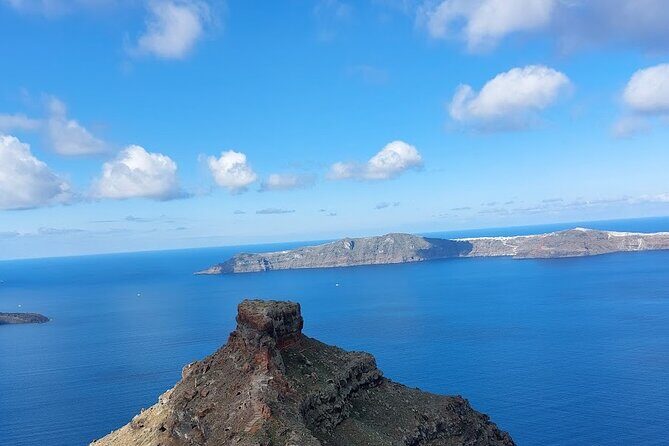
You continue onward until Stavros, a small white church that works as an ideal short rest point. This is where you can slow down, take photos, and catch your breath before the more otherworldly part of the route.
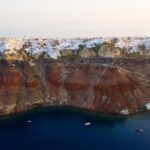
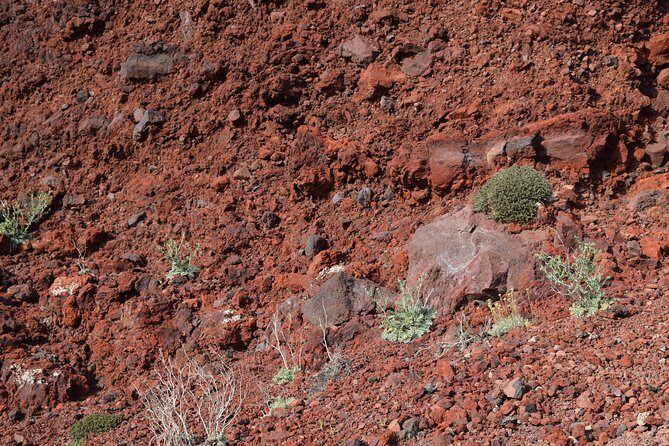
Then comes the detour: you can follow a small path leading to a red hill. The walking section is covered with volcanic ash and white rocks, creating a lunar-feeling stretch that’s made for dramatic pictures and wide-angle compositions.
After you reach the end of the white road, the hiking portion finishes, but the photography focus continues. That’s useful if you’re the type who wants the views without feeling like you’re racing to the finish line.
The real benefit here: the geology becomes visible
Santorini geology is hard to grasp from a brochure. On this section, it stops being a concept and becomes something your feet experience. Ash texture, pale rock, and the way the path opens to views above the mountains help you connect the island’s volcanic origin to what you see in front of you.
Oia without the rush: traditional village walk and 19th–20th century context
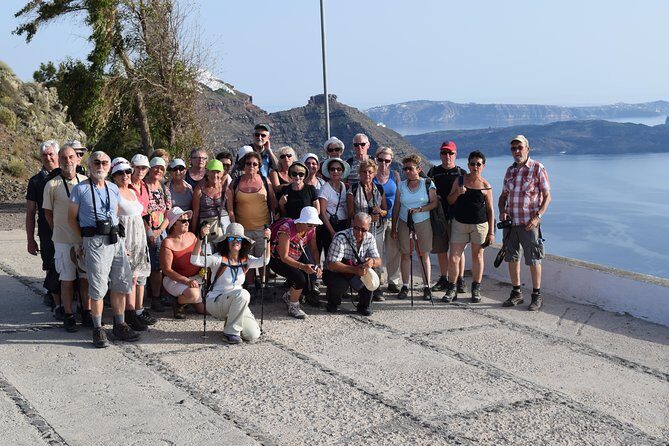
Once you arrive in Oia, the tone changes. Instead of chasing the next viewpoint, you walk through the traditional village to discover how inhabitants lived during the 19th and 20th centuries.
That shift is smart. Oia can feel like a postcard factory if you only treat it like a photo stop. Here, you slow down and learn how the village life worked—so the architecture and streets start making sense beyond their appearance.
For many people, this is where the whole hike pays off. If earlier stops helped you understand how Santorini was formed and organized along cliffs, the Oia walk helps you connect it to human life—habits, layout, and the way people used the space they had.
Price and what $289.59 buys you (and what it doesn’t)
At $289.59 per person, this isn’t the cheapest thing on Santorini. But you are getting several value pieces bundled in:
- Hotel pickup and drop-off
- Bottled water
- Snacks including fresh fruit
- A map of Santorini
- A private group format (only your group)
Your duration is about 4 hours, which is a good chunk of time for a guided north-to-west circuit without turning the day into a full travel saga. And because it starts at 8:00 am, it’s easier to fit into your overall itinerary.
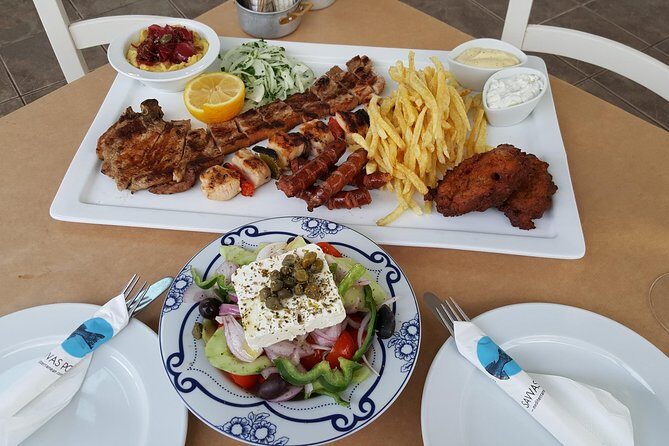
What’s not included is lunch. You’ll need to keep that in mind if you’re someone who plans meals tightly. The inclusion of fresh fruit and water helps, but it’s still not a full lunch break.
Getting the pace right: moderate fitness, real breaks, and a hilly route
The activity is listed for travelers with moderate physical fitness. The walking includes steps and cliffside paths, with enough climbing that it’s not ideal for anyone who struggles with uneven ground or steep grades.
That said, the format includes time to relax and photograph at key points like Stavros. There are also snack moments along the way, so it’s not a nonstop grind. In practice, expect this to feel like a proper hike. One earlier experience described it as about 6–7 miles of walking with hills, which lines up with what this route looks like on paper.
If you’re reasonably active and you like photo stops, you’ll likely find the pace workable. If you’re hoping for a gentle stroll with minimal stairs, you may feel the strain.
Who this Santorini walk fits best
This hike is a strong match if you:
- want guided history and geology tied to what you’re seeing
- like photo moments with built-in pauses at multiple viewpoints
- prefer a private, smaller-group feel instead of a large tour crowd
- want to hit Fira, Firostefani, Imerovigli, and Oia in one connected route
It’s less ideal if you:
- need a fully flat walk
- need a sit-down lunch included
- want minimal walking time
The guide factor: biology-level explanations that make the island stick
One of the most praised parts of the experience is the guide’s ability to connect the hike to facts you can actually remember. In particular, the guide Constantino is highlighted as having advanced degrees in biology and bringing maps to help explain the volcanic story.
That kind of explanation changes how the stops land. When someone points out notable plants during the walk and ties them back to volcanic conditions and history, you stop seeing Santorini as only a set of buildings on cliffs. You start seeing a living system that grew out of volcanic change and human adaptation.
It’s also why the hike works even if you’re not a geology nerd. The stories are practical: they help you look at the view longer, because you understand what you’re looking at.
Booking advice: when to reserve and how to plan your day
This tour is often booked about 86 days in advance on average. That’s a hint that good times for the morning slots can go quickly. If your schedule is fixed—like cruise days or limited hotel availability—booking earlier gives you the best shot at matching the 8:00 am start.
Also plan your timing around what the tour covers. You’ll start at the top of Fira and finish in one of the listed end points (cruise port, airport, or hotel). That makes it easier to keep your day structured, but you’ll want to make sure the rest of your plans don’t depend on you being able to arrive instantly somewhere right after.
Should you book this Golden Ibex Santorini hike?
I’d book it if you want more than scenic walking. This is a good choice when you like guided interpretation, multiple viewpoints, and a route that connects Fira’s north edge to Imerovigli’s high vantage and then down into Oia’s traditional village streets.
Skip it if you’re chasing an easy, low-step stroll or if you need lunch included. And if moderate fitness is not your strong suit, consider a shorter or less hilly option instead.
If you do book, go in expecting a real hike with great breaks. The views are the headline—but the guide’s volcanic and cultural explanations are what turn those views into a memorable story.
FAQ
What time does this Santorini hike start?
The start time is 8:00 am.
How long is the tour?
The duration is approximately 4 hours.
Where do I get picked up?
You can choose pickup options. For cruise ship passengers, pickup is from the exit of the cable car. For hotel pickup, you’re picked up from any hotel as close as possible. For airport pickup, you need to provide your flight number.
Is this a private tour?
Yes. It’s private, and only your group will participate.
What’s included in the price?
Included items are hotel pickup and drop-off, bottled water, snacks (fresh fruit and water), and a map of Santorini.
Is lunch included?
No. Lunch is not included.
Is there any admission fee at the Imerovigli stop?
The Imerovigli stop lists admission ticket free.
Is the activity suitable for everyone?
It’s designed for travelers with moderate physical fitness. The route includes steps and hills, and it’s recommended for those who can handle that.
If you tell me your cruise/hotel area (or whether you’re starting from the airport), I can suggest which end-point option makes the most sense for your day flow.