REVIEW · AKROTIRI EXCAVATIONS
Akrotiri Family Treasure Hunt ,kid friendly Archeology Adventure
Book on Viator →Operated by EXPLORE AKROTIRI · Bookable on Viator
Ancient Akrotiri feels like a live puzzle. You’ll walk through the excavated Minoan city of Akrotiri—buried under volcanic ash around 1450 BC—while kids hunt for clues and parents get real context from a local guide. I especially like the family-focused game approach (it keeps kids moving), and I also love that the route includes practical details like water access, kitchens, and drainage systems. One consideration: the entrance ticket to the archaeological site is not included, so you’ll want to budget extra before you go.
I also appreciate how the tour mixes storytelling with visible ruins—main street storefronts, houses with traces of painted frescoes, and even balcony and sewage/drainage remnants. It’s built for ages 5–12 and aims to keep the pace relaxed, though if you stop to ask extra questions you may need to do it early so the guide can build it into the flow.
If your group wants a strict, slow “read every placard” experience, this may feel a little guided and timed. Still, for most families, the payoff is that learning looks a lot more like play than homework.
In This Review
- Key things to know before you go
- Akrotiri with kids: the treasure hunt that makes ruins make sense
- What you actually walk through at Akrotiri
- Water, kitchens, and the unglamorous stuff that’s actually fascinating
- Private guide means you can ask more than you planned
- Timing and pacing: plan for about two hours on the site
- Entrance fee and what’s worth budgeting
- How kid-friendly is this, really?
- When this tour is a great fit
- When you might want a different approach
- Value check: is $421 per group worth it?
- Practical tips so your tour goes smoothly
- Should you book the Akrotiri Family Treasure Hunt?
- FAQ
- Is this tour private or shared?
- What ages is the treasure hunt designed for?
- How long does the Akrotiri tour take?
- Do I need to buy the Akrotiri entrance ticket?
- Is hotel pickup and drop-off included?
- Where does pickup happen?
- What’s included in the tour price?
- Are there food or drinks included?
- What kind of ticket do I need?
- Is free cancellation available?
Key things to know before you go
- Kids become junior archaeologists with simple missions and clue-spotting at Akrotiri.
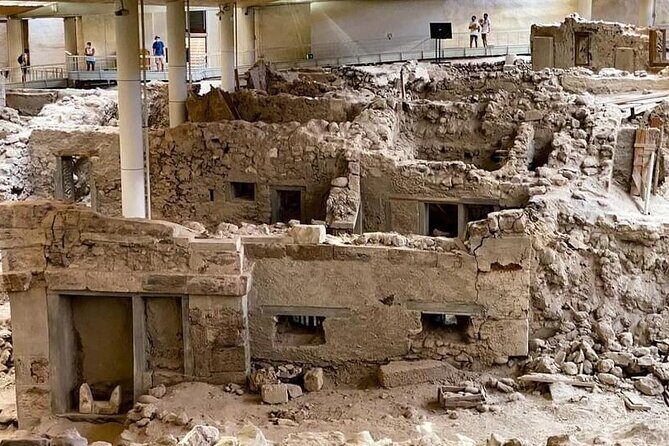
- Parents get a guided walk focused on architecture, daily life, and the volcanic eruption that preserved the site.
- You’ll see everyday tech like drainage and sewage systems, not just temples and statues.
- Fresco traces show up along the main street, including areas where colorful painting once covered surfaces.
- It’s private for just your group, so you can ask questions and move at a family rhythm.
- Entrance is separate: Akrotiri’s site fee is €20 per person and isn’t included.
Akrotiri with kids: the treasure hunt that makes ruins make sense
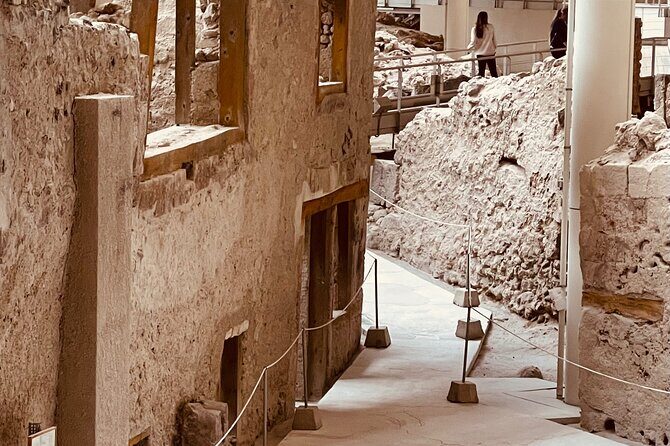
Akrotiri can be a tough sell to kids—until it’s turned into a mission. This experience is designed so children don’t just look at stone walls; they hunt for clues and complete small tasks that help them connect what they’re seeing to how people lived nearly 4,000 years ago.
The basic idea is split by roles. Kids do the interactive part as “junior archaeologists,” while parents follow along with the guide’s explanation of Akrotiri’s layout and systems. That structure matters because it avoids the usual family problem: one person is bored while the other is deeply interested. Here, everyone gets something to do.
If you’ve ever watched a child lose interest halfway through a museum visit, you’ll understand why this kind of format works. When the site becomes a scavenger game, the ruins turn into a story children can track.
You can also read our reviews of more tours and experiences in Santorini.



What you actually walk through at Akrotiri
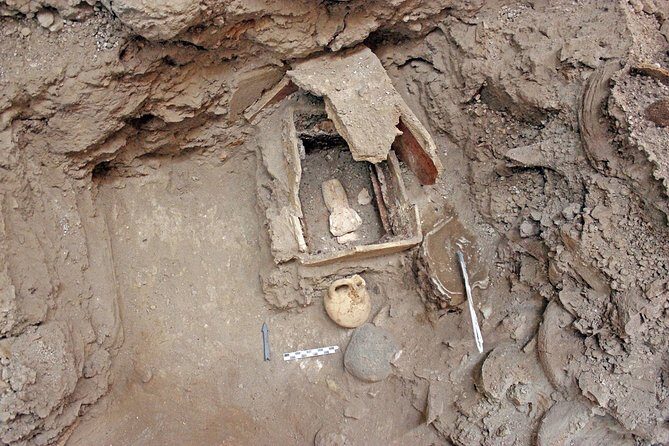
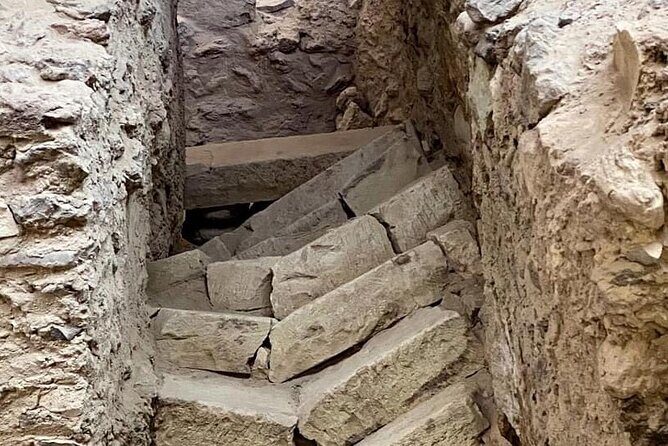
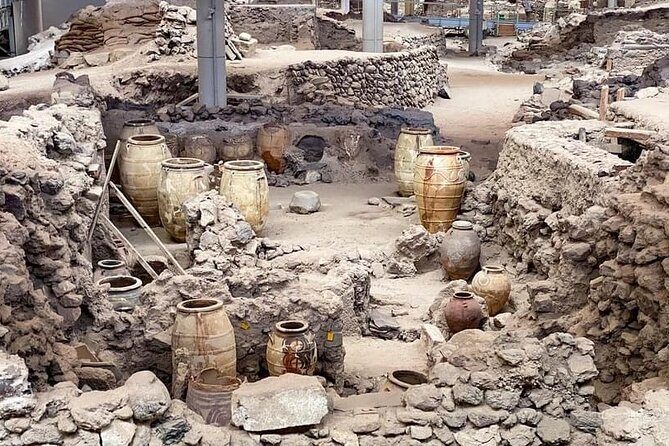
Akrotiri is famous for being preserved under volcanic ash. You feel that preservation as you walk the main street and see rooms, corners, and foundations that were once part of a functioning town—not a “pile of rocks.”
Expect to pass areas tied to everyday life: shops and houses along the street, plus visible remnants that help you picture daily routines. The experience doesn’t stay purely on top-level descriptions. It points out details like how buildings were arranged and what structures suggest about city living.
Some parts you’ll likely notice include:
- Traces that suggest where shops and homes lined the main thoroughfare
- Spots where surfaces once held colorful frescoes
- Remains of features linked to balconies and interior spaces
That blend is the reason I think this tour works so well as a family outing. You’re not only learning that the city existed—you’re learning how it functioned.
Water, kitchens, and the unglamorous stuff that’s actually fascinating
Akrotiri isn’t just art and buildings. The real magic for me is the practicality: how people solved problems like water access and sanitation.
The tour includes stops that focus on remains of kitchens and the systems connected to drainage and sewage. These details are easy to skip if you’re touring alone, because you might not know what you’re looking at. With a guide, those “unremarkable” channels and layouts become proof of planning.
One person I found especially convincing here is how this kind of explanation makes the Minoan world feel modern. When you understand that people managed water and waste with built systems, it stops being ancient trivia and starts feeling like human ingenuity.
Even if your kids are mostly focused on the treasure hunt, those practical stops tend to land—because the contrast between simple stone remains and sophisticated planning creates its own kind of curiosity.
Private guide means you can ask more than you planned
This is a private experience, meaning your group is the only group on the tour. That changes the feel immediately. Instead of catching a guide at the end of a sentence, you can ask questions, get clarifications, and point at something and say, wait—what is that?
I also like that the experience is described as relaxed and flexible to a family’s rhythm. You’re not being dragged through a site like a luggage line at the airport.
Still, balance it with a practical expectation: some tours are taught as a route and a script. If you want to linger on a particular feature, ask for that time early rather than late. On short site visits, timing is everything.
If you’re choosing between guides, two names from past tours can help you recognize the style:
- Georgia, who has been praised for passion and added iPad supplemental pictures to explain what you’re seeing
- Mariana, who’s been described as engaging and detail-focused
Those notes can help you set expectations, especially if your group thrives on explanation and visuals.
Timing and pacing: plan for about two hours on the site
The experience runs around 1 hour 40 minutes to 2 hours 10 minutes. That makes it realistic even for younger kids, as long as you show up ready to walk.
Pickup and drop-off are included, and that’s a big value add for families. One practical detail: pickup is handled from your hotel area (for example, a past tour included pickup from an Oia hotel). The exact pickup point can vary, so confirm the meeting/pickup location when you book—hotel is the stated default, not port or airport.
Comfort-wise, the tour calls for moderate physical fitness. Akrotiri is outdoors and involves walking on uneven archaeological terrain, so good shoes matter. If someone in your group has mobility limits, it’s worth asking how much time you’ll be able to pause.






Entrance fee and what’s worth budgeting
Here’s the math that matters. The tour price is listed as $421.03 per group (up to 4), and the Akrotiri entrance ticket is not included. The site fee is €20 per person.
That separate entrance fee changes how you should think about value. The private guide and the family treasure hunt are what you’re paying for—then you top it up with the site admission. If you have only 1–2 people total, it can feel pricier on a per-person basis. If you’ve got a group up to four, the cost spreads out and starts to look more sensible.
My practical advice: price out your group size including the €20 per person, then compare it to the cost of a standard group tour plus the hassle of arranging family-friendly pacing. For families who want a guide to handle the kids and the questions, the setup is usually worth it.
Also, bring cashless payment if possible, but don’t assume. Entrance is paid separately, so plan to handle it smoothly without delaying your start.
How kid-friendly is this, really?
The tour is specifically designed for children aged 5–12, and the structure reflects that. Kids get missions, clue spotting, and a small reward at the end for completing the challenge.
For parents, the important part is that you’re not stuck managing attention spans while trying to understand Akrotiri. You get the guided visit focused on architecture and daily life while the kids are actively engaged.
One practical note: this isn’t a long, stop-and-snack outing. There’s no mention of food being included, so if your kids get cranky around the 90-minute mark, plan a snack strategy before or after.
If your family already loves volcano stories, ancient daily life, or “how did they do that” tech questions, you’ll find extra satisfaction here.
When this tour is a great fit
This experience is a strong match if:
- You’re traveling with kids who enjoy games and problem solving
- You want a guide to translate ruins into daily life (water systems, kitchens, home design)
- You prefer a private setting where you can ask questions
- You want hotel pickup and an efficient plan that avoids extra logistics
It’s also a good fit for adults who get annoyed by museums that rely on placards alone. With a guide explaining what you’re looking at, Akrotiri becomes more than a photo stop.
When you might want a different approach
You may want to consider a different style of tour if:
- Your group’s top priority is unlimited time to linger and read slowly
- You strongly prefer a minimal-sales experience, since some guides may recommend shops in/near the site area
- You dislike tours with a built-in pace and route
A couple of past experiences included concerns about guides moving quickly or seeming impatient if families stopped longer than expected. Another concern involved being steered toward a particular souvenir option. Those aren’t universal issues—but they’re worth factoring if your group values total control over timing and shopping decisions.
If you go in expecting a guided route and you communicate your preferred pace early, you’ll likely be happier.
Value check: is $421 per group worth it?
For a private family tour at a major archaeological site, $421 per group up to 4 is in the range where you’re paying for three things at once:
- A licensed guide
- Family-friendly engagement through a treasure hunt
- Hotel pickup and drop-off that saves time and stress
The entrance fee (€20 per person) is separate, so your all-in cost is higher. Still, for families who would otherwise have trouble keeping kids interested while also learning the site properly, this format can save you from doing two separate things (a kid activity plus a grown-up history tour).
To judge value for your group, do this quick test:
- If you have up to four people and you want everyone involved, it’s usually a fair deal.
- If you’re traveling as a solo adult or a couple with no kids, you may find you’d rather pay less for a standard Akrotiri visit and spend the saved money elsewhere.
Practical tips so your tour goes smoothly
A few things I’d do before you head to Akrotiri:
- Wear shoes with solid grip for uneven ground.
- Bring water and plan a snack strategy, since food and drinks aren’t included.
- If your child has a short attention span, use the treasure-hunt framing as your “theme” for the day—kids often respond well when they know what they’re trying to complete.
- If you have a must-see feature (a specific fresco area, a particular drainage section), mention it early so the guide can route time around it.
Also, the tour is in English and offers a mobile ticket, so have your phone charged.
Should you book the Akrotiri Family Treasure Hunt?
If you’re visiting Santorini with kids in the 5–12 range, I’d book it. The treasure hunt format turns Akrotiri from confusing ruins into a shared adventure, and the guided focus on daily life details—especially water and sanitation—gives the visit real substance.
If you’re booking for adults only, or if your group wants a slow, self-paced archaeological “wander,” you might feel the structure more than you enjoy it. But for families who want a guide to handle both learning and pace, this private setup is one of the more efficient ways to experience Akrotiri.
FAQ
Is this tour private or shared?
This is a private tour/activity, meaning only your group participates.
What ages is the treasure hunt designed for?
It’s designed for children aged 5–12.
How long does the Akrotiri tour take?
The experience duration is about 1 hour 40 minutes to 2 hours 10 minutes.
Do I need to buy the Akrotiri entrance ticket?
Yes. The entrance fee to the Akrotiri archaeological site is €20 per person and is not included.
Is hotel pickup and drop-off included?
Yes. Pickup and drop-off are included as part of the experience.
Where does pickup happen?
Pickup is included, and past tours specifically mention pickup from hotels (for example, Oia). You should confirm your exact pickup point when you book.
What’s included in the tour price?
Included is a guided tour by a licensed tourist guide.
Are there food or drinks included?
No. Food and drinks aren’t included.
What kind of ticket do I need?
You’ll receive a mobile ticket.
Is free cancellation available?
Yes. You can cancel up to 24 hours in advance for a full refund.