I like the practical setup: pickup (either near your hotel or at the Fira Bus Stop) and a climate-controlled minivan make the ride from Fira feel civilized. I also like that you’re not just standing in one spot; you get time to explore Oia’s backstreets, and the audio guide + driver tips help you know where to look and when to shoot. The big drawback is reliability—some people report no-shows or trouble getting back after the experience—so you should plan carefully if you hate surprises.
If you want a sunset that’s mostly about photos, pretty streets, and learning a bit without reading, this can fit. If you’re the type who needs everything to run on rails, take the risk seriously and book with a backup plan.
Key highlights at a glance
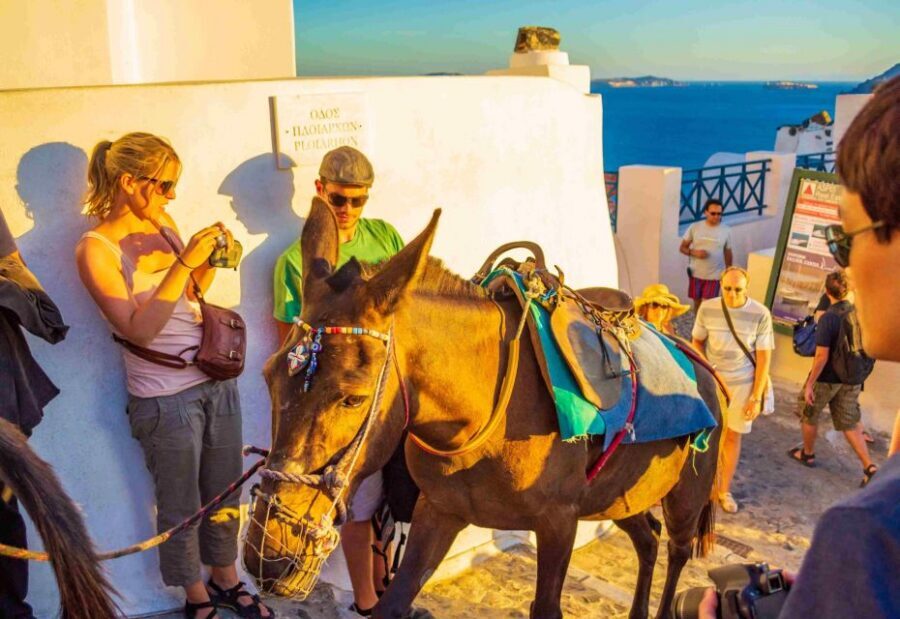
- Oia at the golden hour: sunset viewing from the village area on the Caldera rim
- About two hours to explore Oia: alleys, viewpoints, and photo stops on your own pace
- English audio guide included: stories about Oia’s architecture and cultural background
- Pickup options: meet near your hotel or at the Fira Bus Stop
- Comfortable transport: climate-controlled minivan for the transfer time
- Driver help: you can ask for the best photo spots during your Oia time
Oia sunset timing: why 4.5 hours matters
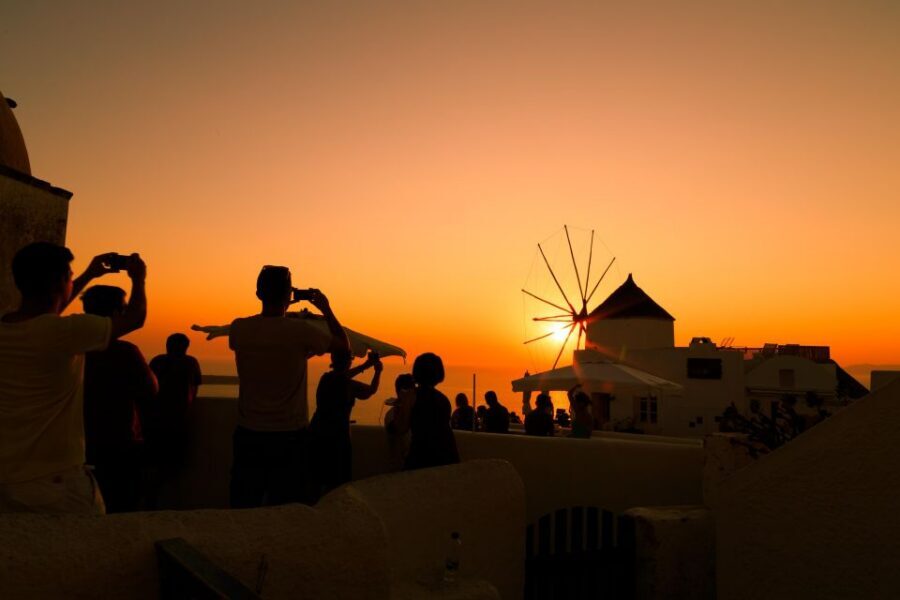
Oia sunset is one of those experiences where the clock is part of the attraction. The sky doesn’t care about your schedule, and neither do the crowds. This tour gives you a tight window—about 4.5 hours total—so you spend your time where it counts: arriving for sunset and then having a set chunk of time in Oia.
The structure is simple. You’ll be transported to the Oia area, set up for sunset, and then given time to walk. That’s valuable because Oia is more than a single viewpoint. The village’s layout means the best “wow” moments are often around corners, down stairways, and along edges of the Caldera.
During summer, the light lasts longer and the evenings feel more festive, so that “sunset first, then explore” flow works well. If you’re visiting in shoulder seasons, you’ll still get the idea, but the weather and daylight length can change how long you’ll feel like wandering afterward.
Getting there from Fira (or your hotel) in a climate-controlled van
One of the practical upsides here is the transfer. Instead of DIY bus hops or figuring out parking, you get pickup options and a ride in a climate-controlled minivan. That matters in Santorini because late afternoon can be hot, and Oia can feel like a slow vertical climb once you start walking.
You have two stated start options:
- Meet at the Fira Bus Stop
- Choose accommodation pickup and drop-off
That second option is especially helpful if you’re staying outside the most obvious pickup points or if you just want your evening to stay easy. The experience is operated with an English-speaking driver, so you’re not stuck guessing what happens next.
Do note this: a minivan is still a vehicle with a schedule. If traffic runs late or an earlier group changes timing, your “exact sunset minute” can shift. On a good day, you won’t care. On a day when you’re relying on a strict plan (dinner reservations, cruise check-in, etc.), you should keep your timeline flexible.
The semi-private sunset spot: Caldera views without the chaos
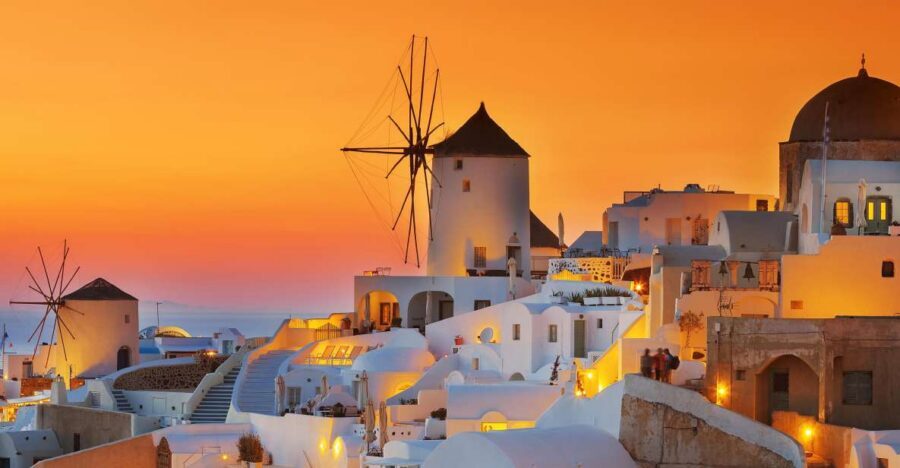
The heart of this tour is the sunset moment. You’re positioned in the Oia village area with the goal of watching the sunset from the Caldera rim. This is where semi-private matters in real life.
A smaller group tends to be easier to manage around narrow streets and crowded viewpoints. It can also mean the schedule is more controlled than a big group that stops too late or lingers too long. The trade-off is that you won’t have a private terrace or a guaranteed empty viewing area. Oia is still Oia.
What helps is the tour’s pacing. Instead of “arrive, stand, leave,” you’ll have time after the sunset to move through town. That reduces the pressure of finding the perfect spot instantly. You can watch the sky turn, then use your time to explore the places that match your style—architecture photos, sunset silhouettes, or just strolling where the light looks good.
Two hours to explore Oia’s alleys (and not miss the side streets)
You get about two hours in Oia to walk the quaint alleys and soak up the village vibe. That duration is a sweet spot for most people. It’s long enough to get your bearings and still short enough that you’re not exhausted before sunset.
Here’s how to use that time:
- Start with the main lanes just long enough to orient yourself, then cut toward quieter streets.
- Look for elevation changes. Oia has plenty of natural “stair-view” moments, and the angle of the Caldera changes as you move.
- If you care about photos, plan to spend 10–15 minutes at one good spot rather than constantly moving.
Also: the sunset is not just “one view.” If you walk a bit after the initial viewing area, you often find better angles and less jostling. This tour’s built-in time lets you do that.
The one caveat is physical. Oia is hilly and the streets can be uneven. Even with a tour schedule, you’re still doing a lot of walking on stone steps and slopes. Wear shoes you can handle for stairs and cobblestones.
The English audio guide: what it adds while you wander
The included English audio guide is one of the smarter parts of this experience. Instead of only hearing “look at the view,” you’re getting context about Oia’s history, architectural wonders, and the stories tied to the village over time.
When you’re walking through places like Oia, a little context changes everything. Doors, windows, plaster colors, and the overall way buildings sit on the cliff stop feeling random. You start noticing patterns and understanding why Oia looks the way it does.
A practical bonus: you can use the guide while you walk, then use the driver for extra advice on photo spots. The driver isn’t a replacement for an art historian, but the best photo location often depends on the exact season, the crowd level, and which side street is easiest to reach at your moment in the schedule.
Since it’s audio, you can take it at your pace. If you’d rather just look and not listen, you can keep it low. If you love learning while moving, it gives you something to do besides staring upward.
Included vs not included: food, drinks, and your evening plan
This tour includes pickup and drop-off (at the stated meeting point near your hotel or at the Fira Bus Stop) and all taxes. What’s not included is food and drinks.
That means you should plan your own “gap time” strategy. In practice, I’d do one of these:
- Eat earlier in Fira before pickup so you’re not hunting for a meal during the most crowded hour
- Bring water if you’re sensitive to heat
- If you want something specific for sunset, grab it beforehand and treat it as a bonus rather than a guarantee
Oia can be expensive and food lines can get slow near peak hours. Since this tour is focused on the view and the walking time, it’s not designed to be a food tour. If you need dinner timing to be precise, consider planning dinner after you’ve finished your Oia exploring, not before.
Price check: $33.88 for transport + guide + structured sunset time
At $33.88 per person, the price is positioned as a value option for Santorini. On paper, you’re paying for:
- A guided-style transfer from Fira area to Oia
- Climate-controlled transport
- English audio guide content
- About two hours in Oia, built around sunset
That’s not a private-taxi experience, and it’s not a full-service guided hike. But it’s also not “just a ticket to stand somewhere.” The audio guide and the structured timing can easily add up in value if you like context and want the logistics handled.
The tricky part is risk. If a tour runs smoothly, $33.88 feels like a fair deal for getting you to the right place at the right time. If it doesn’t run smoothly, $33.88 feels like the cost of a headache.
So I’d think about value in two layers: the advertised value (comfort + time + audio) and the operational value (did you actually get pickup, your Oia time, and return).
Reliability and risk: the no-show problem you can’t ignore
Here’s the honest travel-writer bit: the biggest issue with this tour is not the view or the guide content. It’s operational reliability.
In the feedback provided, there are multiple reports about drivers not arriving and people being left without the tour as promised. One account describes a guide and van not picking anyone up. Another describes a driver not coming and, after phone calls, being taken to the site without an actual visit and with no proper return plan. A third story mentions a booked pickup that didn’t happen at the scheduled time and an alternative plan that didn’t match what was expected.
That doesn’t mean the tour always fails. But it does mean you should treat it as a “possible complication” booking, not a casual add-on.
If you decide to book, I’d strongly suggest:
- Screenshot your pickup details and meeting point choice (Fira Bus Stop vs pickup from accommodation)
- Have a local phone number working and charged before pickup time
- Build in buffer time before any hard commitments that evening
- Keep your expectations flexible about exact timing
If you’re traveling solo, or you’re relying on this tour to hit a specific dinner or ferry window, I’d think twice or choose a provider with stronger operational track record.
Who this tour suits best (and who should skip it)
This Oia sunset setup fits best if you:
- Want sunset plus structured exploration in a compact time window
- Like walking and photo-taking more than sitting through a lecture
- Appreciate English audio guidance while you move around
- Prefer a minivan transfer over DIY transport
It may not be ideal if you:
- Get stressed when plans change or communications fail
- Have no flexibility for evening timing
- Expect a fully guaranteed, no-hassle pickup and return every time
If you’re the type who can handle a delay, make phone calls, and adjust your dinner plan, you’ll probably enjoy the core experience. If you can’t tolerate operational uncertainty, you’ll have a bad time no matter how beautiful Oia looks.
Should you book the Oia Sunset Daily Tour?
I’d book it only if you’re comfortable with two things: walking Oia after sunset and handling small operational hiccups. The potential upside is real—Oia sunset views, about two hours of wandering, and an English audio guide that adds meaning to the architecture and streets.
But given the reported pickup problems and no-show experiences, you should not treat this as a slam-dunk. If you have tight deadlines, consider skipping or choosing a tour with a stronger reliability track record. If you’re flexible and you verify your pickup details carefully, this can still be a good value way to get to Oia for the golden hour.
If you want, tell me your exact dates and where you’re staying (near Fira, Imerovigli, Perissa, etc.). I can help you judge whether the pickup option you choose makes sense and how to schedule dinner and photos around sunset.
FAQ
What is the duration of the Oia sunset tour?
The experience lasts about 4.5 hours. The tour also includes roughly 2 hours to explore Oia on your own.
Where does pickup happen?
You can meet at the Fira Bus Stop or choose accommodation pick-up and drop-off.
Is there an English guide?
Yes. The driver speaks English, and an English audio guide is included.
What time is the sunset part?
You’ll arrive for the sunset and watch it from the Oia village area near the Caldera rim. Starting times depend on availability.
Are food and drinks included?
No. Food and drinks are not included, so you’ll want to plan your own.
Is it easy to cancel if plans change?
There is free cancellation up to 24 hours in advance for a full refund.
]]>This Santorini private agri-educational visit takes you through an organic estate shaped by the island’s dry conditions, starting with black currant vineyard walks and ending with a tasting of LIQUEUR RAISIN plus herb flavors you can’t get in town. I also like that you’re not just looking at plants, you’re learning how the farm processes them, including a cave used for natural herb drying.
The one thing to plan for is the walking: it’s a moderate walk on cobblestones and around the farm, and there are no WC/toilets facilities included. If you’re sensitive to uneven ground, this is worth thinking about before you book.
Key Things To Know Before You Go
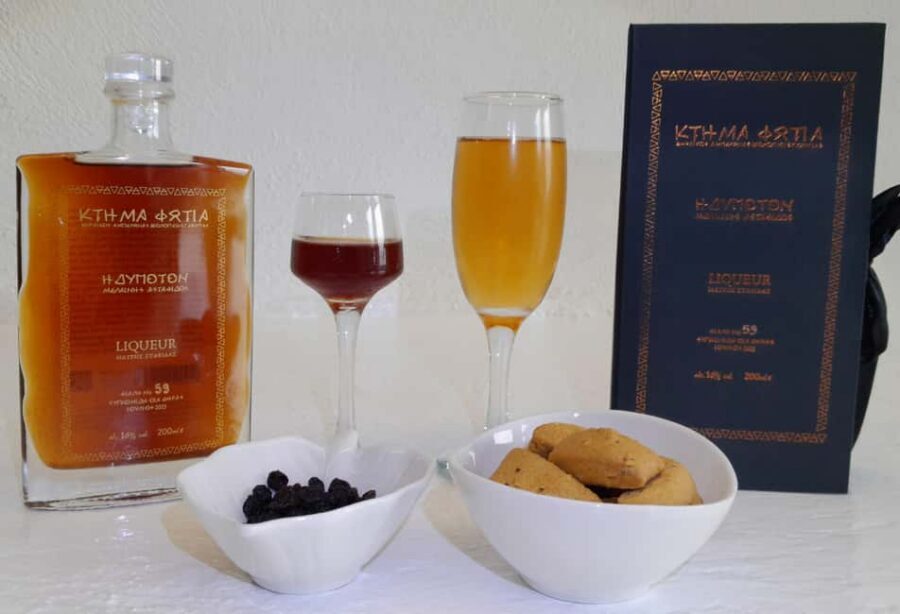
- Meet the owners: Dimitris and Maria run the place with real passion and you’ll hear how the farm works day to day.
- Black currant first: You’ll stroll the first organic black currant vineyard in Santorini and understand why it matters here.
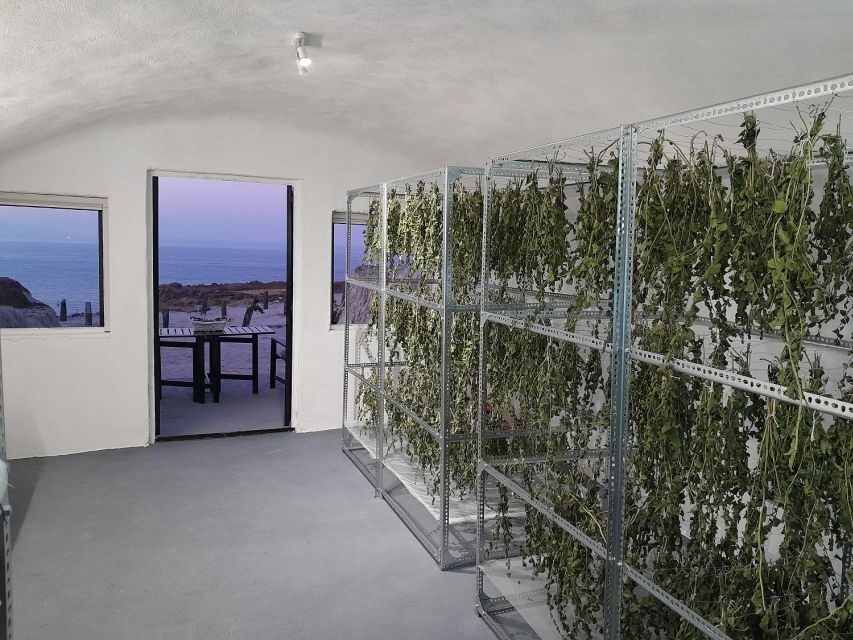
- Herb-drying cave: A famous cave is part of the production story, showing how herbs are naturally dried.
- Prickly pear products: Expect prickly pear seed oil and a no-sugar prickly pear juice tasting.
- Olive oil with attitude: You’ll taste herb-infused extra virgin olive oil alongside regional bites.
- Private by default: This is a private group experience with a live guide in English and Greek.
Why This Santorini Farm Visit Feels Like a Time Machine
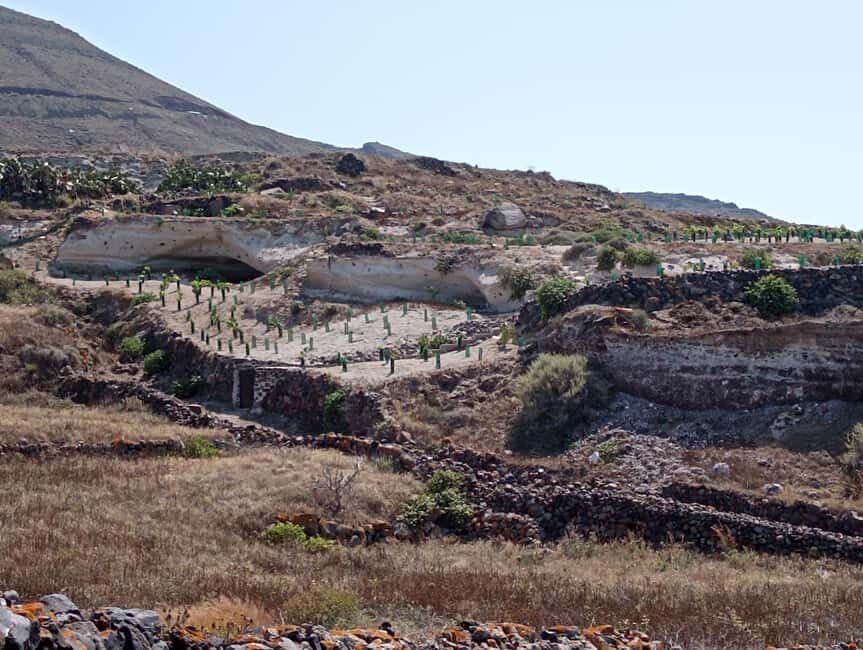
Santorini can be a visual overload: white walls, big views, cruise crowds, and the same souvenirs in every shop. This tour slows you down on purpose. You walk into a working organic estate where the point isn’t Instagram shots. It’s how people survive and craft food on a dry island.
I love that the farm doesn’t pretend it’s something it’s not. There’s no big vegetable garden fantasy here. The climate is too dry, so you focus on what grows well locally: herbs like caper and thyme, prickly pears, and black currants that turn into black raisins and then into the star tasting, LIQUEUR RAISIN.
A second thing I like is that you’re treated like a real guest. When you meet Dimitris and Maria, it adds a human layer to everything. The tour isn’t just facts on a sign. It’s people explaining why they do things the way they do.
One practical note: because this is a farm and not a museum, expect uneven ground and walking. You’ll be on cobblestones for at least part of the route, and you should wear sturdy shoes.
The Short Walk In: Cobblestones, Scenic Stops, and Farm Energy
Your experience starts by meeting your guide and then heading to the farm on foot. You hike only a few meters along picturesque cobblestone streets before you reach the estate. That short stretch matters because it helps you feel where you are: Santorini isn’t flat and tidy, and the stone paths are part of the island character.
Along the way, there may be a scenic photo stop, and depending on your start time you might catch sunrise or sunset views. This isn’t a long bus ride that starts and ends the day. It’s more like you step into the farm’s world while the island is still doing its thing.
For your comfort:
- bring a sun hat
- wear comfortable clothes
- plan on closed-toe shoes
- if you need help on uneven ground, a hiking baton is available
This part is also where you’ll get your bearings fast. Your guide sets the tone: what you’ll see, what you’ll taste, and what to pay attention to as the tour moves from plants to processing.
Black Currant Vineyard Walk: What Grows Here and Why
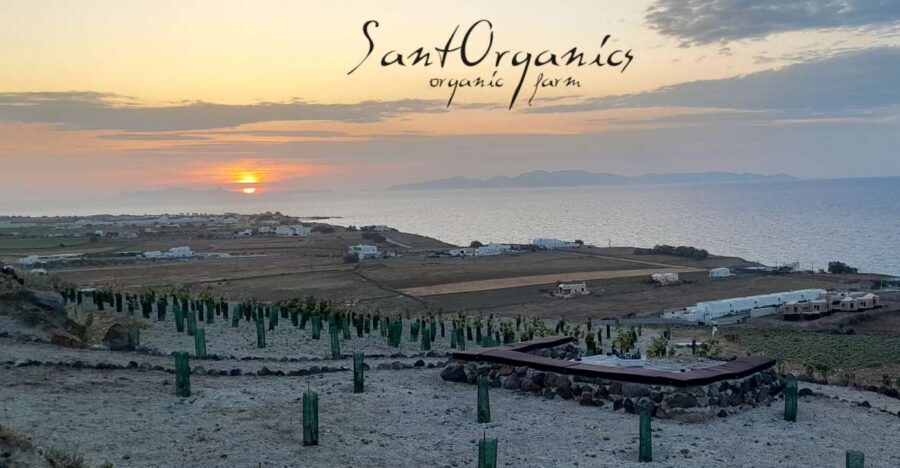
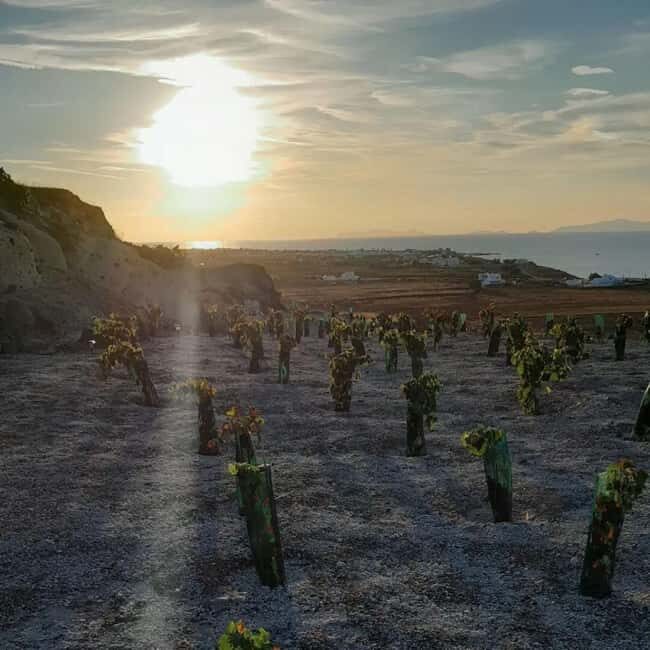
The heart of the visit begins in the black currant vineyard, described as the first organic black currant vineyard in Santorini. This is the kind of crop choice that tells you a lot about the island: black currants thrive here in a way that supports the farm’s whole production chain.
As you walk through the vines, you’re not just being shown plants. You’re learning how the island’s dryness shapes the approach. Black currants are traditionally linked to raisin production, and here that becomes part of the organic story.
What I find useful as a traveler is that the tour gives you a framework. Instead of tasting something and wondering what it is, you learn the steps that turn raw fruit into something shelf-stable and intensely flavored. That’s what makes the final tasting feel earned rather than random.
Your guide also introduces other local varieties of herbs, including caper and thyme. Depending on the season, you might even have the chance to pick some herbs. Even if you don’t pick, you’ll get the sense of what grows where, and you’ll start spotting these plants like you belong there for a day.
Inside the Organic Farm Facilities: Artisanal Processes You Can See
After the vineyard and herb walk, the tour shifts into how the farm works as a production space. You’ll tour the facilities and learn about their artisanal processing methods. The big takeaway is that the farm’s style is practical: it uses traditional steps that fit the environment instead of fighting it.
This is where the “private” part really pays off. In a small group, you can ask specific questions. You can also slow down at moments that interest you: how herbs are handled, how olive oil is treated, why certain products take the form they do.
You also get the best kind of farm context: the connection between raw ingredients and the finished tasting you’ll have later. Many tasting experiences are disconnected from production. Here, you get the production thread all the way through.
And yes, you’re on a farm estate with real farm logic, not a staged show. That’s why this experience works better if you like learning by observation.
The Cave Stop: Natural Herb Drying, Plain and Practical
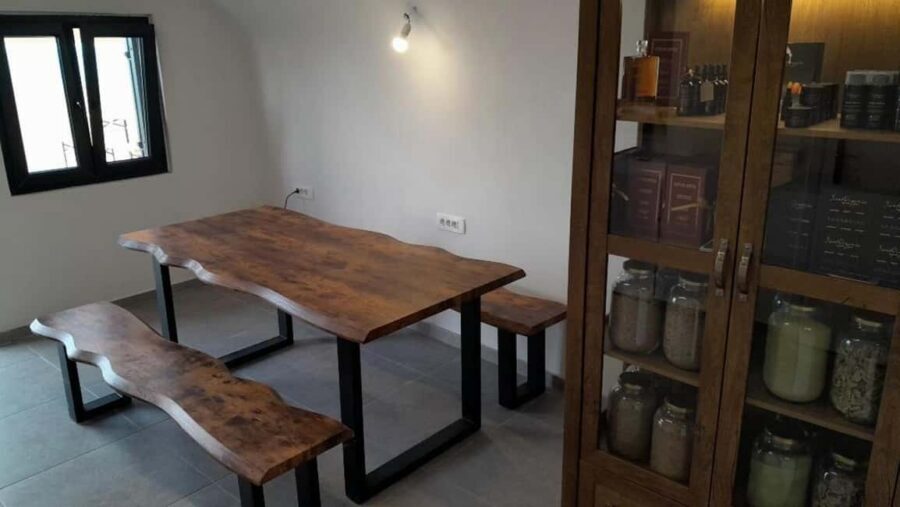
One of the most memorable moments is stepping into a famous cave used traditionally for the natural drying of herbs. This is the kind of detail that turns a farm visit into something you’ll remember a year later.
Why a cave? The tour explains the stages of harvesting and production in the natural herb drying area. You see how the environment supports drying without turning it into a factory job. It’s a reminder that people used to solve food-processing problems with architecture and patience, not electronics.
As you’re moving through this part:
- watch how herbs are handled and staged
- listen for the link between harvesting timing and drying needs
- don’t rush photos—this is more about understanding than framing
If you’re the kind of traveler who loves seeing where flavor comes from, this is your highlight. It’s also a good mental reset from the crowds outside. You’re in a space shaped by everyday work.
Tasting LIQUEUR RAISIN and Herb-Infused Olive Oil
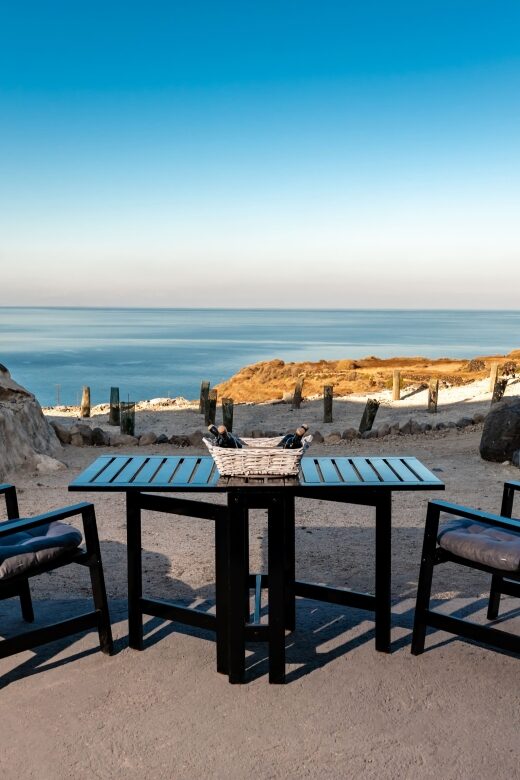
Now for the part your taste buds have been waiting for.
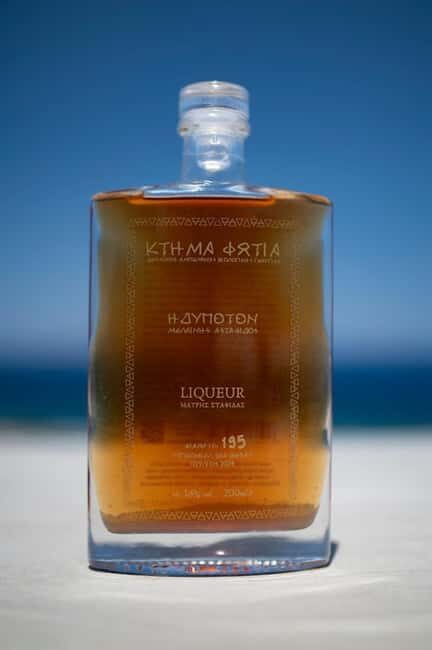
The tour ends with a tasting featuring LIQUEUR RAISIN and infused extra virgin olive oil paired with regional bites. This is not just “try a sample and move on.” It’s a structured tasting that matches what you learned earlier.
Here’s what’s included in the tasting experience:
- LIQUEUR RAISIN tasting
- olive oil tasting, including herb-infused varieties
- organic must cookies
- organic cereals breadstics
- organic no-sugar prickly pear juice
- almond rusks
- an introduction to organic prickly pear seed oil
I like this lineup because it gives you multiple flavor angles:
- sweetness and depth from the black currant/raisin chain (that’s the LIQUEUR RAISIN connection)
- savory aromatics from herb-infused olive oil
- bright, unusual freshness from prickly pear juice
- crunchy textures from breadstics and rusks
Also, since you’re learning the “why” before you taste, you’ll understand what you’re picking up—herb notes, raisin-like depth, and the way different crops behave in processing.
One small practical thought: plan to taste slowly. If you rush through this, you’ll miss the differences your guide is pointing out.
Anhydrous Organic Farming: The Island Logic Behind the Menu
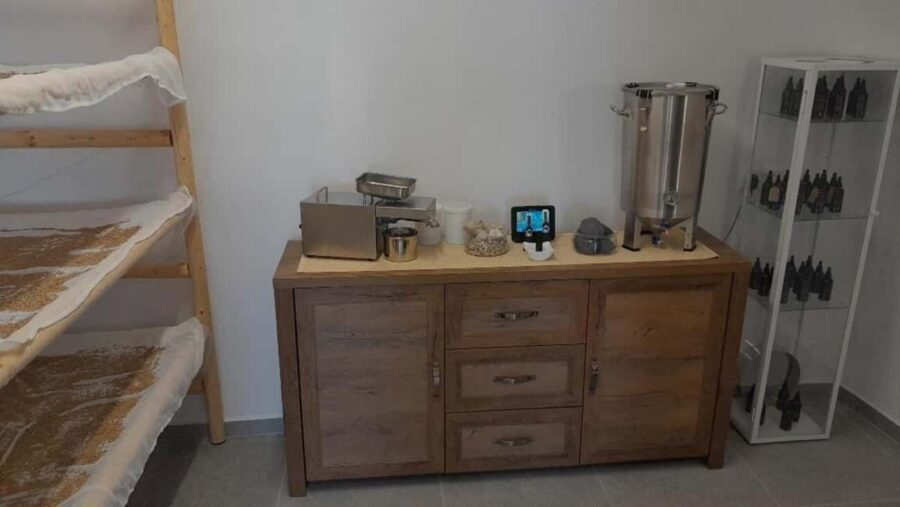
Santorini is famous for its volcanic drama and views. But this tour highlights something less visible: the island’s survival logic. The farm is described as an organic anhydrous farm, which basically means the focus isn’t on water-hungry crops. It’s about thriving with limited moisture and choosing crops and processes that work.
That’s why your tour revolves around:
- black currants and raisins
- herbs suited to dry conditions, including thyme and capers
- prickly pear products
- olive oil with herb infusions
This context makes your Santorini experience feel more honest. It connects the food to the place, instead of treating food like a generic souvenir. And if you’ve ever felt like Santorini is too commercial, this kind of visit gives you a different point of view—more how it used to be, and how people still make it work.
It’s also a reminder that organic farming isn’t only about methods. It’s also about crop selection, timing, and patience in a specific climate.
Price and Value for a 2-Hour Private Tour
At $56 per person for about 2 hours, you’re paying for three things:
1) a private guided visit (not a big bus group)
2) access to the farm facilities and the cave production area
3) a tasting that includes multiple products, not just one small sample
For many short experiences in Santorini, you pay similar money for a view, a quick walk, and maybe one drink. Here, you get a full “learn → see → taste” arc, plus the chance to meet the people behind the operation.
There’s also value in the specificity. You’re not doing a general olive oil tasting with generic explanations. You’re tasting products tied to a particular estate’s crops and processing methods. That’s harder to get elsewhere.
Could it feel expensive? If you dislike tastings or don’t care about agricultural processes, maybe. But if you want something quieter and more textured than the standard island circuit, this price feels fair for the time and access you get.
Who Should Book This Farm Visit (and Who Might Skip It)
This tour is best for you if:
- you like food that has a story
- you enjoy small-group settings and Q&A with your guide
- you’re curious about how Santorini works beyond the postcard scenes
- you’re happy with moderate walking on cobblestones and around farm areas
- you want to taste multiple products tied to the island’s dry-climate agriculture
You might want to skip it if you:
- use a wheelchair or need mobility-friendly routes (it’s not suitable for wheelchair users)
- have low level of fitness or health constraints related to the walking involved
- have heart problems, epilepsy, or visual impairments (not suitable as listed)
- are traveling with someone who needs easy restroom access (WC/toilets facilities aren’t included)
And one more honest consideration: if you’re expecting a typical lush “vegetable farm,” you’ll be surprised. This place leans into herbs, prickly pears, and currants because that’s what the island can support.
My Booking Checklist Before You Go
If you book this, do a quick prep scan:
- wear closed-toe shoes
- bring a sun hat
- plan for some uneven ground
- set aside time for tasting at the end (don’t schedule a demanding dinner right after)
- remember that smoking and alcohol and drugs are not allowed during the tour
If you’re coordinating ahead of time, you’ll communicate via email with the estate ([email protected]). That’s also helpful if you want to confirm the best timing for your day.
Should You Book Santorganics Organic Farm?
Book it if you want a Santorini experience that’s slower, smaller, and more grounded in how people actually grow and process food on the island. The black currant vineyard, the herb-drying cave, and the tastings—especially LIQUEUR RAISIN and herb-infused olive oil—make it feel like a complete story, not a quick stop.
Skip it if you need a very low-walking itinerary or you strongly prefer the typical tour comforts (like on-site toilets). Also skip it if you only want big-city sightseeing vibes. This is about farm work, crop choices, and craft.
If you fit the first group, this is exactly the kind of tour that changes your understanding of Santorini.
FAQ
How long is the Santorini private organic farm visit?
It lasts about 2 hours.
Is this tour private?
Yes. It’s a private group experience.
What languages is the guide available in?
The live guide speaks Greek and English.
What tastings are included?
The tasting includes LIQUEUR RAISIN and olive oil, plus organic must cookies, organic cereals breadstics, organic no-sugar prickly pear juice, and almond rusks, along with an introduction to organic prickly pear seed oil.
Are hotel pickup and drop-off included?
No. Hotel pickup and drop-off are not included.
Are there toilets on site?
WC/toilets facilities are not included.
Is it suitable for wheelchair users or limited mobility?
No. It’s not suitable for wheelchair users and is listed as not suitable for people with mobility impairments.
What should I not do during the tour?
Smoking is not allowed, and alcohol and drugs are not allowed.
]]>What I like most is how the session is built around comfort and control: you get a personal assistant to help make the dress fly, and an experienced photographer to guide angles and movement. I also like the pacing—just 1 hour—so you’re not wasting your vacation with an all-day production.
One thing to consider: you’ll get your best results if you’re comfortable without mobility aids. This experience isn’t suitable for people with mobility impairments, and it also requires you to keep your kit light (no large bags).
Key points you should know before you go
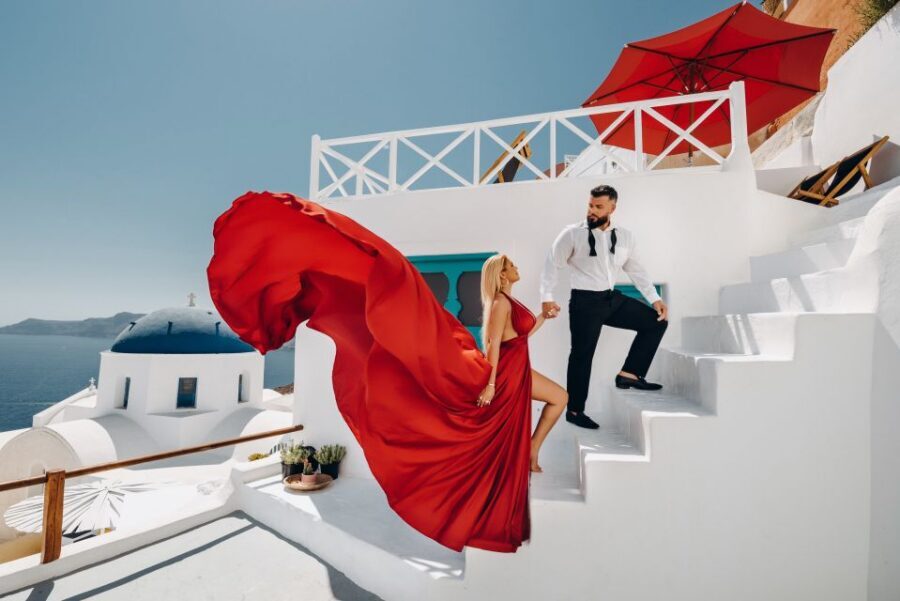
- Assistant-managed dress lift: you don’t struggle with the train; help is part of the plan
- 15–20 fully edited photos: a clear deliverable after a short shoot window
- Fast first delivery (7–14 days): you’ll see images sooner, then get the rest later
- Choose your look: one plain-color dress is included; cloud and glitter cost extra
- Santorini variety in the background: shoots can be on the seashore, in urban-style spots, or sandy areas
- Private, language-supported team: hosts can communicate in English, Ukrainian, and Russian
A one-hour photoshoot that actually feels like vacation time
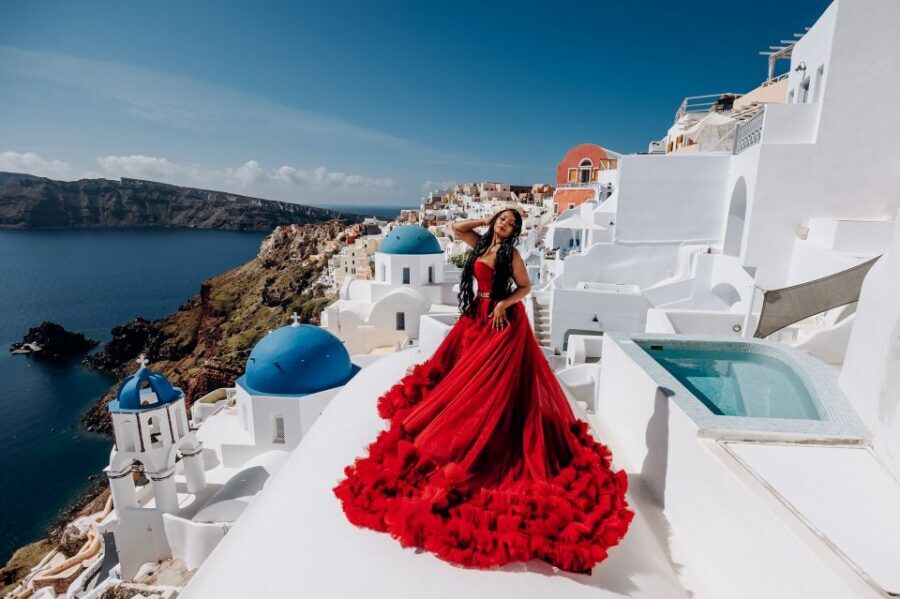
This is a private session designed to fit into a real travel schedule. You’ll spend one focused hour shooting, not three hours waiting, and not half a day doing wardrobe logistics you didn’t ask for.
In practice, that means the team can move fast. You’ll get guidance on where to stand, how to turn, and how to work the dress train without tripping over your own drama. And since it’s private, you’re not sharing attention with a big group.
The vibe is also noticeably celebratory. A flying dress shoot is less about “formal portrait” and more about feeling powerful, light, and photogenic in motion—like your outfit is doing the work while you look effortless.
How the flying dress works (and why the assistant matters)
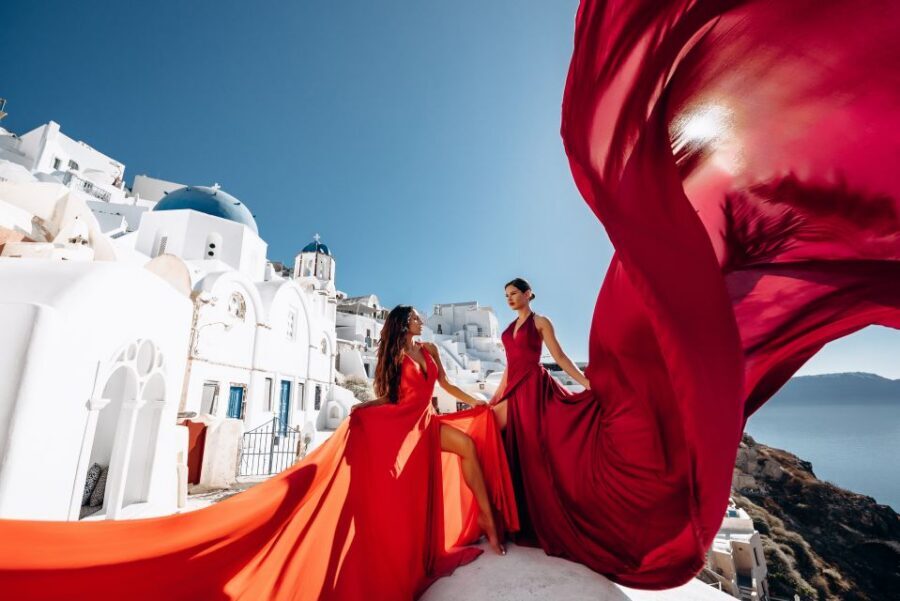
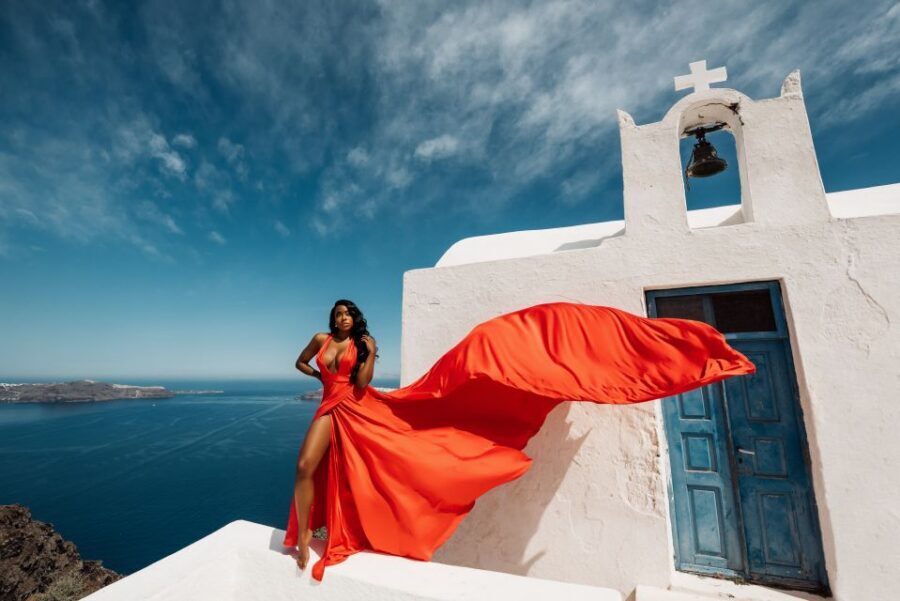
The core idea is simple: you’re in a flowing dress with a long, airy train, and a team member helps you get that lifted “floating” effect. What you should know is that the assistant isn’t just standing there. They’re there to help you control the dress so the lift looks intentional, not accidental.
That’s a big deal if you want photos that look like the dress is catching a breeze, even when you’re not exactly sure how to pose. With the assistant guiding the dress fly moments, your job becomes mostly expression and posture.
It also helps with comfort. Instead of you spending the session fighting fabric, you can focus on breathing, relaxing your shoulders, and finding angles that flatter you fast. One review specifically praised the photographer and assistant for making the session feel smooth and comfortable, which matches what this kind of production requires.
Where you’ll shoot in Santorini: pick your mood, not just your landmark
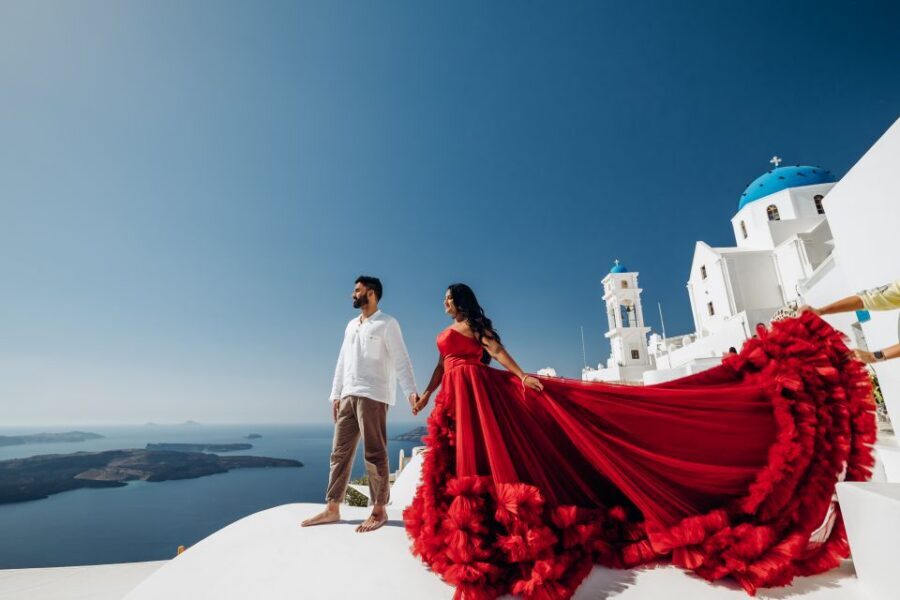
Santorini is all about variety in a small area. This session can take place in different locations on the island, depending on what look you want.
You can expect options like:
- Urban-style backdrops for crisp, styled portraits
- Seashore settings when you want a lighter, breezier feel
- Sandy areas if you want that wide-open, romantic look with fewer visual distractions
The team also works with both popular tourist spots and less common scenery. The practical win here is not chasing a checklist; it’s choosing a background that matches the emotion of the photo—wedding announcement energy, vacation glam, or something softer and more cinematic.
Because you’re guided on successful angles and posing, you don’t have to figure out the best corner yourself. You’re basically borrowing the team’s sense of composition for one hour.
The dress situation: what’s included, what costs extra
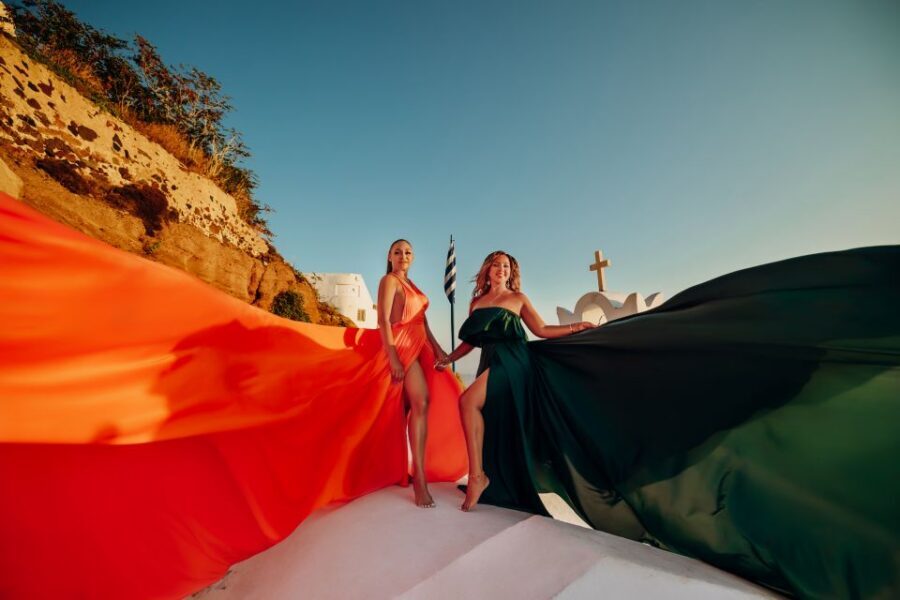
You get one dress in a solid plain color as part of the session. The dress is the heart of the whole concept, and the fact that it’s provided (with a personal assistant) saves you a lot of hassle compared with DIY portrait shoots.
Two styles are specifically called out as extra: cloud and glitter dresses. If you’re imagining a more dramatic, sparkle-heavy look, plan for that added cost.
You’ll also work with consultants who help select locations and create the final image using professional makeup and accessories. Here’s the key point for your budgeting and timing: makeup and hairstyle are listed as not included, so even if the team helps with styling planning, you should expect to handle your own hair and basic makeup unless you arrange it separately.
Posing guidance you’ll actually use in the moment
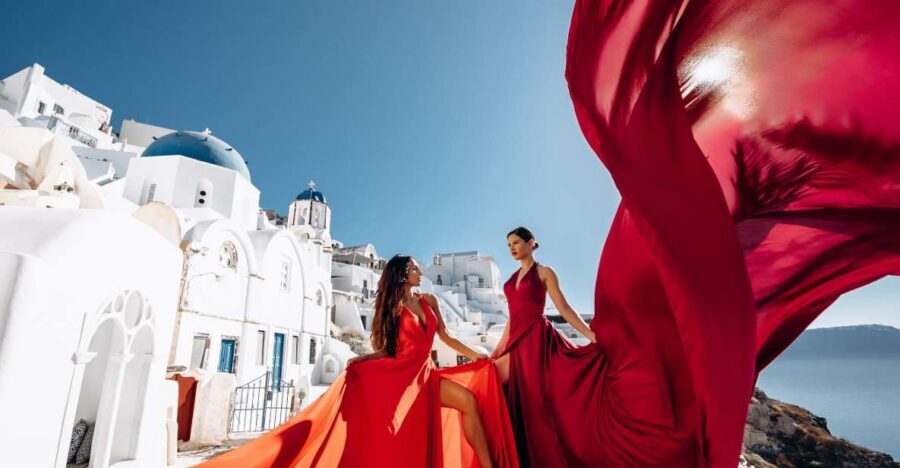
Even the prettiest background won’t help if you don’t know what to do with your hands, your chin, or the train. The photographer’s job here is to capture your shape and the dress motion with angles that look good on camera—and to guide your posing techniques so you don’t burn time testing poses.
In reviews tied to this experience, names like Jenny (with her assistant) and Eugenia plus Sophie come up as professionals who made people feel comfortable and confident during the session. That lines up with what you want from this type of shoot: a calm leader who can give you clear cues and keep things fun, not stiff.
A tip that fits this style: wear something that helps you feel stable and upright. It’s easier to look elegant when your posture is relaxed and your feet aren’t fighting uncomfortable shoes.
Photo delivery timeline: fast first results, full edits later
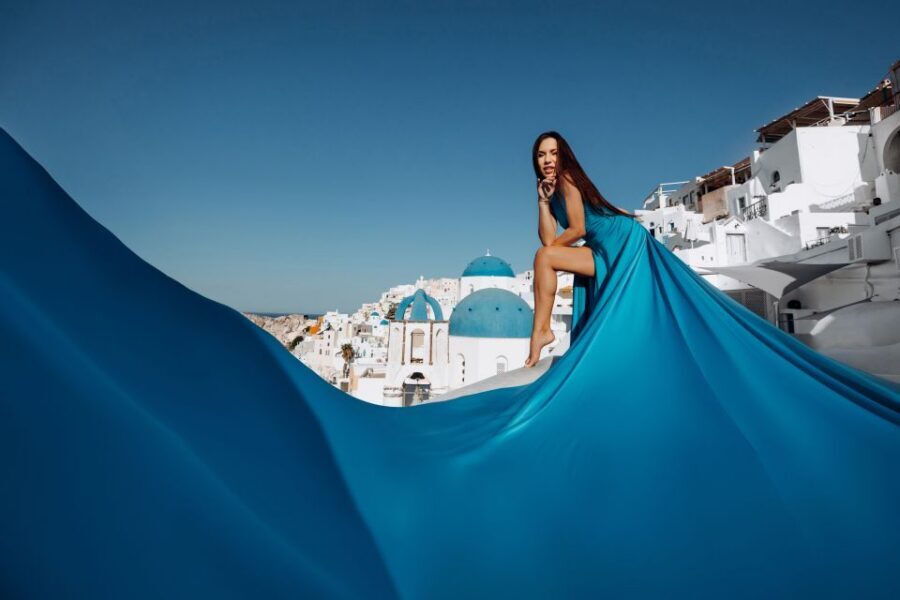
Your photo timeline is nicely structured:
- First photos within 7–14 days
- All edited photos within 35–45 days
- Total delivered is typically 15–20 full edited photos
This matters because you can use the first set for quick sharing or for printing if you’re doing something like a wedding announcement. Then you get the full set later for longer-term keepsakes.
Expect the shoot to be high-impact but still quick, which is why the edits take time afterward. The deliverable is clear: you’re not getting raw files and hoping the rest happens later. You get edited photos and a defined turnaround window.
Price and value: is $279 per person worth it?
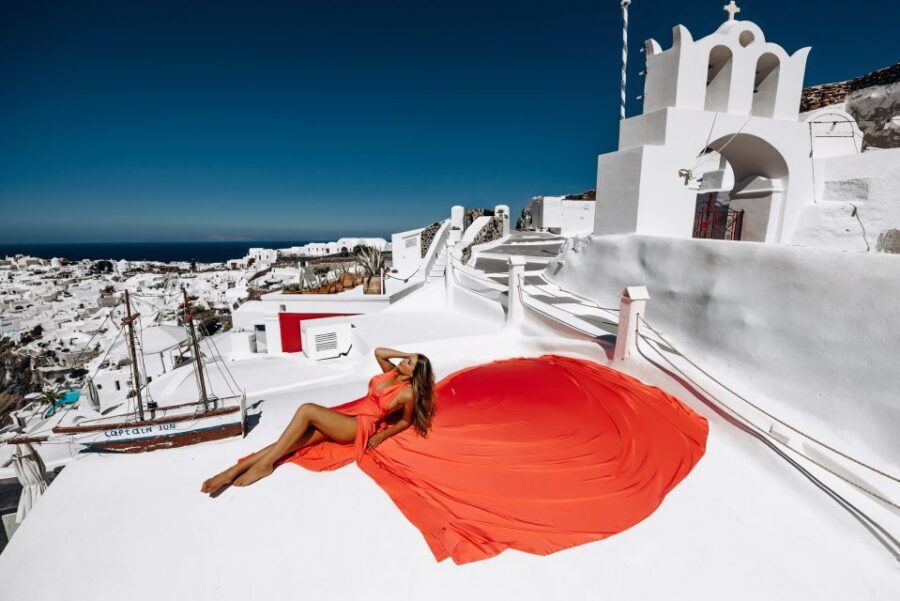
At $279 per person for about one hour, you’re paying for three things:
1) a private, guided photo production (not a casual phone shoot)
2) a specialty wardrobe effect (the dress train “flying” moment)
3) editing work that results in 15–20 finished photos
If you were to build this yourself in Santorini—booking a photographer, figuring out a model-style dress and getting the “float” effect—it would likely cost more in time and coordination. Here, the team handles the concept. You show up with the right basics, then get photographed end-to-end.
What could affect value for you: if you want a cloud or glitter dress, that’s extra. Also, since makeup and hairstyle aren’t included, you might need to plan that cost separately if you want a polished look that matches your photos.
Still, for a one-hour specialty shoot with edited deliverables and a built-in assistant, the pricing is relatively straightforward: you’re paying for a controlled result, not just “time with a camera.”
What to bring so the session stays easy
Bring practical items that help you handle the Greek sun and comfort needs:
- Comfortable shoes
- Sunglasses
- Towel
- Sunscreen
- Water
The “comfortable shoes” part isn’t a minor detail. You’ll be standing, turning, and moving to hit angles, and you’ll want stability while the dress train is in play.
What not to bring:
- Luggage or large bags
- Food
- Alcohol and drugs
This is partly for safety and partly because you’ll likely be moving around to shooting spots. Light travel keeps everyone moving and keeps your session on schedule.
Timing and meeting point: plan for a location-based start

The meeting point depends on where you end up shooting. The team contacts you after booking to coordinate the details.
You’ll want to build your day around flexibility. Since the shoot location can vary, don’t stack this right between two tight reservations. Give yourself a buffer so you can arrive calm and ready.
Also note the first image delivery timing: you’ll see early photos within 1–14 days, then the final set in 30–45 days. That’s a long-ish window, but you get a taste early, which helps.
Who this flying dress shoot suits best
This experience is a great match if you want:
- a wedding announcement-style look
- dramatic vacation photos that feel like a concept shoot
- a guided, private session where someone else manages the tricky parts
It’s also ideal if you’re the type who wants results without spending hours planning. The team helps with dress selection, shooting locations, and posing direction.
It may not suit you if:
- you need mobility accommodations (not suitable for people with mobility impairments)
- you want a completely DIY experience with no assistant help
- you don’t like quick, structured direction (this shoot works best when you follow cues)
Should you book this Santorini flying dress photoshoot?
Book it if you want one hour of guided, high-impact photos with a specialty effect (the dress fly) and clear edited deliverables. The assistant support, photographer direction, and private setting are the main reasons this feels worth it.
Skip it or reconsider if you’re budget-sensitive about extras like cloud or glitter dresses, or if you don’t plan to handle your own hair and makeup. Since transportation to the meeting point isn’t included, factor that into your overall convenience planning too.
If you like photos that look intentional—wind-in-the-train, styled poses, and that white-and-blue Santorini backdrop—this is a fun, practical way to create images you’ll actually want to keep.
FAQ
How long is the Santorini private flying dress photoshoot?
The photoshoot lasts 1 hour.
How many photos will I receive?
You’ll receive 15–20 full edited photos.
When do I get the first photos, and when are all edits finished?
You’ll receive the first edited photos within 7–14 days, and all photos are edited within 35–45 days.
Is makeup and hairstyle included?
No. Make up and hairstyle are listed as not included.
What dress is included, and what costs extra?
You get 1 dress in a whole plain color. Cloud and glitter dresses are extra.
Is transportation to the meeting point included?
No. Transportation to the meet point isn’t included.
What languages are available with the host or greeter?
The host or greeter speaks English, Ukrainian, and Russian.
]]>What I especially like is how the experience focuses on comfort and getting real, natural-looking results. The team (Jessica Mocanu with Nikos) helps you feel confident, even if you’re not into heights or you need a calmer location plan. If you want transportation included for every option, check which duration you pick, since pick-up is not included in the shortest route.
Key Points to Know Before You Go
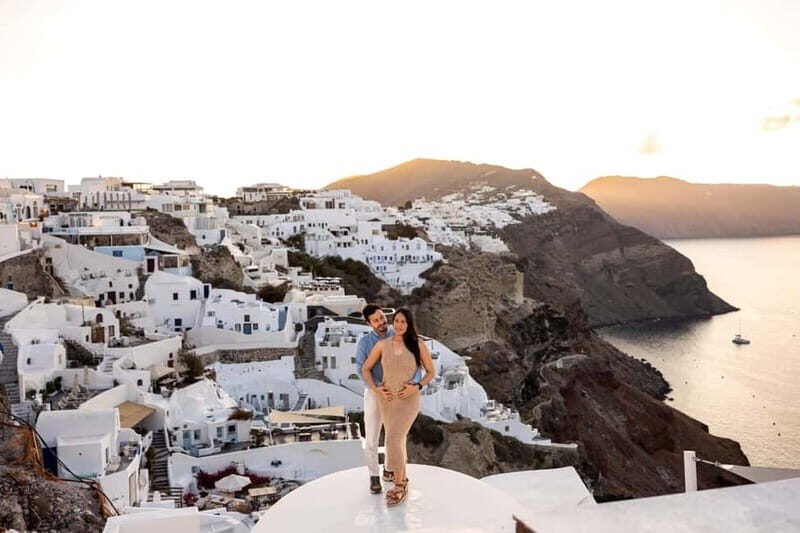
- Oia-first for the 1-hour option, so you get classic Santorini vibes fast
- 3 locations in about 3 hours: Oia, Imerovigli, and Black Sand Beach
- 70–100 professionally edited photos (color correction included) delivered via Dropbox in about a week to ten days
- Expert posing and angle help so you look your best without freezing for hours
- Private group format, with listed spots depending on the selected option
- Bring comfortable shoes and water, because you’ll do real walking and stairs
A Celebrity-Style Photoshoot in Oia, Without the Stress
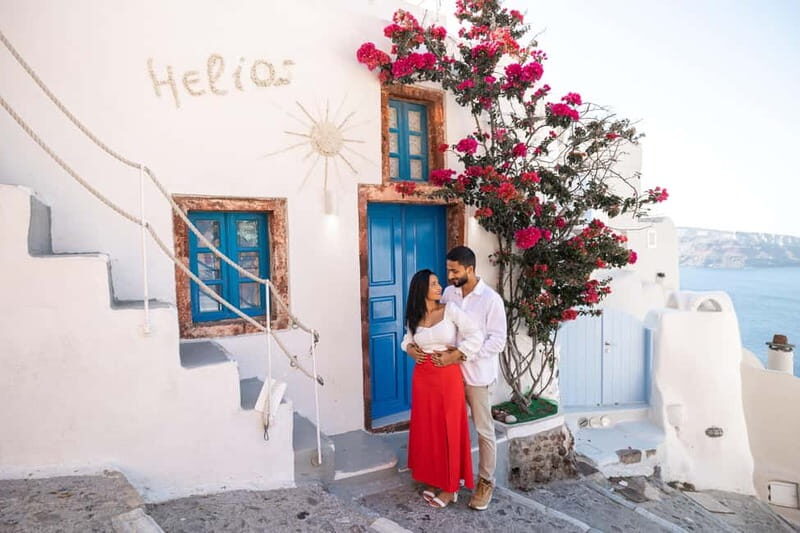
Santorini photos can look effortless. Up close, they’re usually not. This kind of private shoot is built to make the hard part invisible: you focus on the moment, and the photographer handles the angles, body position, and timing.
If you want that signature look—whitewashed buildings, blue-domed church scenes, and the Aegean in the background—this tour gives you a structured way to get there. Instead of spending your whole day chasing the perfect corner, you get directed to the right spots and guided to work with the light.
The vibe is personal. You can come as a solo traveler, a couple, or a family, and the flow is designed around your group rather than a crowded, one-size-fits-all group stop.
Price and What You’re Actually Buying for $130
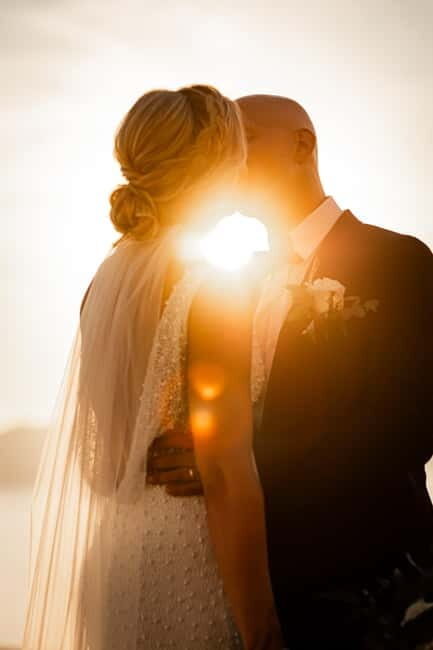
The price starts around $130 per person, depending on the option you choose and available start times. For many people, the value is not just the photos—it’s saving time and removing guesswork.
You’re paying for:
- A professional photographer (Jessica Mocanu) who understands composition and lighting
- On-the-spot direction for poses and positioning
- A set number of edited photos (70 for the shorter option up to 100 for the longer one)
- Color correction, delivered digitally via Dropbox about 1–10 days after the shoot
One cost check to keep in mind: retouched pictures like slimming or smooth-skin edits are not included. So if your ideal photo is heavy on that kind of retouching, you’ll need to do it yourself after delivery or find another service.
Also, if you choose the 1-hour option, transportation isn’t included. The operator does include pickup and drop-off for the 3-hour tour, so that can make a noticeable difference in overall convenience.
The 1-Hour Option: Classic Oia Photos, Fast
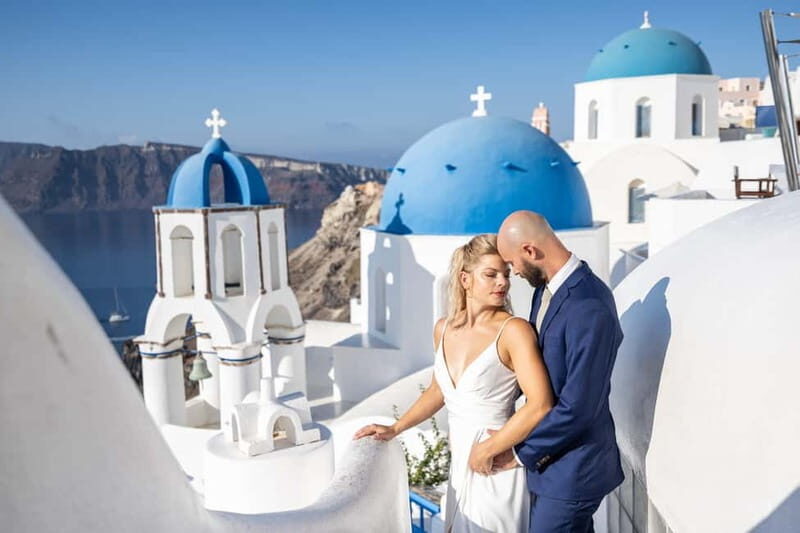
The short session is ideal if you have limited time in Santorini and want the headline images. Your shoot happens in Oia, a village that’s basically designed for photos, especially around white buildings and the caldera-side views.
This is a good fit if:
- You’re tight on time and don’t want a full half-day plan
- You’re happy focusing on the most iconic area rather than adding multiple stops
- You want photos without lots of travel between viewpoints
Expect professional guidance that’s practical, not just aesthetic. You’ll get help with where to stand, how to angle your body, and how to make your expressions look natural. The goal is that you leave with photos that feel like you, not like you were performing.
The included package for the 1-hour route is 70 professionally edited photos with color correction. You’ll also get guidance around the big visual themes—whitewashed houses and that bright blue character that makes Santorini instantly recognizable.
The 3-Hour Route: Oia, Imerovigli, and Black Sand Beach
If you want variety, the 3-hour package is where the tour starts to feel like a full mini-adventure. You’ll hit three different photo settings, which helps your final set of images feel more like a story than a repeat of the same view.
The stops are built around contrasting scenery:
- Oia: for iconic village scenes and that classic postcard look
- Imerovigli: for dramatic caldera views and a calmer atmosphere
- Black Sand Beach: for a volcanic backdrop that looks very different from the white-and-blue streets
Between stops, there are short van transfers, which matters because it cuts down on dead time. In a place like Santorini, “dead time” is basically the hours you lose to getting from one viewpoint to the next.
The 3-hour package includes:
- Convenient pick-up and drop-off
- Up to 100 professionally edited photos
- Full posing and angle guidance throughout
- A chance to capture multiple looks across the day
One practical upside: you can often change outfits between locations. That helps if you brought two outfits and want variety without turning the shoot into a stressful wardrobe battle.
Why the Posing Help Feels Different (Jessica and the Comfort Factor)
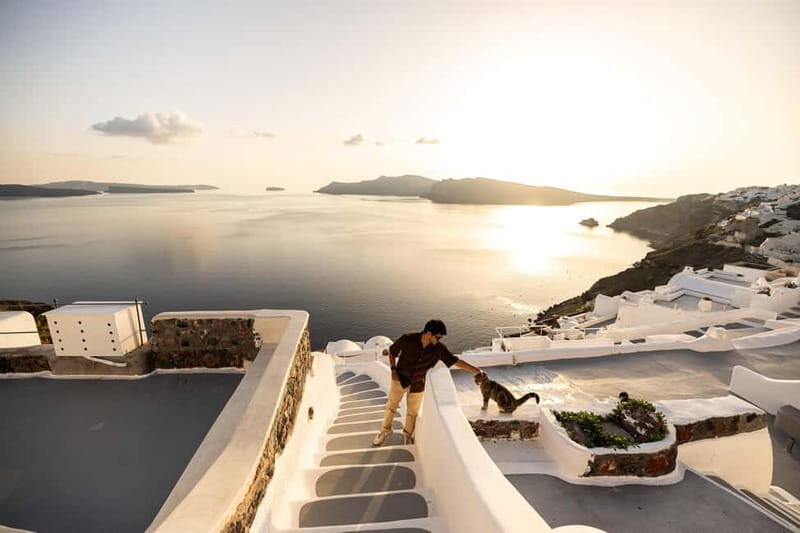
The best thing about this tour is the way posing assistance is handled. You’re not left standing there hoping the photographer reads your mind. You get direct guidance to help you find flattering angles quickly.
That’s especially important in Santorini. Light changes fast, crowds can be unpredictable, and viewpoints can feel exposed. If you’re sensitive to heights or you’re more comfortable with a calmer pace, this team is set up to choose locations that work for you.
In real terms, it means you can be yourself while still getting great results. The photos aim for a natural feel, not stiff poses where you look like you were trying to follow instructions instead of enjoying the moment.
If you want a “celebrity” outcome, you still need to feel relaxed. This shoot is designed around that, with positioning help and comfort checks as you move between spots.
Photos, Videos, and Delivery: What You’ll Receive
Here’s the part that really matters after the shoot: what lands in your hands.
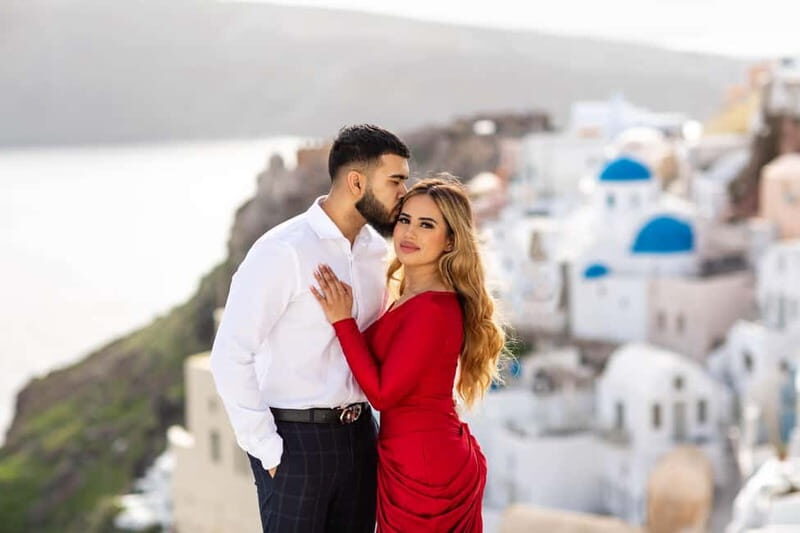
You’ll receive 70 to 100 high-resolution digital photos, depending on whether you book the 1-hour or 3-hour option. The photos include professional edits with color correction, and delivery happens through Dropbox about 1 week to 10 days after your session.
You’ll also get 2–3 videos shot with your phone on the day. That’s handy for reels and quick memories without dragging a separate camera into every moment.
One note on expectations: the photos are professionally edited, but retouching types like slimming or smooth skin are explicitly not included. So plan on celebrating your real look rather than relying on heavy beauty retouching.
Itinerary Flow: Pickup, Van Hops, and Drop-Off
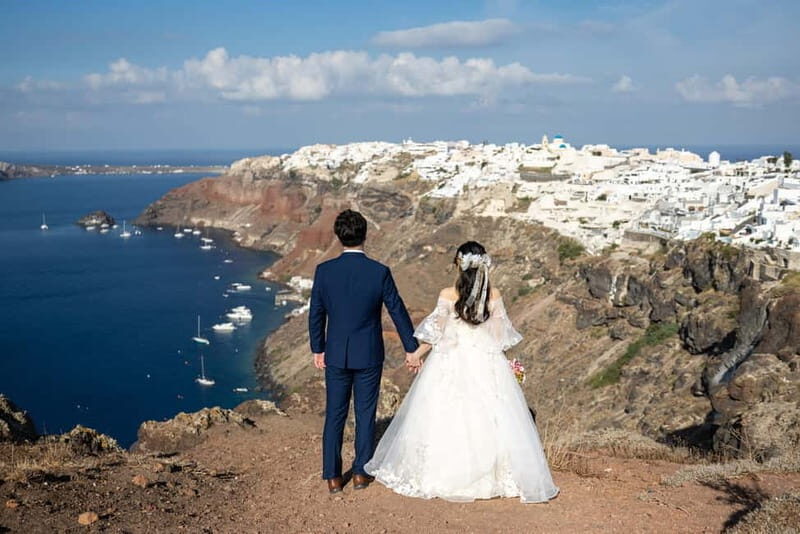
The tour is structured to keep you moving without turning it into a long logistics headache. There are short transfers (van time is listed in blocks), and then focused shooting time at each stop.
For most visitors, pickup can be arranged from any accessible by car area in Santorini. If you’re arriving on a cruise ship, the meeting point is at the top of the Cable Cars.
Drop-off details depend on the option and route. The operator lists Thera and Oia Bus Terminal as drop-off locations for the multi-stop format. That’s useful to know if you’re planning your next bus ride, dinner area, or hotel walk after the shoot.
Because the route includes both walking and viewpoint time, timing matters. If you’re trying to fit this between other bookings, I’d schedule it with a cushion before sunset plans or dinner reservations.
Practical Stuff: Shoes, Sun, Water, and Stairs
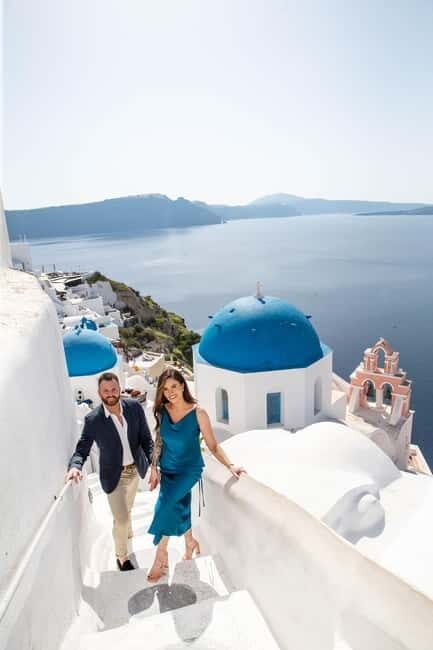
Santorini can punish bad footwear. This tour includes walking and stairs, especially around the classic Oia viewpoints. Wear comfortable shoes that handle uneven stone and steps.
Bring:
- Water
- Sunglasses (if you’re sensitive to sunlight)
- A small layer if you’re prone to feeling chilly near the water in the evening
Also think about comfort with camera-ready locations. Even with the best photographer, if you’re rushed, you’ll tense up. The best photos usually come from you being able to breathe, move, and follow direction without fighting the terrain.
If you’re doing the 3-hour version, it’s smart to plan for more total walking across three settings. The van helps, but you still need your feet ready.
Best For Who: Couples, Solo Travelers, and Families
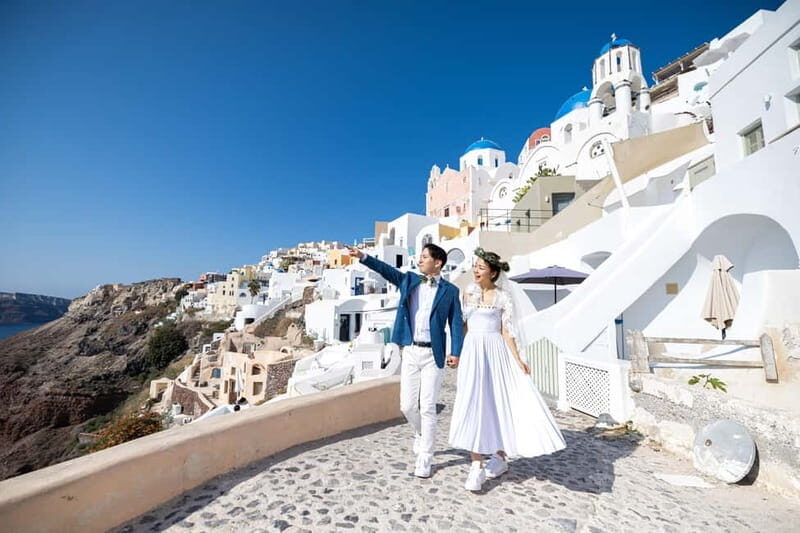
This is one of those activities that works for lots of traveler types, because it’s customizable without feeling complicated.
You’ll likely love it if you’re:
- A couple who wants photos that look like your relationship, not a staged photo booth
- A solo traveler who wants images that actually show you, not just phone selfies from across the street
- A family that wants a way to get everyone in the frame with less hassle
Families can also benefit from having clear direction. When everyone knows what they should do next—stand here, look here, angle this way—you save time and avoid the chaos that happens when children or older relatives get bored.
For couples, the big win is the combination of background variety and posing guidance. You get more than one mood, and you don’t lose the connection while trying to manage the logistics.
Who Should Think Twice
This tour is built for photos, not for sightseeing lectures. If you want a long, slow day with lots of wandering on your own, you may find the schedule too structured.
Also, if you expect heavy glam retouching like slimming or airbrushing skin, remember that retouched pictures are not included. You’ll get professional edits and color correction, but the specific beauty retouching you might be imagining isn’t part of the package.
Finally, if you absolutely hate stairs and exposed viewpoints, plan your expectations carefully. You can request comfort-focused locations, but the area is still part of Santorini’s terrain.
Should You Book This Santorini Photo Tour?
Book this tour if you want high-quality edited photos without spending hours figuring out the best angles on your own. The price makes sense when you value time, expertise, and the convenience of getting directed through iconic spots like Oia and Imerovigli, plus a volcanic contrast at Black Sand Beach.
Skip it (or choose a different style) if you prefer to control everything yourself, or if you’re seeking heavy beauty retouching. Also consider the practicality: you’ll need comfortable shoes and you’ll be walking and climbing some stairs.
If you’re the type who wants the classic Santorini look but also wants it to feel natural and not forced, this is a smart way to spend a few hours—and it’s one of the easier ways to leave the island with photos you’ll actually want to print.
FAQ
How many photos will I receive?
You’ll receive between 70 and 100 high-resolution digital photos, depending on which option you select.
How are the photos delivered and when will I get them?
The photos are professionally edited with color correction and delivered via Dropbox. Delivery is listed as about 1 week to 10 days after the shoot.
Do I get any videos?
Yes. The package includes 2–3 videos with your phone on the day.
Where does the 1-hour photo option take place?
The 1-hour option is in the village of Oia.
What locations are included in the 3-hour photo option?
The 3-hour option includes up to three locations: Oia, Imerovigli, and Black Sand Beach.
Is transportation included?
For the 1-hour option, transportation is not included. For the 3-hour option, pickup and drop-off transportation is included.
Where do cruise ship passengers meet?
For cruise ship travelers, the meeting point is at the top of the Cable Cars.
What languages are available during the tour?
The live tour guide is available in English, Greek, Polish, and Romanian.
What should I bring?
Bring comfortable shoes, sunglasses (especially if you’re sensitive to sunlight), and water.
Is cancellation free?
Yes. Free cancellation is available if you cancel up to 24 hours in advance for a full refund.
]]>I love the air-conditioned mini van for keeping your energy for walking and photos. I also like the way the schedule gives you real time at each landmark, with photo stops plus stories from your English-speaking driver-guide as you travel between viewpoints.
One thing to weigh: six hours goes quickly on a classic loop, and Art Space Winery admission is not included (20–30 euros per person). Meals aren’t included either, so plan for food on your own after the tour.
Key things that make this Santorini private half-day work
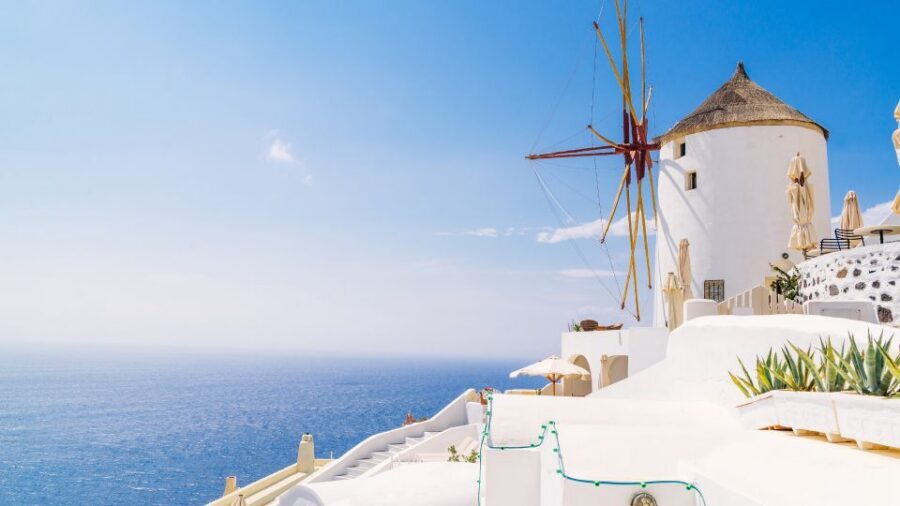
- A true private format with a driver-guide who can adapt to what you care about
- Comfort first: air-conditioned mini van, hotel pickup and drop-off, water, and free Wi‑Fi
- Best-of variety in one loop: Oia and Fira views, plus Profitis Ilias and Pyrgos
- Perissa Black Beach break for relaxing and optional water sports like snorkeling or kayaking
- Wine tasting with volcanic grapes at Art Space Winery Museum Art Gallery
- Frequent photo opportunities from viewpoints that make the caldera look unreal
Why a private Best of Santorini tour feels worth the money
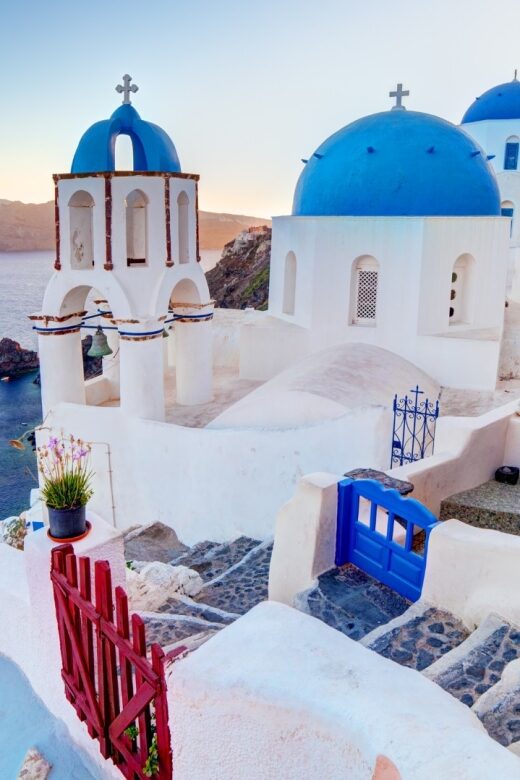
Santorini is gorgeous, but it’s also a logistical challenge. Streets are narrow, parking is awkward, and viewpoints are scattered across the island. Paying for a private tour with hotel pickup and drop-off helps you skip a lot of friction and get straight to the places that make Santorini famous.
At $259 per person for a 6-hour private outing, you’re not just paying for a ride. You’re paying for someone local—your English-speaking driver-guide—to translate the scenery into context. That means you’re not just snapping photos at random stops. You’re understanding why Oia sits where it does, what makes volcanic soil matter for wine, and how the island’s layout shapes the views you’ll see.
There’s also a comfort angle that matters in Santorini. You’ll move in a luxury air-conditioned mini van, which is a big deal when you’ve got walking time at cliffside villages. When you’re done sightseeing, you’re not cooked. You can still find a meal, wander a little, and enjoy the evening without feeling like you’ve survived transportation.
The 6-hour route: Oia, Fira, Profitis Ilias, Pyrgos, Perissa Black Beach, Art Space Winery
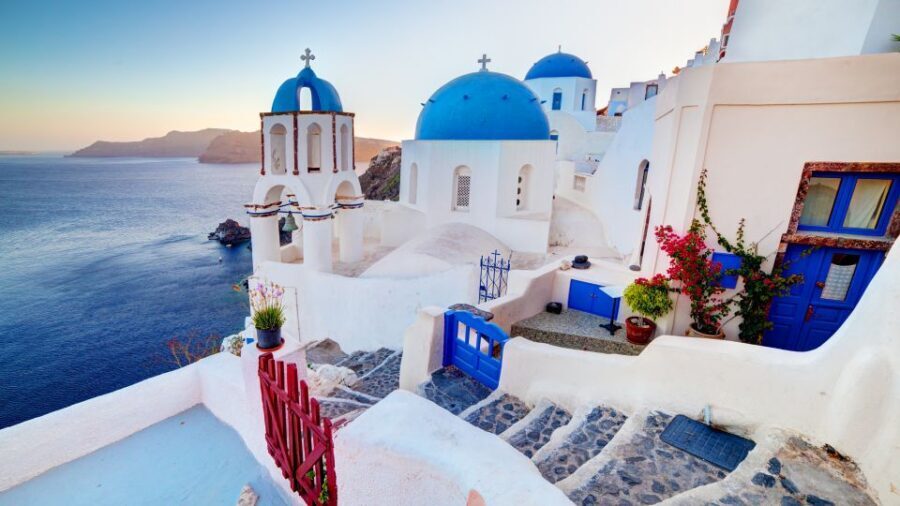
This tour is designed as a compact “greatest hits” loop, but it avoids the worst kind of sightseeing—endless rushing with zero time to look. The plan cycles through five major areas and includes one longer “experience” stop: wine tasting.
Here’s how the day is paced:
- Oia (70 min) for caldera views and the famous blue-domed look
- Fira (60 min) for cliffside alleys and cathedral/museum area time
- Profitis Ilias (20 min) for the highest convent viewpoint (567 m)
- Pyrgos (30 min) for the old island capital vibe and medieval lanes
- Perissa Black Beach (45 min) for a real break by the water
- Art Space Winery Museum Art Gallery (60 min) for volcanic-soil tasting
Six hours sounds short because the island’s major sites are far more dramatic than “normal” sightseeing. Still, this schedule makes sense: you get multiple viewpoints, then you get a break at a beach, then you finish with the kind of stop that turns the day from sightseeing into a memory.
Practical tip: since you’ll be walking in village lanes and along viewpoint areas, comfortable walking shoes are a must. And if you’re sensitive to heat, plan for sunscreen and water planning around your stops (water is provided, but you’ll still want to protect yourself).
Oia caldera views and blue domes: 70 minutes that can make or break the day
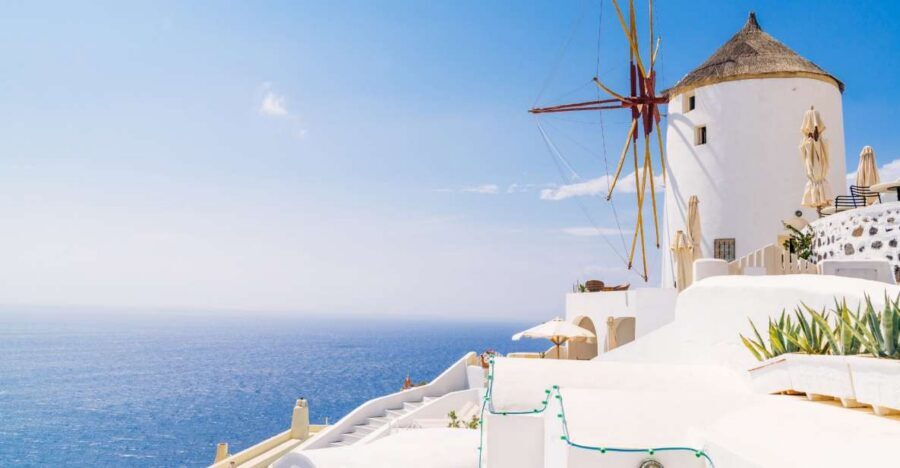
Oia is the name everyone knows for a reason. This is where you’ll get the iconic whitewashed streets and the dramatic caldera backdrop, plus a strong photo window built into the schedule.
You’ll focus on:
- The caldera view from prime viewpoints
- The iconic Blue Domes area you’ll have time to photograph
- Time to wander the shopping alleys with local brands, handmade goods, and art galleries
Seventy minutes is a sweet spot. It’s long enough to take photos, reposition yourself for better angles, and still browse without feeling rushed. The tradeoff is that Oia is busy in general, and your best shots may require a little patience and early movement. Also, expect hills and uneven stone lanes once you leave the widest streets.
If you care about photos, this is the stop to treat as your priority. Don’t waste your first minutes waiting around. Start with the highest-impact viewpoints, then use the shopping alley time as your pace reset.
Fira: cliffside alley wandering, museum/cathedral area, and market energy
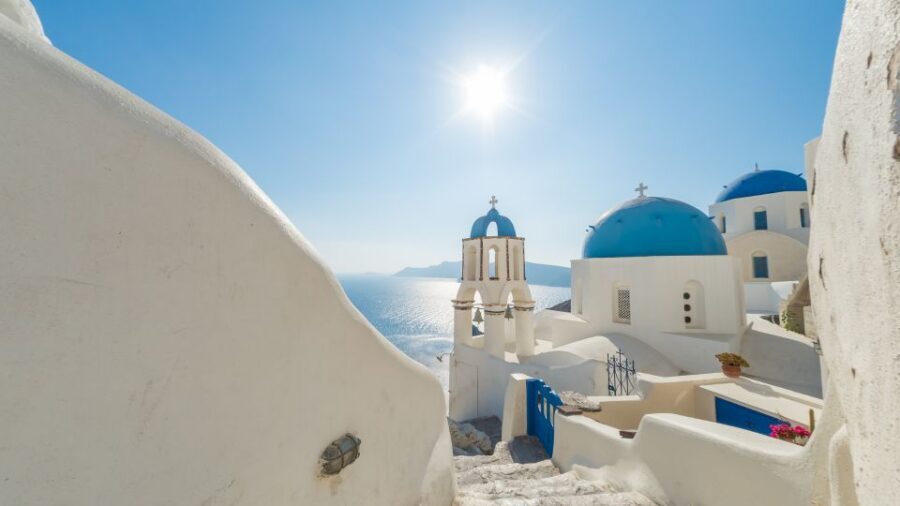
After Oia, you move to Fira, the island’s capital. This stop is about energy and variety: you’ll get a mix of viewpoints and street-level wandering in less time than Oia.
In Fira you’ll:
- Spend about 60 minutes strolling the little alleys
- Pass by the Prehistoric Thira Museum area
- See both the Orthodox and Catholic Cathedral
- Reach the caldera edge for more of that volcano-and-cliffs view
Fira also has the island’s larger market scene, plus plenty of restaurants, tavernas, cafes, and nightclubs. That matters because it makes Fira feel like a living place, not a theme park. Even if you don’t plan to go out at night, you’ll appreciate the sense of everyday life.
The only consideration: because time is tight, you’ll want to decide how much you want to focus on streets versus viewpoints. If your main goal is scenery, aim for the caldera-facing areas first, then use the market streets as a second act.
Profitis Ilias (567 m) and Pyrgos: two viewpoints that add depth to the Santorini story
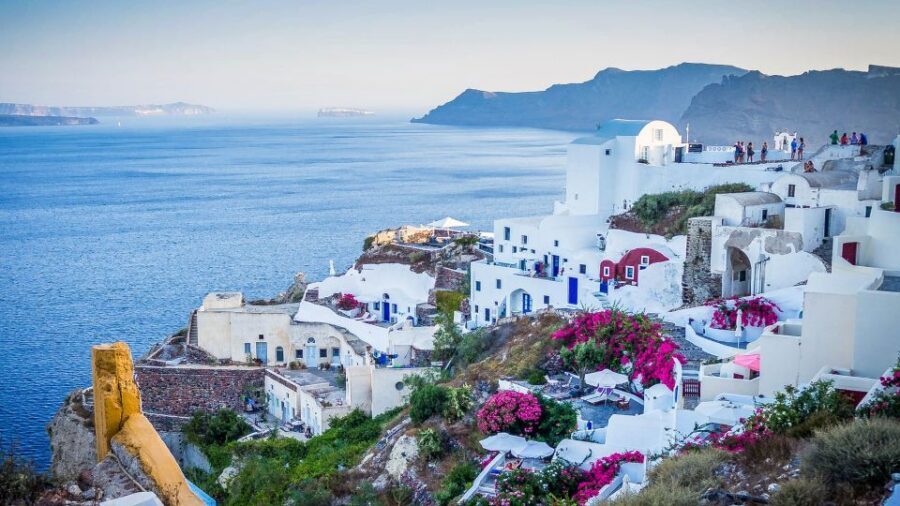
These two stops are what turn a “photo tour” into a better island understanding.
Profitis Ilias: a convent viewpoint with collected artifacts
You’ll stop at the Convent of Profitis Ilias, near the island’s highest peak (567 m / 1860 ft). This is less about shopping and more about viewpoint drama plus a sense of place.
You’ll be able to appreciate the convent’s collection, including:
- Holy images
- Handwritten books
- Rare ecclesiastical items
It’s a nice counterbalance to the more famous villages. Even in a short 20-minute window, you’ll feel the shift: higher ground, different atmosphere, and a clearer sense of Santorini’s vertical geography.
Pyrgos: the old capital feel and medieval lanes
Next is Pyrgos, once the old capital and also the highest village on the island. Expect medieval details like:
- A medieval castle
- Churches
- Traditional houses
- Quiet alleys and old-stone charm
You get about 30 minutes, which means you should treat it as a “wander and look” stop, not a full exploration. The payoff is variety—your day stops feeling like repeated views from the same type of street.
Perissa Black Beach: a 45-minute break with real contrast

After the cliffside villages, you’ll head to Perissa’s Black Beach, known for dark volcanic sand made of black volcanic pebbles. This is one of those Santorini contrasts that photos often don’t fully capture until you’re there: black sand next to bright, clear Aegean water.
You’ll have about 45 minutes to relax, with beach infrastructure and places to grab a refreshment or local food. It’s also set up for water activities, so if you want action, the area supports options like:
- Windsurfing
- Snorkeling
- Kayaking
A practical note: since the time is limited, don’t plan on a full-on activity session unless your group is ready to move quickly. This stop works best as a reset—sit, breathe, cool down, and enjoy the beach atmosphere before the wine portion.
If you’re taking photos, the beach contrast is strong. Shoot from angles that show both the sand texture and the bright water line.
Art Space Winery Museum Art Gallery: wine tasting with volcanic soil
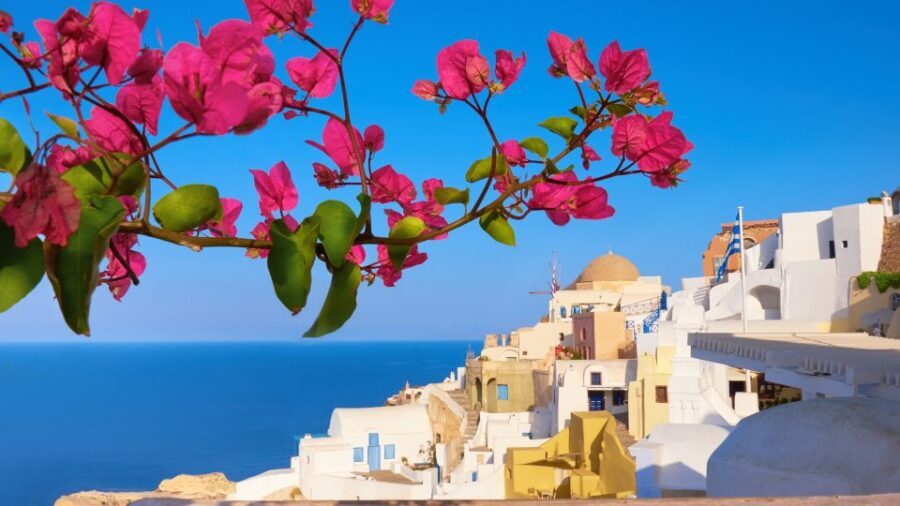
The wine stop is about 60 minutes and scheduled at what’s described as a best time of the day for tasting. The big theme here is volcanic agriculture—grapes grown in volcanic soil, where the island’s geology affects the character of the wine.
At Art Space Winery Museum Art Gallery, you’ll:
- Visit the traditional winery setting
- Taste the wines produced from those volcanic-soil grapes
- Hear explanations of the wine-making process
- Learn about different varieties from the staff guidance
This is where the tour becomes more than scenery. You’re getting a cultural layer that helps your Santorini photos feel connected to something real: the island’s land.
One important budget note: entry/admission to Art Space Winery is not included and can be 20–30 euros per person. The program includes wine tasting as part of the tour, but you should plan for that extra admission cost so you’re not surprised at the winery.
Also, keep an eye on pacing here. If you want a relaxed tasting, be ready to switch from “photo mode” to “slow down and listen” mode.
The guide factor: stories, flexibility, and standout service
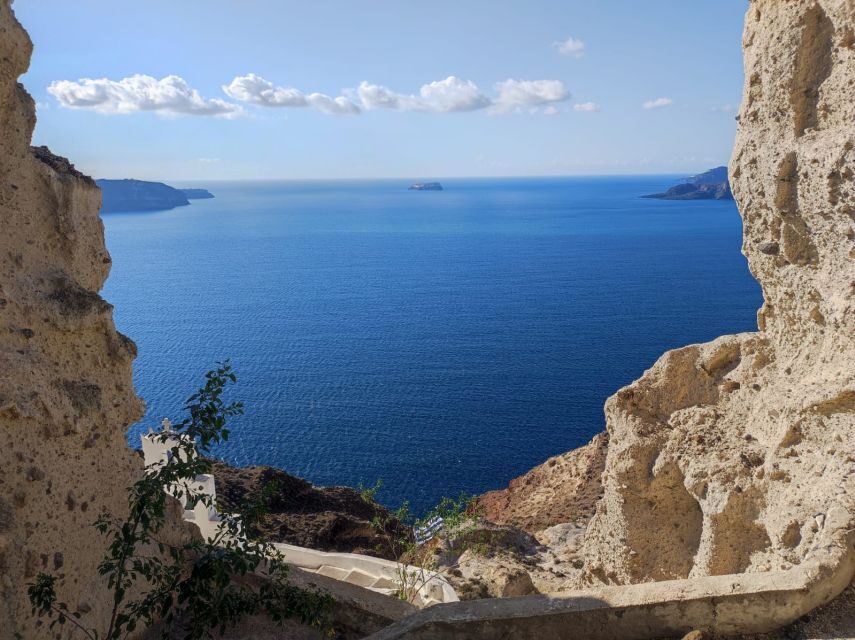
A private tour rises or falls on the guide. The tour’s best feedback patterns focus on driver-guide attention and the ability to tailor the experience to what your group needs.
One highlighted example: Daniel is mentioned for careful attention and for being flexible enough to handle a family-style pace. At the winery, Madelene is singled out for excellent care and an impressive tasting experience. That kind of service matters because it affects your day-to-day quality—when plans need adjusting, when a photo spot needs a better angle, or when your group’s interests aren’t the same as someone else’s.
If you like tours where you can ask questions, clarify priorities, and shift your time between sightseeing and wandering, this format is a strong fit.
Price and value: what you’re paying for, and what to budget extra
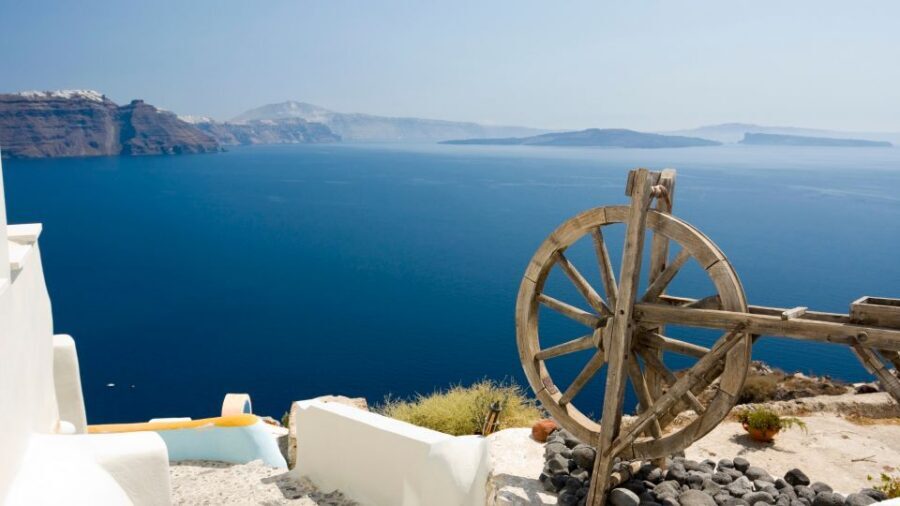
Let’s talk value without the sugar coating.
You pay $259 per person for:
- Hotel pickup and drop-off
- A private English-speaking driver-guide
- A private air-conditioned vehicle
- The main highlight route with plenty of photo opportunities
- Wine tasting as part of the winery visit
- Bottle of water and free Wi‑Fi
What costs extra:
- Art Space Winery admission: 20–30 euros per person
- Cable car tickets: 6 euros per person per ride, specifically noted for cruise ship travelers
- Meals and personal expenses
That admission fee is the biggest “gotcha” to plan for. Still, even with that extra cost, you’re paying for a full half-day experience that combines multiple major Santorini areas plus structured time at a beach and a wine stop. If you tried to do this by yourself, you’d spend more energy coordinating transit and timing, especially with parking and moving between villages.
In other words: you’re buying convenience, comfort, and a guided flow that prevents dead time.
Who this Santorini private half-day tour suits best
This tour is built for people who want a lot in one day without turning the trip into a sprint.
It’s a great match if you:
- Want the main Santorini highlights without wrangling buses or figuring out transport between areas
- Care about views and photos, but also want explanations so the photos mean something
- Prefer the comfort of an air-conditioned private vehicle
- Want to add wine tasting to your day and understand volcanic-soil wine basics
- Travel with family members who benefit from flexibility
It may not be the best fit if you:
- Want to spend half a day in only one village (like a long Oia deep wander)
- Are extremely budget-sensitive once you add winery admission and meals
Should you book this private Santorini best-of and wine tasting tour?
Book it if your goal is a balanced half day: Oia and Fira viewpoints, a couple of elevated/old-capital stops for variety, a break at Perissa Black Beach, and a guided Art Space Winery tasting that adds island context. The private setup and air-conditioned comfort are exactly what you want when Santorini’s routes can wear you down.
Skip it if you want total freedom to linger at one place for hours, or if your plan is to self-guide every stop with zero add-on fees. In that case, a DIY day could feel more aligned.
If you’re choosing between stress and structure, this tour leans toward structure—with enough walking time and viewpoint access to still feel personal.
]]>In the middle, you get a guided circuit of Santorini’s biggest visual hits: Oia charm, the Blue Dome, the island’s highest point at Profitis Ilias Monastery, and beaches with very different sand colors. This is a small group (up to 8) with an English-speaking guide, hotel pickup and drop-off, and water and refreshments, which keeps the day from turning into a logistics headache.
Key things I’d pencil into your Santorini plan
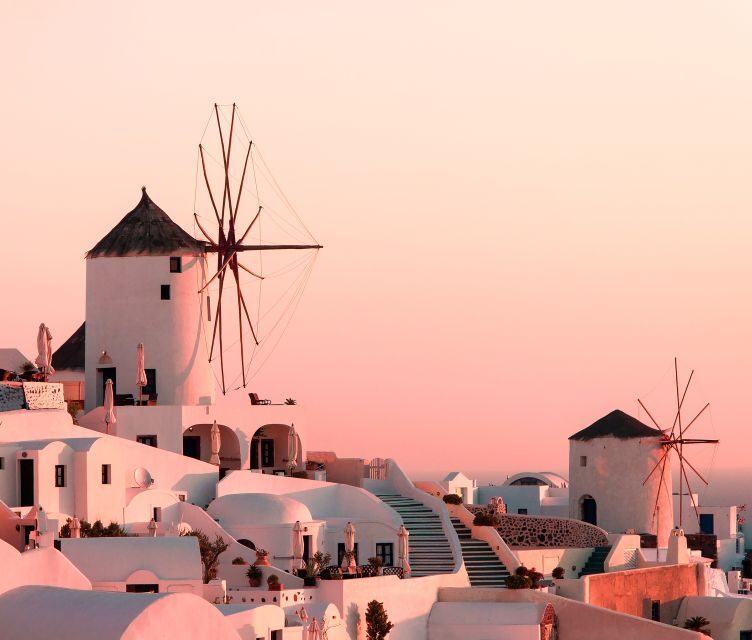
- Oia’s caldera viewpoints plus a guided walk that gets you to the best angles
- Profitis Ilias Monastery at Santorini’s highest point for wide panoramas
- Red Beach in Akrotiri with the rare red sand look
- Black sand beach stops (Perissa and Vychada) for real contrast
- Military Lighthouse sunset as the finale of the day
- Small-group setup (max 8) with English guidance and included water
Why this 5-hour semi-private route is a smart use of your time
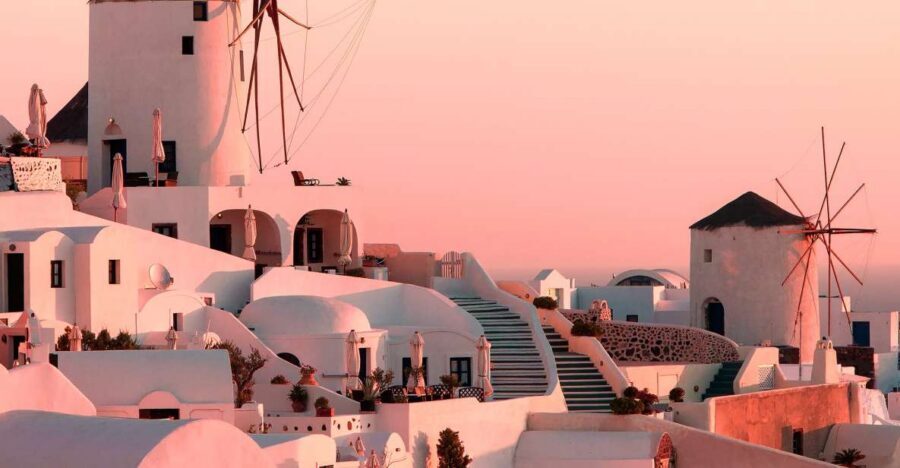
Five hours sounds short until you realize how spread out Santorini’s highlights are. This tour stitches together multiple viewpoints and beach stops into one guided day, with hotel pickup and drop-off. That matters on Santorini, where getting from one side of the island to the other can eat up time and energy fast.
The “semi-private” part isn’t just a label. Limited to 8 participants, you’re less likely to feel like you’re part of a marching crowd. You also have a better chance of getting timely help from your guide—especially when you need to move from one viewpoint to the next without losing your bearings.
Value-wise, $147 per person is easiest to judge against what you’re not paying for: pickup and drop-off, a live English guide, water and refreshments, and a detailed island map. You’ll still need to handle meals on your own (snacks/dinner aren’t included) and you may cover any museum tickets or wine-tasting costs separately, but the core experience is bundled.
Oia and the caldera cliff views: where the day starts on high drama
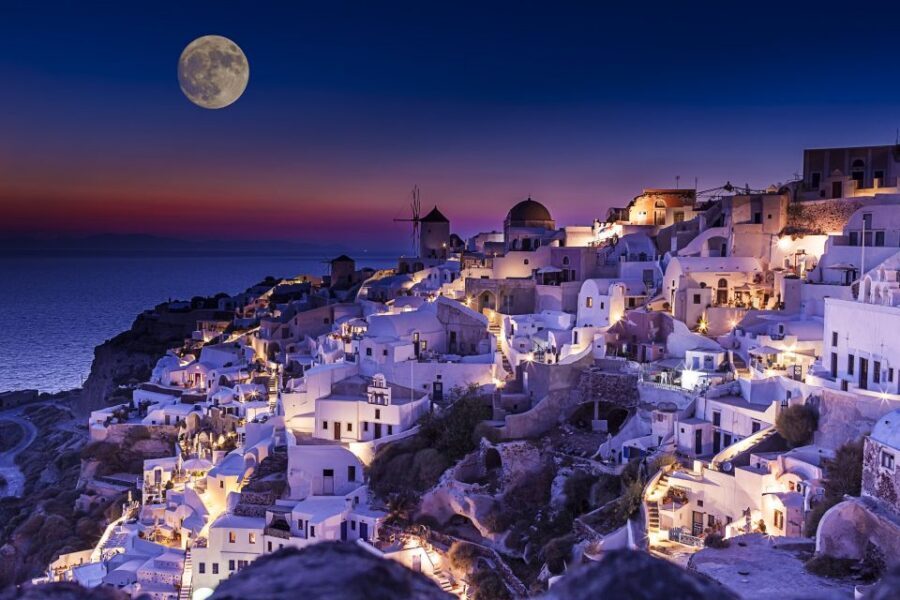
Oia is the kind of place that makes you slow down without meaning to. The tour starts here with the goal that should be obvious once you arrive: get you to the caldera views from the cliffside village. You’ll spend time walking around Oia (about 1.5 hours), which is a good amount for sightseeing without turning the whole day into a full workout.
What makes Oia worth it is not just the famous look from a distance. Up close, you’ll see how the village is built around the caldera’s edge, which changes how the light hits the cliffs and sea. If you’re the type who likes taking photos, this is where you’ll feel glad you brought sunglasses and a hat.
Quick reality check: Oia walking can be uneven. Bring comfortable shoes you trust. Also, because the tour runs rain or shine, dress in a way that won’t ruin your mood the moment the weather changes.
The Blue Dome and Profitis Ilias Monastery: iconic sights plus a big elevation payoff
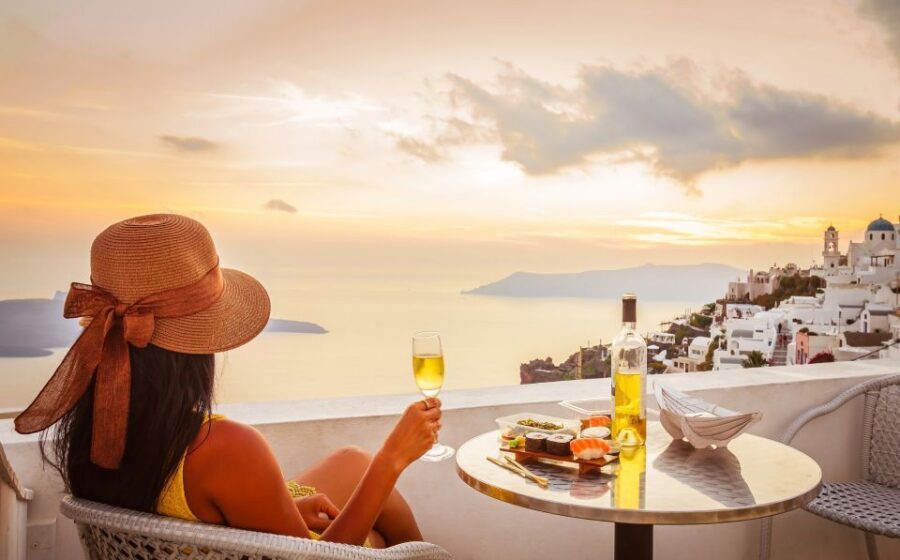
From Oia, the tour continues toward the Blue Dome, one of Santorini’s most recognizable visual icons. Even if you’ve seen it in photos, seeing it in person lands differently. It’s a quick stop, but it’s the kind of moment you remember because it’s so visually specific to the island.
Then comes the bigger shift: Profitis Ilias Monastery, located at the island’s highest point. High ground is where Santorini starts to make sense. From up there, you’re not just looking at one view—you’re getting a broader sense of how the caldera curves and how the towns sit along it.
This is also one of those stops where your guide’s timing matters. You’ll want to be ready to look up, look outward, and then look back at what you just came from. If your goal is understanding Santorini beyond postcards, this is where the tour helps most.
One practical note: higher points can feel cooler or windier than the lower towns. If you’re sensitive to that, pack a layer.
Beaches with black sand and the rare red sand of Akrotiri
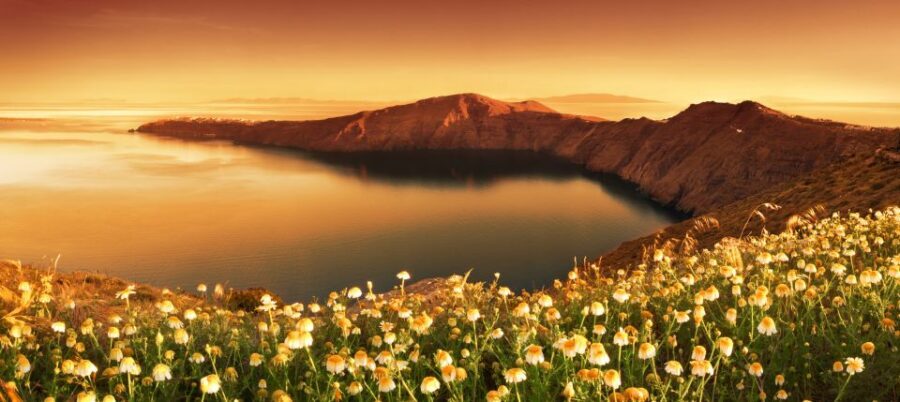
After the high points, the tour shifts to beach country—first with black sand stops around Perissa and Vychada. Black sand is dramatic in a different way than the white and beige beaches you might be used to. It changes the look of everything around it, especially the contrast between dark sand, pale stone, and the sea.
Then you hit Akrotiri’s Red Beach, which is one of the world’s few red sand beaches. That alone is a reason to include it, because most islands can’t offer that specific geology look. The color is what grabs you immediately, but what makes it more fun with a guide is the context: you’re not just at a beach stop, you’re seeing an ingredient in Santorini’s volcanic identity.
Important: swimming isn’t allowed on this tour. So think of the beach time as sightseeing time—views, photos, and enjoying the weird-and-wonderful sand color—rather than a beach day where you’re planning to swim laps.
The Military Lighthouse: how the tour turns into a sunset moment
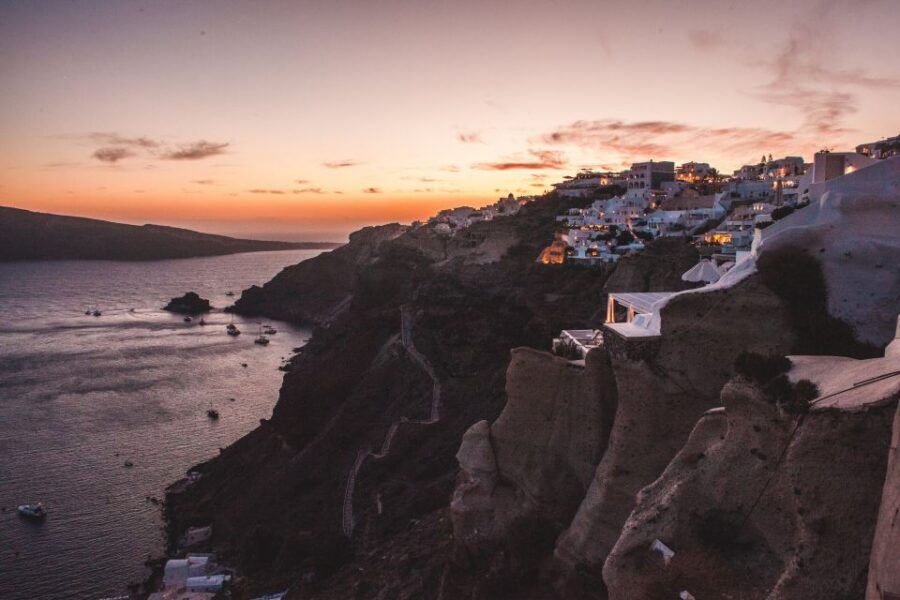
Every Santorini visitor hears about sunsets. The challenge is getting a sunset view that’s timed right and positioned well. This tour’s finale is the Military Lighthouse, described as the top spot for a spectacular sunset—and they sell it as a secret-style finish for a reason: you’re not ending your day back in the most obvious photo areas.
The lighthouse location gives the sunset a certain structure. You’re looking outward rather than only down into the caldera. That outward perspective can make the sky feel wider, and it changes how the light lands across the water as the sun lowers.
If you’re trying to make the most of your evening, this is a smart way to do it. Instead of spending the last hour deciding where to go, you have a plan. And because the tour is designed to finish there, you can focus on the view rather than chasing it.
Price and what’s included: where your money actually goes
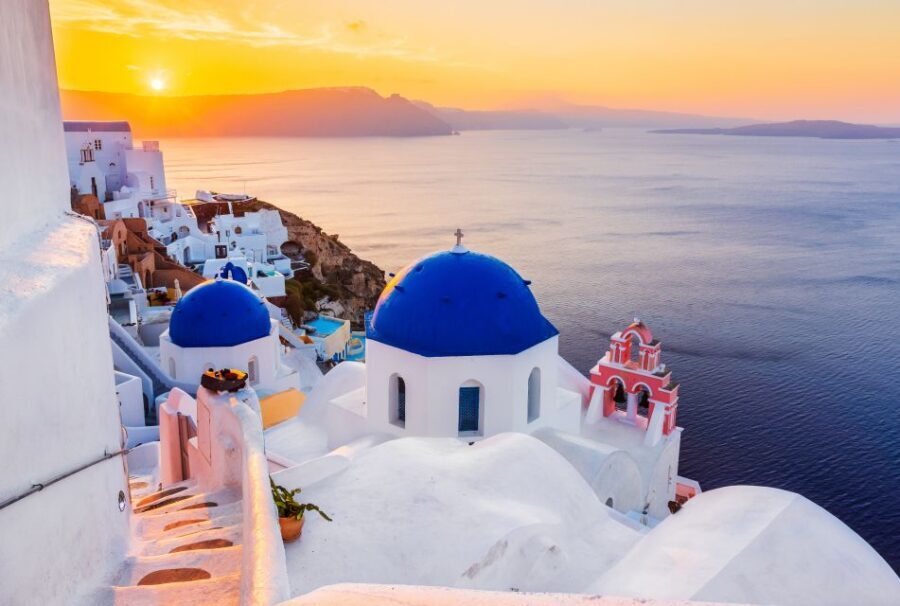
At $147 per person for a 5-hour tour, you’re paying for a guided route that covers a lot of terrain and multiple distinct areas of the island. This isn’t just one scenic viewpoint and a photo. It’s a sequence: Oia, the Blue Dome, Profitis Ilias Monastery, Perissa and Vychada, Akrotiri’s Red Beach, and finally the Military Lighthouse.
Here’s what’s included:
- Hotel pickup and drop-off
- Guided tour with a live English tour guide
- Water and refreshments
- A detailed map of the island
Here’s what’s not included:
- Snacks/dinner
- Museum tickets
- Wine tasting expenses
That inclusion list is the key to the value. Pickup and drop-off alone can be pricey on Santorini if you don’t plan ahead. Water and refreshments are also underrated—especially if the weather is hot or the day runs longer than expected at one stop. The detailed map is useful too, because after the tour you can decide where you want to go next with a clearer sense of geography.
If you’re sensitive to budgets, plan for meals outside the tour. Since food isn’t included, don’t count on grabbing a snack mid-route as part of the package.
Comfort tips that make the whole day easier
This tour is straightforward, but a few details can make or break the day.
First, pack for walking in Oia. You’ll walk for about 1.5 hours there, so comfortable shoes are non-negotiable. Add a hat and sunglasses, since you’ll be exposed for long stretches while moving between viewpoints.
Second, remember the tour runs rain or shine. That means you should dress for sudden weather changes. If rain is in the forecast, you’ll want shoes that handle damp ground and clothes you can move in without getting miserable.
Third, keep expectations realistic about beach time. Swimming isn’t allowed, so bring a mindset focused on views and photos, not a swim session.
Fourth, note the vehicle rule: food isn’t allowed in the vehicle. If you’re the type who likes a snack on the go, adjust your plan. This is more of a guided sightseeing flow than a picnic trip.
Finally, meeting logistics matter. You’ll be picked up outside your hotel or at another requested location. Don’t wait in the hotel lobby. If you’re unsure, confirm where your guide/driver expects to see you, then head there early.
Who this tour suits best (and who should think twice)
This one fits best if you want a guided hit list across Santorini without building your own transportation plan. It’s also a good choice if you like structure: you show up, the guide handles the timing, and you get multiple viewpoints in a single day.
You’ll likely enjoy it most if:
- You’re comfortable walking for about 1.5 hours in Oia
- You want a mix of viewpoints and beaches, not just one area
- You prefer a small group (up to 8) with an English-speaking guide
- You want the sunset moment without scrambling to find the perfect spot at the last minute
You should think twice if:
- You don’t handle walking well or uneven surfaces
- You want swimming included at the beaches (it isn’t)
- You’re extremely sensitive to weather, since it runs rain or shine
The tour also lists an age limitation: it isn’t suitable for people over 95 years. If that touches your group, it’s worth choosing a different style of day that’s less walking-focused.
Should you book this secret sunset Santorini tour?
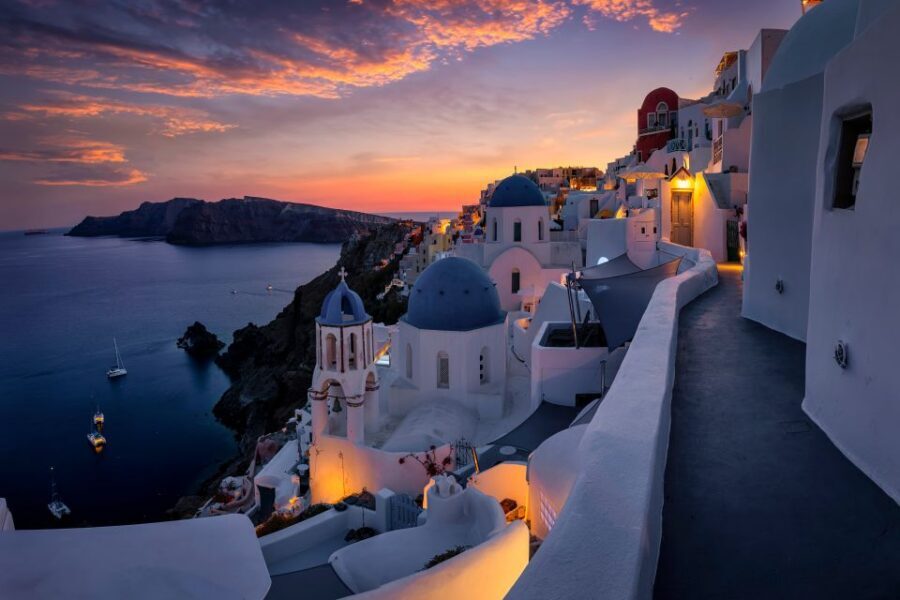
Book it if your goal is a guided, efficient Santorini sampler that still hits big visual moments: Oia caldera cliffs, Profitis Ilias Monastery at the island’s highest point, Akrotiri’s rare red sand, and a sunset finish at the Military Lighthouse. For $147, the value is strongest when you factor in pickup/drop-off, live English guidance, water and refreshments, and the island map.
Skip it if you want a beach day where you’ll swim, or if walking in Oia is a deal-breaker for you. Also, if weather stress wrecks your experience, remember this runs rain or shine.
If you’re flexible and you want your Santorini day to feel like a guided story with a strong ending, this is a solid choice.
FAQ
How long is the Santorini secret sunset tour?
It lasts 5 hours.
Is the tour guided, and what language is it in?
Yes, you’ll have a live tour guide speaking English.
How big is the group?
The group is limited to 8 participants.
Does the tour include hotel pickup and drop-off?
Yes. Pickup and drop-off are included. You should meet your guide/driver outside your hotel or at another requested meeting point, not in the hotel lobby.
Where does the tour finish?
It finishes at the Military Lighthouse for the sunset.
What should I bring?
Bring a hat, sunglasses, and comfortable shoes.
Will the tour run in bad weather?
Yes. The tour takes place rain or shine.
Is swimming allowed?
No, swimming isn’t allowed on this tour.
]]>If you choose the dress, you’ll get help making it lift and billow while you’re moving through Oia’s famous marble streets and toward the Castle viewpoints. You also get to pick from 15 dress colors, which is great if you care about matching the look to your photos. The only potential drawback is simple: with an extra fee for the dress, your final cost depends on whether you want the full “goddess” effect.
Key highlights worth putting on your radar
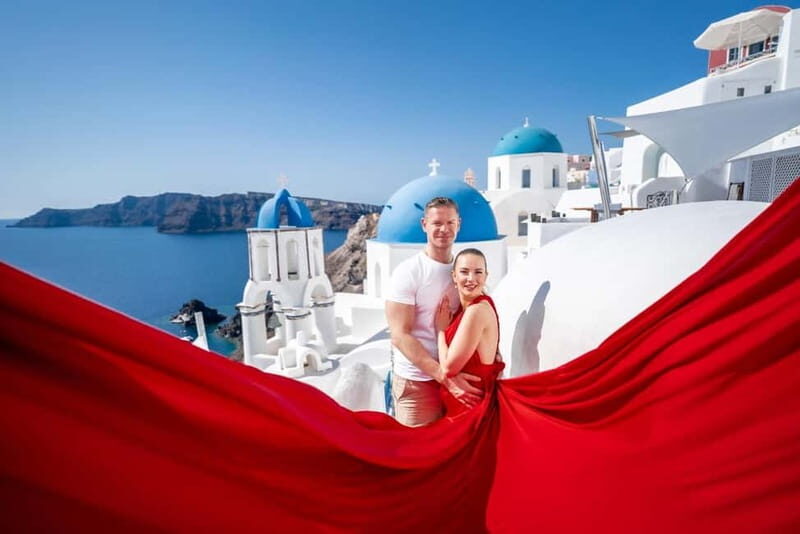
- 50 professionally-edited digital photos in a 1-hour shoot, so you’re not stuck sorting raw images later
- Oia walking route that takes in caldera views, churches, and the iconic Blue Domes area
- Unplanned-feeling photo stops thanks to a photographer-led tour of side streets and angles
- Flying-dress assistance included, with an assistant built into the experience so you can focus on posing
- 15 dress colors to choose from (dress rental is extra)
- English live guide plus wheelchair access for visitors who need it
Why this Oia photoshoot feels different from a quick snap
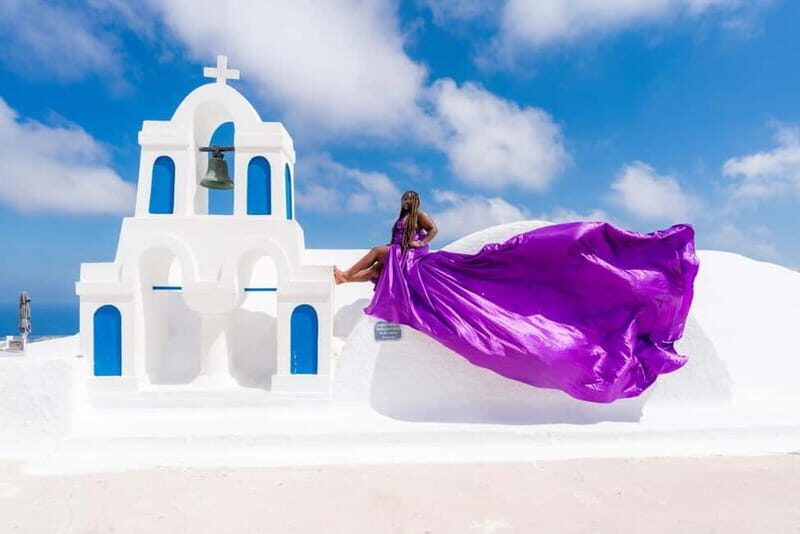
Oia is famous for photos, but most “photo opportunities” are basically you holding a phone and hoping your angle works. This experience is built like a guided shoot, where you follow the photographer through the best spots and get real direction along the way.
The big win for me is the package: 50 edited photos. Even if you’re picky about framing, it saves you the effort of picking favorites and doing post-processing yourself. The second thing I like is the walking format. You’re not just standing and hoping the light behaves; you’re moving through Oia’s standout areas—marble streets, church views, and that caldera backdrop.
The flying-dress option is the other reason this is worth your time. The assistant helping the dress fly matters, because getting that “floating” effect takes more than good vibes. If you want the look in your photos, having someone handle the practical side is a comfort.
The 1-hour walking route: marble streets to Blue Domes
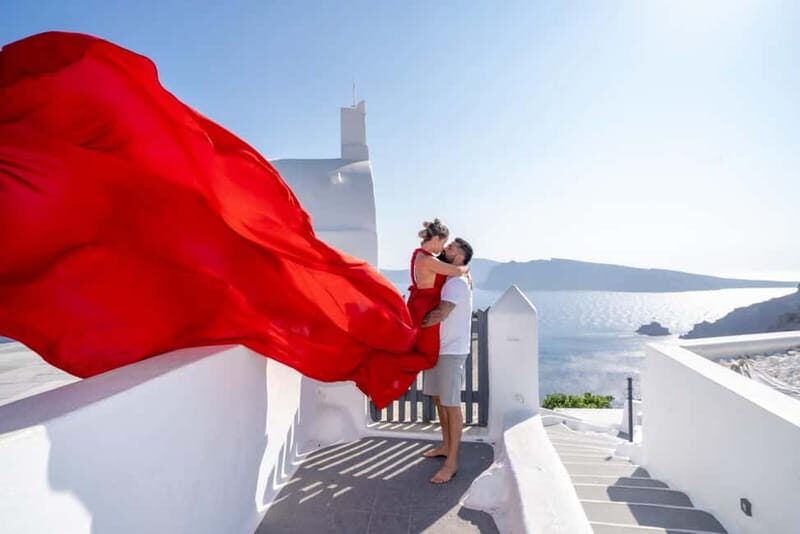
This shoot is designed around a compact route through Oia, starting on the main marble streets and working your way up toward the Castle area. You then end near the Blue Domes, which is where a lot of people come to see the classic Santorini view.
Here’s what that route typically gives you, and why it’s smart:
- Main marble streets: easier footing, lots of traditional-looking stone texture, and a sense of place that reads as Oia in your photos
- Castle area approach: you get elevated viewpoints, and the perspective can make the caldera feel more dramatic even in a short session
- Blue Domes stop: you finish with that iconic visual anchor, which is usually the hardest photo to coordinate without a plan
What I’d watch out for is crowd pressure. Oia can get busy, and with a 1-hour window you’ll want to keep things moving. The best approach is to stay flexible when the photographer suggests where to stand or when to move.
Also, the experience includes time for “hidden photo spots,” meaning you’ll get steered toward small side angles that aren’t just the most obvious postcard positions. That matters because the best photos usually come from having a practiced eye guiding where to stand.
The flying dress rental: choosing a color and making it work
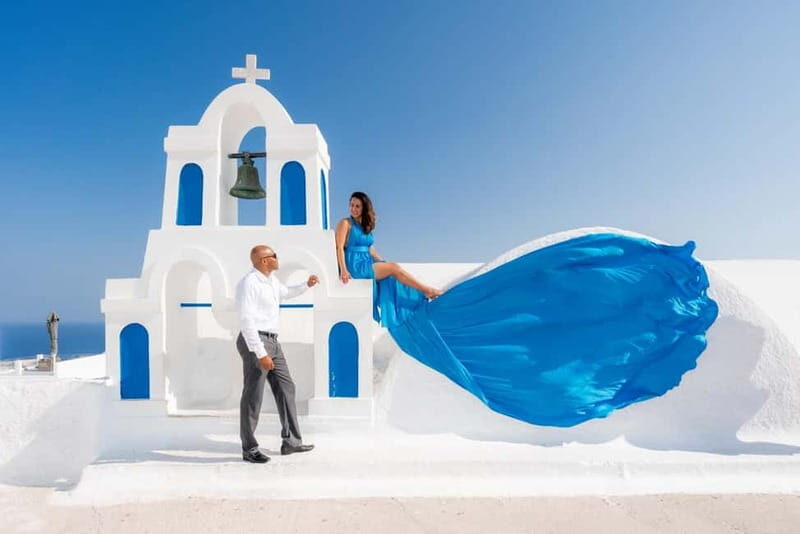
The flying dress rental is optional, but if you want the signature look, this is where the experience earns its name. The dress is from Flyoia, a Greek brand based in Santorini, and it’s described as handmade in Greece.
You’ll be able to pick your dress color from 15 available colors. For photo planning, color choice isn’t just style—it affects how the dress pops against the white buildings and the blue tones around you. If you’re someone who already knows you want a specific vibe (soft, bold, or classic), this is a real advantage because you don’t have to gamble.
Now for the practical part: the assistant is included, and their job is to help make the dress fly. That’s important because the effect is action-based, not magic. You can follow the photographer’s posing cues while the assistant handles the motion and adjustment.
If you skip the dress rental, you’ll still get the guided walking shoot and the 50 edited photos, but you won’t get the “flying” styling. So think about your priorities: do you want a great Oia portrait set, or do you want a standout costume look?
The photos you get: 50 edited images you can actually use
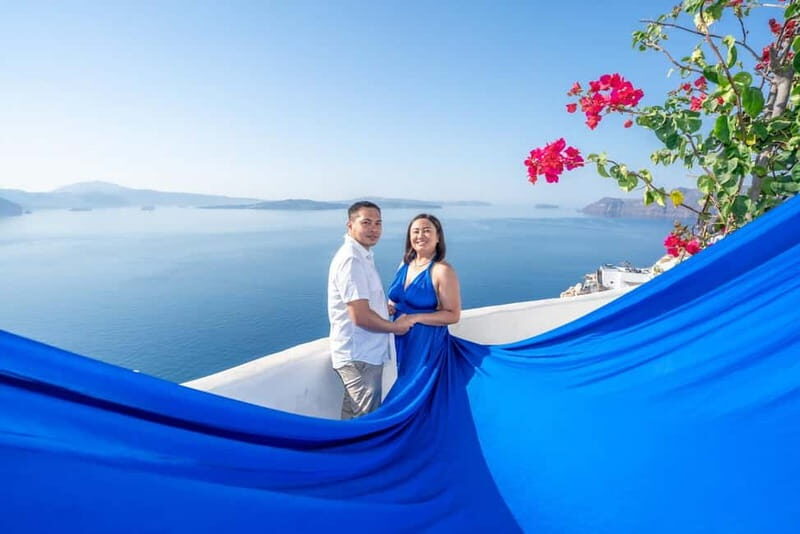
This experience includes 50 professionally-edited digital photos. That’s a big value point because it turns your money into finished images, not just a camera session you still need to work to complete.
What you can expect the edits to help with, based on the format:
- Cleaner colors and contrast so your dress and surroundings photograph well
- Better composition choices from someone who knows where the lines and viewpoints work
Also, because the shoot covers multiple areas (marble streets, churches/caldera views, and the Blue Domes area), the final set should feel varied. You’re aiming for a mini collection rather than 50 nearly identical shots.
One note: the information you provided doesn’t list delivery timing for those edited photos. So if you have a specific deadline (like a wedding guest post or a trip recap schedule), you’ll want to confirm that detail when you book.
Price and value: $175 for the shoot, plus 100 EUR for the dress
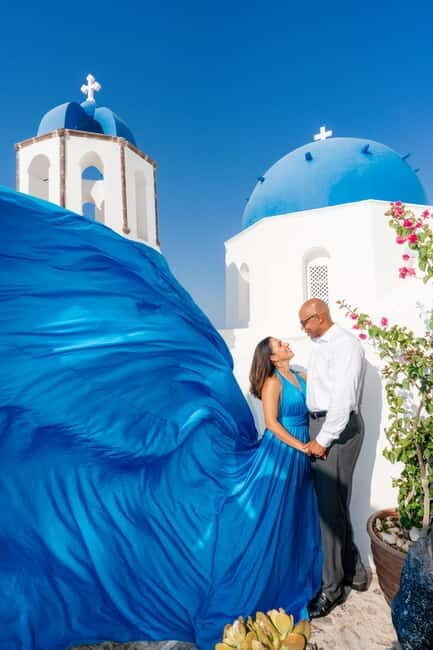
The base price is $175 per person for the 1-hour photoshoot, including the assistant and 50 professionally edited digital photos. The flying dress rental is not included, and it costs +100 EUR, with 15 colors to choose from.
Is it good value? Usually, yes—because you’re paying for three things at once:
1) guided posing and spot selection,
2) a short, efficient shoot time, and
3) the editing of 50 images.
That’s different from paying for a generic photographer hour where you later receive raw files and have to do your own selection and editing. Here, your deliverable is clearly defined.
Where the math changes is if you want the dress. The dress adds a meaningful amount, but it also adds a whole look theme to your photo story. If you’re the kind of traveler who frames your trip around one signature photo set, the extra cost can feel worth it.
Who this works best for (and who might rethink it)
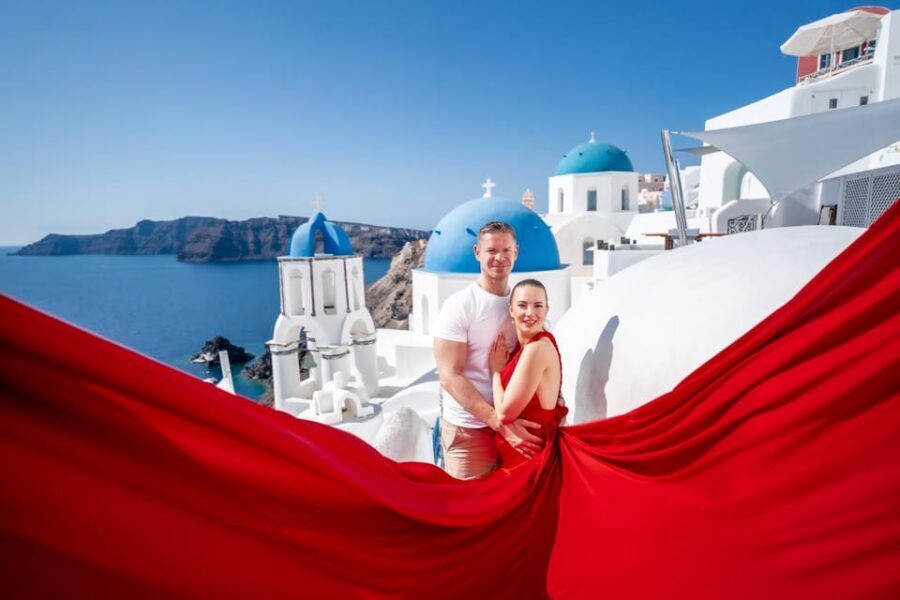
This photoshoot is a strong fit if you want an iconic Oia photo set without planning your own route through crowded streets. You’ll get a guided experience in English and a photographer-led tour that takes you through the areas you actually want for photos.
It also suits people who care about comfort and direction. One of the most praised parts is that the photographer and assistant make you feel at ease, which matters a lot when you’re standing in a costume and trying to look natural.
A possible mismatch: if you’re traveling light, hate the idea of a dress rental fee, or only want a simple walk-and-snap memory, you might decide that the base shoot alone is enough—or skip altogether.
Should you book this Oia photoshoot?
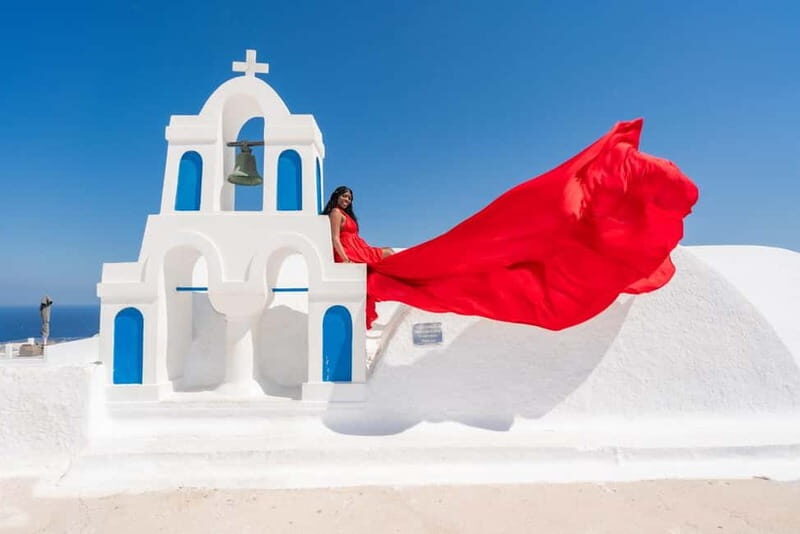
Book it if you want 50 edited digital photos and a guided route that ends with the iconic Blue Domes area, especially if you like the idea of getting real posing help. Choose the flying dress option if you want one standout visual concept and you’re excited to have the assistant make the effect work.
If you’re price-sensitive, double-check whether you’re truly committed to the +100 EUR dress rental. The base experience is already a solid photo package, and the dress turns it into a costume-style portrait story.
FAQ
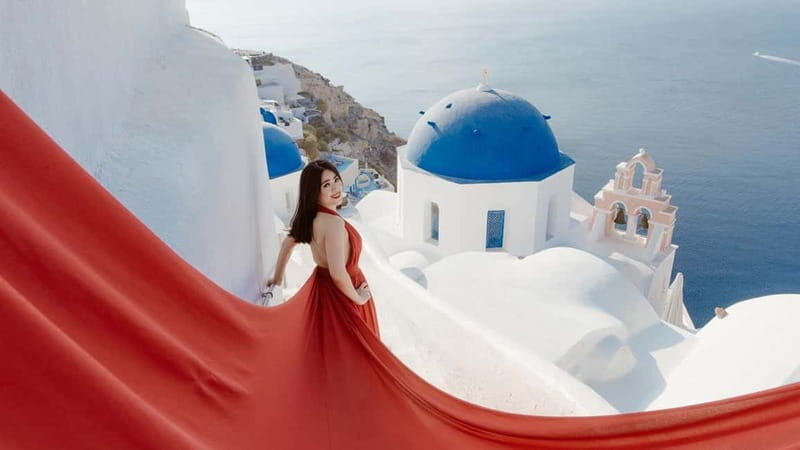
How many photos are included?
You’ll get 50 professionally-edited digital photos included in the photoshoot.
How long is the photoshoot in Oia?
The experience lasts 1 hour.
Is the flying dress rental included in the $175 price?
No. The flying dress rental is not included, and it costs an extra 100 EUR.
How many dress colors are available if I rent the flying dress?
The flying dress rental offers 15 available colors.
Who helps with the flying-dress effect?
An assistant is included to help make the dress fly.
Is the tour guide available in English, and is it wheelchair accessible?
Yes. The live tour guide is English, and the experience is wheelchair accessible.
What are my cancellation and booking options?
You can cancel up to 24 hours in advance for a full refund. You can also reserve now and pay later, meaning you can book your spot and pay nothing today.
]]>You get a professional setup in the middle of Oia village, with the photographer arriving early so they can work the best angles and timing. The vibe is calm and organized, and the result is meant for sharing with friends and revisiting later, not just a quick phone snapshot. If your group size is more than two, this one may not be the right fit since pricing is for a group up to 2.
Key Things I’d Focus On Before You Book
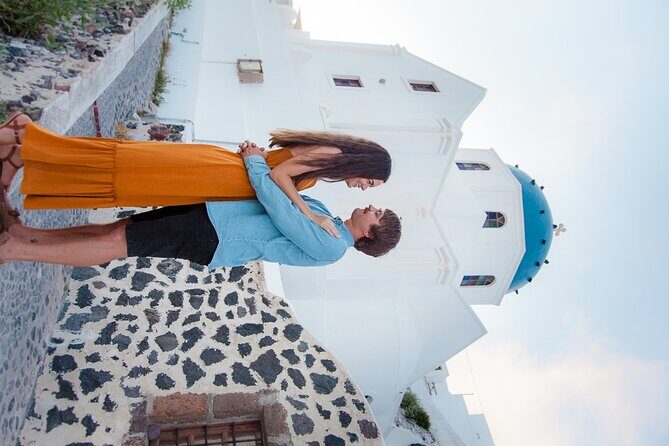
- Hidden photographer for the big moment: The photographer hides during the proposal, then appears at the right time.
- Full sequence coverage: You’ll get shots from before the proposal through the yes moment and right after.
- 50 professionally edited photos: You’re not left with only raw images.
- All the unedited photos too: You get the full set, edited plus unedited.
- Unique viewpoints in Oia: The shoot is designed around strong angles from Oia’s famous vantage points.
- Pro communication and direction: You’ll get guidance so even first-time models feel at ease.
Oia Proposals Go Best With a Photographer Who Takes Control
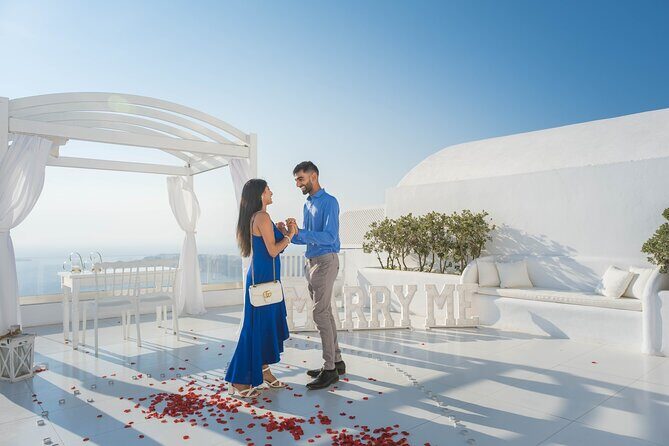
Santorini is famous for its cliffside views, but for a proposal, the real challenge is timing. You’re managing nerves, a location full of distractions, and the one instant that has to be perfect. That’s where this experience earns its keep: a professional photographer runs the show, and you’re free to stay present.
I also like that the session is planned around surprise. The photographer doesn’t just stand there photographing everything. Instead, the plan is to hide during the proposal so your moment stays natural, then capture the burst of emotion right when it matters. In Oia, where people are always moving around, that approach helps you avoid the awkward feeling of performing for the camera.
One more practical reason I’d choose this setup: it’s designed as a short, focused block. With a 1-hour duration, you’re not dealing with a long schedule where plans drift. You’re getting a clear window to propose and get great images without stretching the day.
The 1-Hour Flow: Before, During, and After the Yes
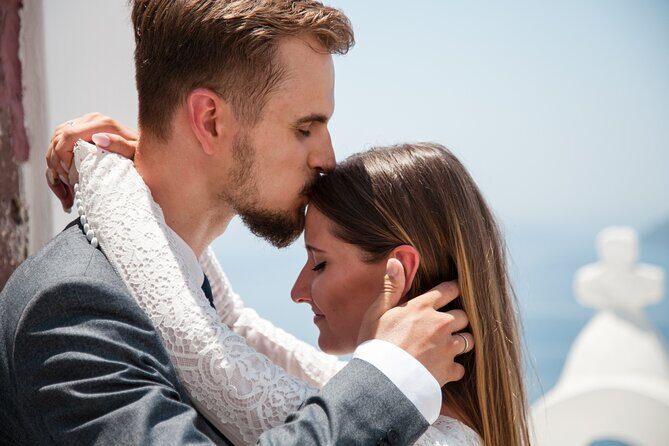
This shoot isn’t only for the knee-drop moment. It’s built as a sequence, which is exactly what you want for a proposal story.
Here’s what you can expect within that hour:
Getting set before the proposal
Your photographer arrives early and works their plan for intimate details. That means you’re not just stepping into a random spot at the last second. The goal is to capture the lead-up—small movements, your body language, and the way you and your partner react to each other as the moment approaches.
If you’re the one proposing, this part matters. It gives you a few minutes to settle in, get comfortable with the camera presence, and receive direction without feeling rushed.
The proposal moment: hidden shooting + pop-out timing
When it’s time, the photographer hides during the proposal. Then, at the right moment, they pop out to capture what’s happening while you’re focused on saying the words.
This matters because proposals don’t last long. The best photos usually happen in seconds: the look up, the hands reaching, the expression when they say yes. A photographer who can time that transition is the difference between a posed picture and a real memory.
After the yes: capturing the reaction and the celebration
Once the yes happens, the session continues. That’s when you’ll get the “we did it” photos: reactions, hugging, laughter, and the quick shift from tension to joy.
Many couples only plan for the proposal click. Here, you’re also covered for what comes right after, which is often where the best emotion shows up.
Hidden Photospots in Oia: Why It Works for Real Surprise
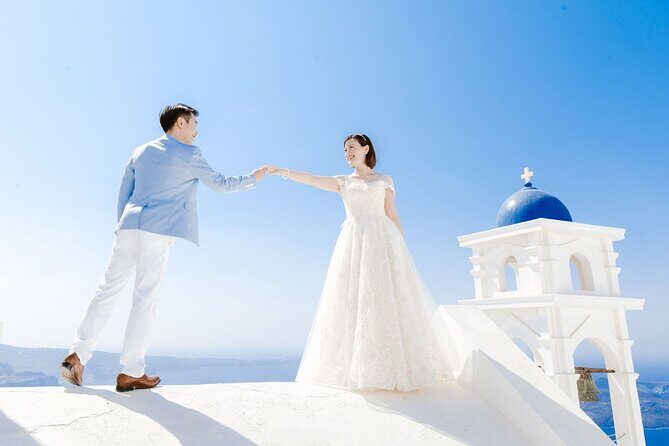
“Hidden photospots” sounds nice, but what it really means for you is less waiting and less awkwardness. If you’ve ever tried to plan a proposal around crowds and cameras, you know the danger: you spend the best moment fighting your own nervousness, while your phone captures blurry frames and strangers accidentally get in the shot.
In this experience, the strategy is built around concealment. Your photographer uses hiding during the proposal so the moment stays private-feeling, even in a popular area. When they reveal themselves, it’s to photograph the critical instant and keep the action from turning into a staged photoshoot.
I also love the emotional benefit. When you don’t feel like you’re being watched, your proposal reads as what it is: yours. The photos tend to look more like a story and less like a performance.
Photo Pack That Lets You Share Now and Print Later
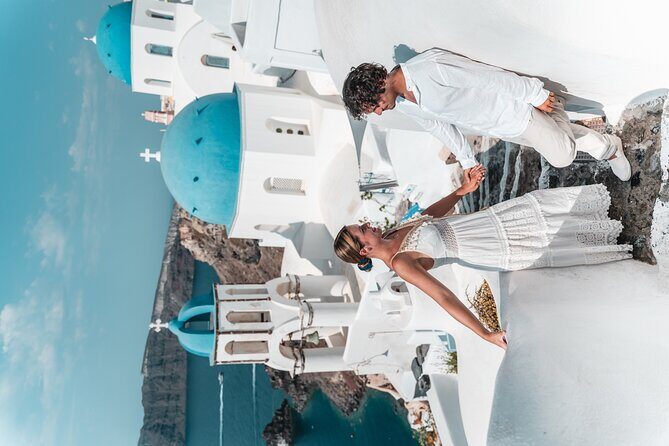
The included photo set is one of the strongest parts of this package.
You receive:
- 50 professionally edited photos
- all the unedited photos
That combination is smart. Edited images are perfect for sharing on social media or sending to family right away. But keeping the unedited set is a backup gift. Sometimes an unedited frame catches a glance or a micro-expression that the edited version crops out or adjusts. Having both means you’re less likely to regret any “almost perfect” moment.
There’s also mention of unique photographs from an excellent vantage point. While you shouldn’t expect every frame to be identical (that’s not how real proposals work), you should expect angles that use Oia’s strengths. You’re paying for someone to choose viewpoints with intention, not random shutter timing.
Meeting Point in Central Oia: The Practical Part People Forget
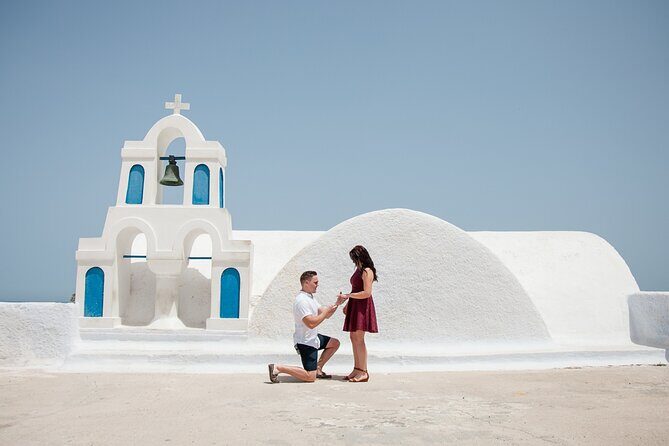
You meet in the center of Oia. That detail sounds basic, but it helps a lot. Central meeting points make it easier to arrive calm instead of doing last-minute location hunting with your nerves already at full volume.
For your planning, I’d treat the meeting time like it matters. With proposal planning, you want your partner not to suspect delays, and you don’t want to arrive after the photographer has already scoped the best angles.
If you’re carrying a ring or any personal item you don’t want photographed, keep that separate until the shoot starts. Once you’re in position, keep your movements simple. You’ll thank yourself when it’s time to focus on the actual proposal.
Price and Value: $223 for Two With Real Deliverables
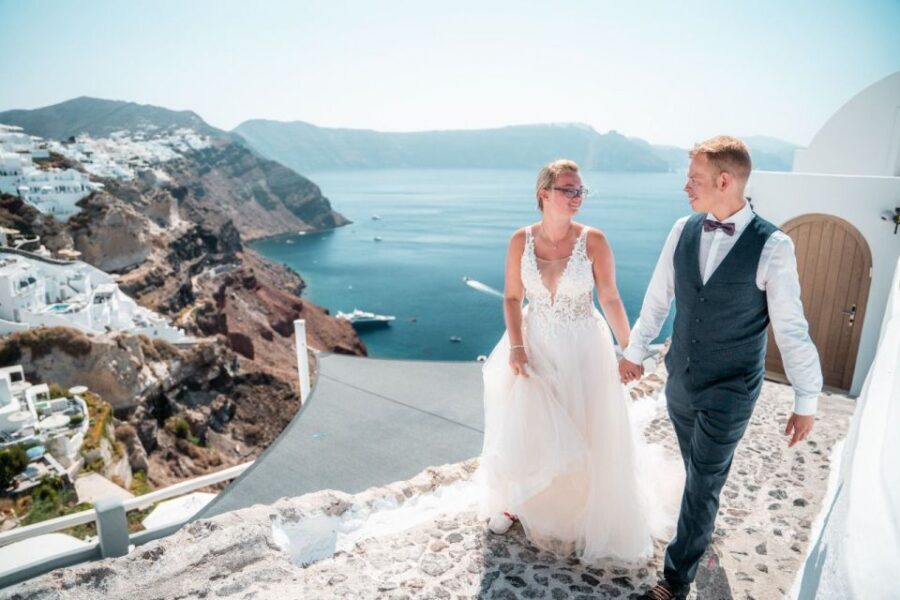
At $223 per group up to 2, this isn’t a “cheap” add-on, but it’s also not priced like a multi-hour luxury production. The best part is that the value comes from what you actually receive and how the shoot is structured.
You’re getting:
- a pro photographer focused on one event
- 50 edited photos
- all unedited photos included
- coverage before, during, and after the yes
For me, the value logic is simple: you’re not just paying for someone to take pictures. You’re paying for direction, timing, and capture strategy in a place where a proposal can easily go sideways.
One practical note: the price is for a group up to 2. If more people are part of your plan (extra witnesses or friends joining), double-check whether your group size fits what’s included.
Who This Proposal Photoshoot Fits Best
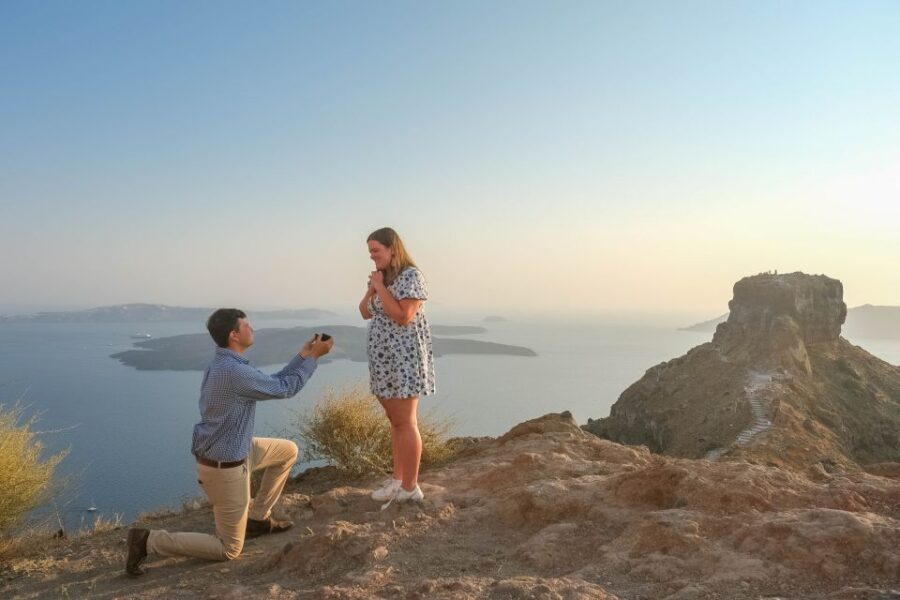
This experience is ideal if you:
- want a stress-reduced proposal setup with a clear plan
- are proposing in Oia and care about getting more than one good photo
- want professional guidance even if this is your first professional shoot
- like the idea of keeping the proposal natural by using hidden shooting
It’s also a good match for couples who want a clean timeline. You won’t spend hours changing outfits or walking a long route. You get one focused hour designed around the sequence that matters most: build-up, yes, and reaction.
Small Planning Tips That Make the Photos Look Effortless
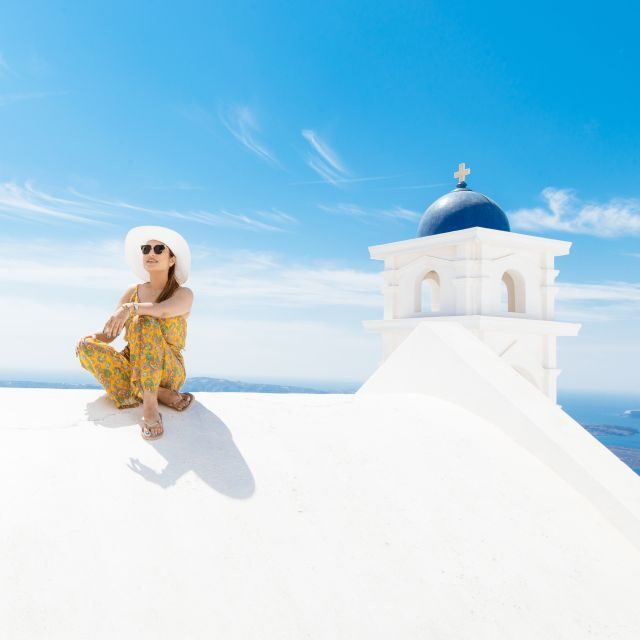
The package covers the photography side, but you’ll still control the outcome with a few thoughtful choices.
- Rehearse your cue. Decide what you’ll do first, second, and last. When nerves hit, routines help.
- Keep your wardrobe simple. You want to look great in photos without needing constant fixes.
- Bring what you need and nothing more. If you’re handling a ring or other items, keep everything ready before the shoot begins.
- Choose calm body language. A proposal photo set improves when you’re not fidgeting. Stand close, slow down your movements, and let the emotion lead.
If you’re worried about not knowing what to do, take comfort in the fact that the photographer is there to guide you. The whole concept is built around direction and patience, not leaving you to guess.
Should You Book This Oia Proposal Photoshoot?
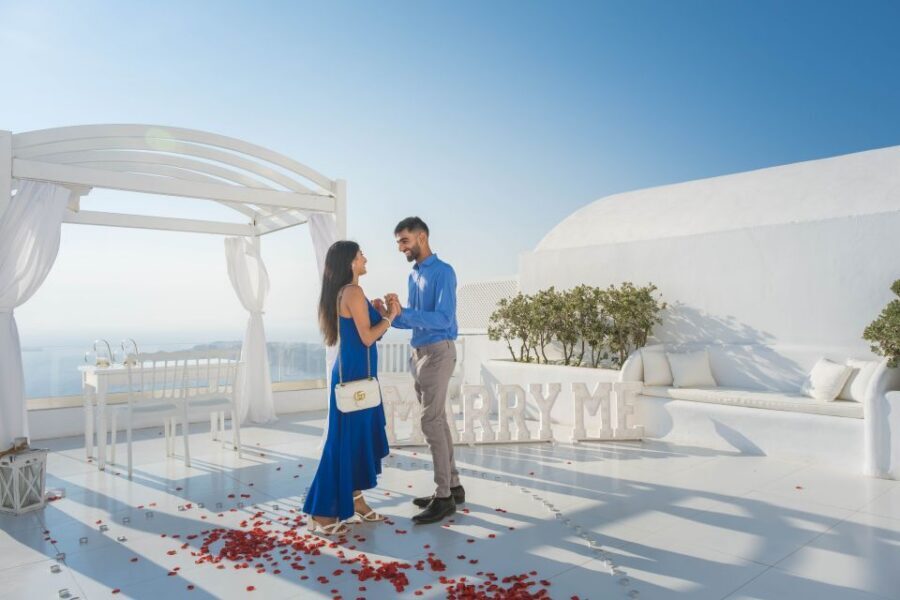
I’d book it if you’re planning a proposal in Oia and you want photos that tell the story from first moment to yes and celebration. The combination of hidden photographer timing, full sequence coverage, and a deliverable set of 50 edited plus all unedited photos is exactly what you want when one day has to last a lifetime.
Skip it only if you want something longer or more like an all-day photo experience, or if your group size doesn’t fit the up-to-2 structure.
If your priority is a clean, professional proposal moment with images you’ll actually be proud to frame, this one is a strong choice.
FAQ
Where is the meeting point?
You’ll meet in the center of Oia.
How long does the photoshoot last?
The session lasts 1 hour.
How much does the proposal photoshoot cost?
It costs $223 per group for up to 2 people.
How many photos will I receive?
You’ll receive 50 professionally edited photos.
Do I also get the unedited photos?
Yes. All the unedited photos are included.
Will the photographer capture moments before the proposal?
Yes. The photo capture includes before the proposal, during the proposal, and after the yes.
Is the photographer hidden during the proposal?
Yes. The photographer is hiding during the proposal and pops out to capture the key moments.
Is there free cancellation?
Yes. You can cancel up to 24 hours in advance for a full refund.
Is the experience wheelchair accessible?
Yes, it’s listed as wheelchair accessible.
]]>That wind-powered dress looks magical.
I like this experience because it turns Oia’s iconic views into a guided photo session, not a random camera struggle. I also love the fact that you get an included flying dress rental plus an assistant who helps the dress catch air for those swooshy, storybook shots. One thing to consider: you’ll still do some stairs and uneven walking, so comfy shoes matter more than you’d think.
If you pick the 3-hour option, you’re not just staying in one postcard corner. You’ll get guided stops across multiple spots around Oia and beyond, with the Aegean and caldera views in the mix. I’ve seen the name Jessica Mocanu come up a lot for this shoot, and the tone is consistent: friendly, professional, and good at getting you posing fast (even if you’re a bit nervous).
Key points before you go
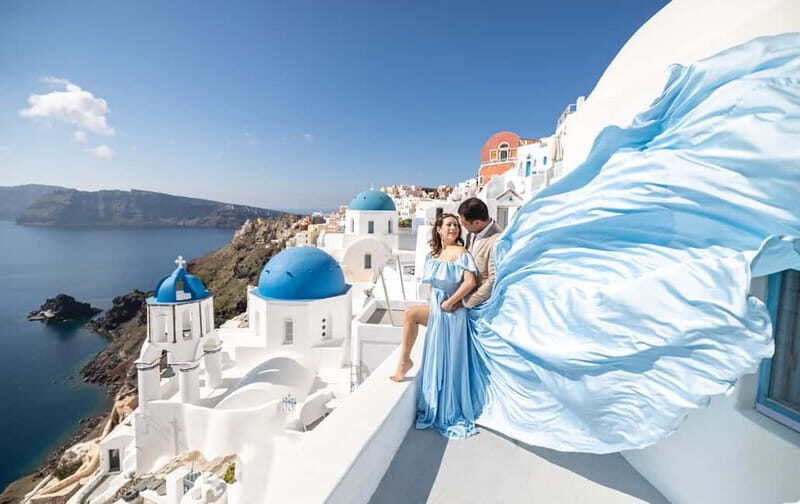
- Vlychada Port start with a real safety briefing so you know the rules before you hop in
- Red Beach and White Beach for quick swim/photo time without turning it into a long slog
- Caldera sightseeing with time for photos and stops set by your captain
- Nea Kameni hot springs + snorkeling gear (life jackets available on request)
- A full onboard meal and drinks: BBQ-style dishes, salads/dips, wine/beer/soft drinks, and dessert
Vlychada Port Pickup, Handoff, and the Safety Briefing That Matters
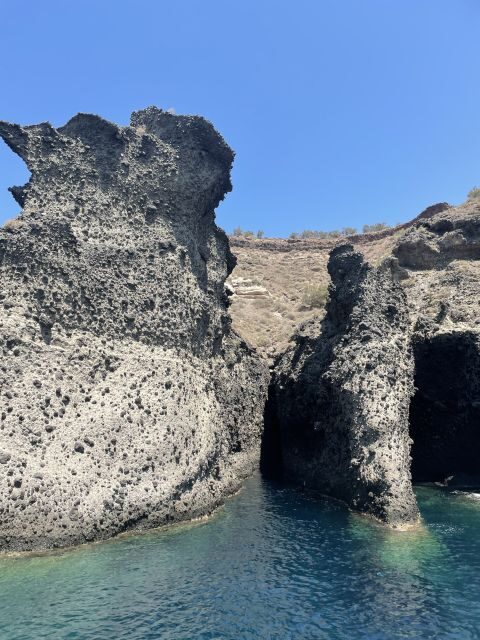
Your day starts with pickup from your hotel area in Thera, then a transfer to Vlychada Port in a ventilated mini van. Once you’re at the port, you don’t just get thrown on a boat and hoped for the best. You get a 15-minute safety briefing right before sailing.
This briefing is worth paying attention to, because the boat has real rules that keep things smooth. Shoes come off before boarding, and you shouldn’t step on tinted windows. After swimming, the deck can be slick, so you’ll want to dry off and walk carefully. There’s also guidance on where you can sit on the front net (only when anchored).
Also, a practical note: there’s a WC onboard and fresh water so you can rinse off salt before you get dressed again. That small detail makes the “we just swam” moment feel like a normal part of a great day, not a wet mess.
Red Beach Swim Stop: Quick, Colorful, and Time-Limited
When the boat reaches Red Beach, you’ll get about 15 minutes to swim. This stop is short on purpose, because the day is built around several different Santorini moods: black/volcanic water, caldera views, and the hot springs later.
Red Beach is dramatic. The color and the rock shapes are the reason you came, and the water is usually clear enough to enjoy being in it. Bring the mindset that you’re doing a quick swim session, not a long beach hang.
Two safety reminders that are easy to miss: let the crew know before you enter the water, and remember that the crew doesn’t provide swimming or snorkeling assistance. If you’re an easy, confident swimmer, you’ll enjoy this part a lot. If you’re not, this may feel stressful.
If you want the most fun per minute, plan your change clothes early. Sunscreen and a hat are a must, and you’ll thank yourself for wearing swimwear you can easily rinse and re-dress in.
White Beach Photo Stop: The 10-Minute Best Use of Your Camera
Next up is White Beach with a 10-minute photo stop. You’re not meant to spend the whole time there. It’s a “get the shot, soak up the view” moment, then back to sailing.
This is where the private format helps. On group cruises, everyone queues up at the same spots. Here, you can usually move a bit faster because the crew is focused on your group’s pace. That means you can spend those 10 minutes on what you actually care about: cliff angles, beach contrast, or the famous chalky look that makes Santorini feel unreal.
The deck rules still apply. You’ll likely have wet shoes off and on again, so wear something you can manage quickly. If the deck is damp, slow down and don’t rush for the perfect angle.
Caldera Sightseeing: The Views, the Landmarks, and One Possible Detour
You’ll spend about 40 minutes sailing through the Santorini caldera for sightseeing. This is where the cruise stops being just “a boat ride” and turns into an actual Santorini viewpoint with sea-level perspective.
A few of the sights you’ll pass are the volcanic scenery of the caldera, plus landmarks like Akrotiri Lighthouse. You’ll also glide past cliffs, rock formations, and sea caves. Even if you’re not a geology nerd, you’ll get why people travel here just to see the coastline from water.
One thing to consider: a past traveler noted that some sections may be motored rather than sailing. That doesn’t ruin the views, but it does affect the “quiet sail” feeling. If you’re dreaming of a silent, wind-driven cruise the whole time, go in knowing it might not be that way for every stretch.
That said, the private setup helps you get what you want out of the caldera time. If you want a longer photo moment at one vantage, you can discuss it with your captain. The schedule is flexible around your priorities, not around a stamp-collecting itinerary.
Nea Kameni Hot Springs: Where the Day Turns Into a Swim and Snorkel Combo
The heart of the experience is the time at Nea Kameni Hot Springs, around 100 minutes. This is where you’ll get the mix you’re paying for: wine, swimming, snorkeling, and the onboard meal—all tied together in one long block so the day never feels rushed.
You’ll have snorkeling gear provided, and life jackets are available on request. Still, there’s a key rule: the crew does not provide snorkeling assistance. You need to be able to handle yourself in the water. If you’re a comfortable swimmer, you’ll probably have a blast here because the water clarity is part of why this stop works.
There are also clear safety notes. Pregnant women are advised not to swim in the hot springs, and kids must swim with parental supervision. If you’re older, assess your physical comfort before entering. And remember that the deck can be slippery after swimming, so give yourself a moment to dry off before walking around.
One more detail that makes Nea Kameni more pleasant: there are towels and blankets onboard, plus fresh water for rinsing salt. That turns the hot-springs soak into something you can enjoy without worrying about going back to shore miserable and sandy.
BBQ Lunch and Drinks: What’s Included and Why It Feels Worth It
This cruise doesn’t just hand you snacks. The food is built into the sailing plan, and it shows. You’ll have a full meal that’s served onboard as part of the hot springs time.
Included items can include:
- BBQ-style grilled dishes, such as grilled chicken fillet, grilled shrimps, and fish fillet (depending on selections)
- Grilled vegetables
- Pasta with Mediterranean sauce
- Fresh salads, dips, and bread
- Dessert
Drinks are included too: white local wine, beer, water, and soft drinks. That matters because you don’t have to “budget the day” for drinks once you’re on the boat. You can actually relax.
A nice bonus from real-world experience: one group requested a vegetarian meal and received a full traditional Greek dinner. So if you have dietary needs, it’s worth raising them in advance.
Also, because you’re on a boat, food logistics are different than on land. You’ll be eating while the scenery changes around you. That turns lunch into a story moment, not just fuel.
Your Captain and Crew: The Private Part Isn’t Just Marketing
The best thing about this charter is that privacy is actually protected. The crew handles the safety and the timing, then gives you room. A captain and helper like Valentino and Niki are friendly and helpful, but they don’t hover.
Captains in particular seem to handle the “tailor-made” concept well. You’ll talk to the captain about your ideal itinerary—more time in quiet bays, more photos, or a more relaxed pace. This is how a cruise becomes yours instead of a show you sit through.
And yes, this is the kind of setting where people pull off special moments. One traveler mentioned their captain and crew helped with a proposal, including photo support and boat decorations. You shouldn’t book this expecting a Hollywood script, but the point is real: the crew can be flexible and supportive when you have a plan.
English is the live guide language, and there’s also a translated safety leaflet onboard. If you’re traveling with someone who isn’t fluent in English, this is one of those small comforts that reduces stress.
Price and Value for a Private Group Up to 2
The price is $1,060 per group (up to 2) for 5 hours. On paper, that’s a “big number.” In practice, it can make sense because it’s a private charter with a lot included.
What you get bundled in:
- Pickup and drop-off by ventilated mini van
- Onboard meal with multiple courses
- Local wine, beer, and soft drinks
- Snorkeling gear, plus towels/blankets
- Guided sightseeing while sailing
- WC and fresh water for rinsing
- Free Wi‑Fi onboard (small, but useful for quick photo uploads)
If you compare this to piecing together a half-day sailing plus lunch plus drinks, the “value” improves fast. The biggest factor is the group size. For two people, it often feels like you’re paying more than a group tour, but less than you’d spend when you start adding food and drinks on top.
If you’re traveling with more people, it may still work out depending on how the operator prices your exact group setup. But with only two, the private experience is the main selling point, and it’s usually what you’ll feel most during the day.
What to Pack (and What to Avoid) So You Don’t Get Annoyed Mid-Cruise
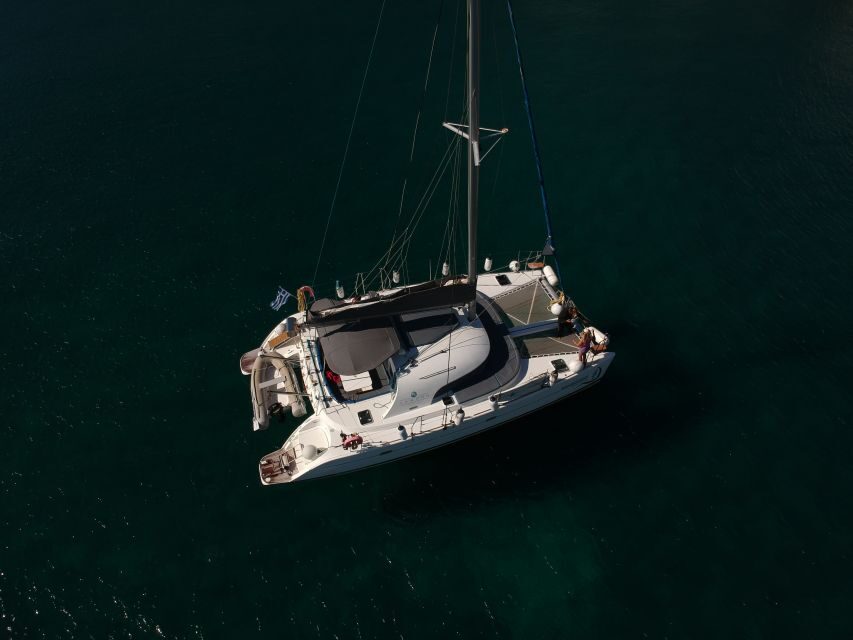
Packing mistakes are the quickest way to kill a good boat day. Here’s what to focus on.
Bring:
- Swimwear and a change of clothes
- Sunscreen (and a hat and sunglasses)
- Light jacket for cool sea breezes
- Motion sickness prevention if you’re sensitive
- Cash and any personal medication
- Passport or ID card
Pay attention to what’s not allowed:
- No shoes on the boat (remove them before boarding)
- No luggage or large bags
- No food or drinks in the vehicle
- Avoid sprays or aerosols (and also avoid oily sunscreen sprays, which can make the deck slippery)
- No jumping
- No intoxication or drugs
If you want an easy day, show up with your swim routine already planned. Put on sunscreen before you board, then reapply after swimming if you need it.
Who This Santorini Catamaran Day Works Best For
This cruise is ideal if you want:
- Privacy and a captain who adapts to your pace
- Multiple water moments in one day: swim at Red Beach, photos at White Beach, then hot springs plus snorkeling
- A real onboard meal, not just snacks
- A “special occasion” vibe, where the crew can help with moments
It’s less ideal if:
- You use a wheelchair (not suitable)
- You’re not comfortable swimming, because the crew doesn’t provide direct water assistance
- You’re pregnant and considering hot springs swimming (advised not to)
If you’re a confident swimmer and you want the caldera from the water with the meal already handled, you’ll likely love how easy the day feels.
Should You Book This Private All-In Catamaran Cruise?
I’d book this if your main goal is a private, all-in day that mixes Santorini’s signature beaches with caldera views, then tops it off with hot springs and a real BBQ meal. The value is strongest for a group of two, especially when you factor in drinks, snorkeling gear, towels, and transfers.
I’d think twice if you hate swimming, dislike water-based plans, or need mobility support, because the experience assumes you’ll move around the boat and handle your own water time. Also, if you want only wind-driven sailing vibes, keep expectations flexible.
Overall, this is the kind of Santorini cruise where the details matter: the safety briefing, the rinse water, the included meal, and the crew’s calm approach to privacy.
FAQ
Where does the cruise depart from?
You’re picked up in the Thera area and transferred to Vlychada Port for the sailing portion of the trip.
How long is the catamaran cruise?
The experience runs for about 5 hours.
What swim and snorkeling equipment is provided?
The cruise includes snorkeling gear and safety equipment. Life jackets are available on request.
Is swimming required?
No, swimming is optional. You should still let the crew know if you plan to enter the water.
What food and drinks are included?
A BBQ-style onboard meal is included, along with water, soft drinks, white local wine, and beer, plus dessert.
Is the cruise suitable for wheelchair users?
No. It’s listed as not suitable for wheelchair users.
Do I need to be able to swim?
Yes. The crew does not provide swimming or snorkeling assistance, so participants must be capable swimmers.
]]>I like that this isn’t just a quick picture at the postcard spot. You also get time for side streets and hidden photospots, and you can choose a morning or sunset session depending on your energy and light. One practical consideration: the booking shows a wide duration range (20 minutes up to 40 hours), so you’ll want to confirm what session length you’re actually choosing.
Key Highlights You’ll Care About
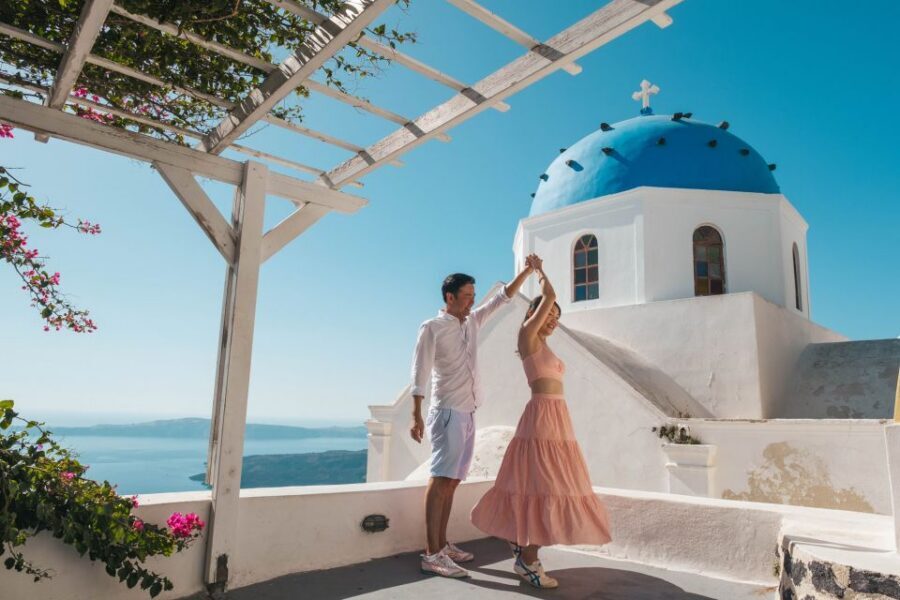
- Private, personal direction focused on connection, not awkward posing
- Oia blue domes + caldera views in one planned route
- Hidden photospots reached via back paths and less-obvious angles
- Morning or sunset timing to match your photos’ mood
- 50 professionally edited, high-resolution photos included in the package
Why a Private Photoshoot Works So Well in Santorini
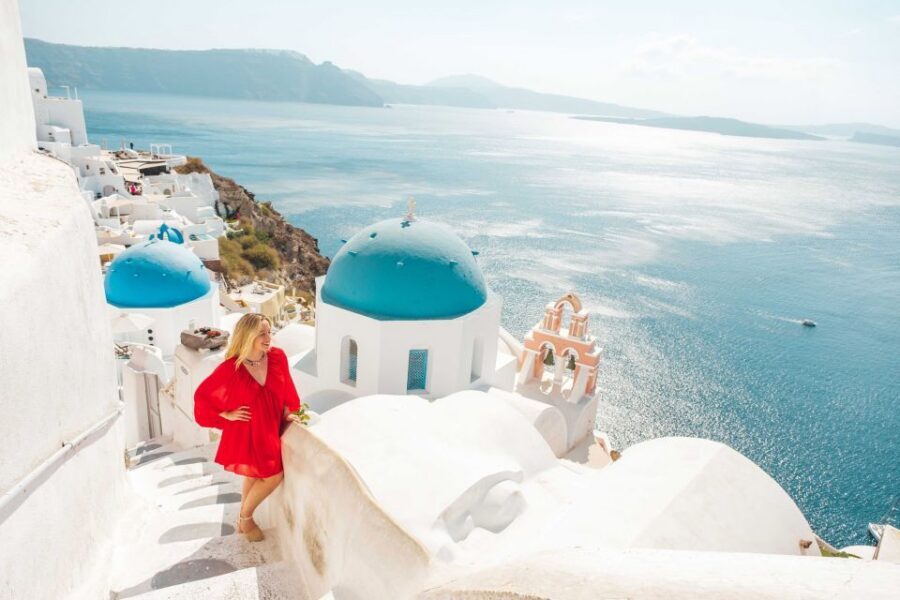
Santorini is basically made for photos, but that doesn’t automatically mean you get good ones. Crowds, harsh midday sun, and confusing streets can turn even a dream trip into a blur of missed angles. A private photographer cuts through that.
With this experience, the setup is simple: a professional photographer meets you (the meeting point can vary by option), you choose morning or sunset, and you get a route that mixes famous views with quieter corners. The idea is that your photos look better when you’re not thinking about what to do next. And in Santorini, not thinking is a gift.
Two details I really value here. First, the approach is about chemistry and connection between two people. That matters because the best Santorini images don’t just look pretty; they look like real emotion caught at the right moment. Second, you’re not stuck at one spot. The plan includes the classic trio: Oia, the area around the Castle, and then the blue domes with caldera views.
The one drawback is worth taking seriously. While most feedback leans positive, there are occasional complaints about the look of the photos after editing and about styling. That doesn’t mean the service is consistently bad, but it does mean you should set expectations clearly—especially if you’re very particular about how you want to be represented.
Morning vs Sunset: This Is the Real Decision
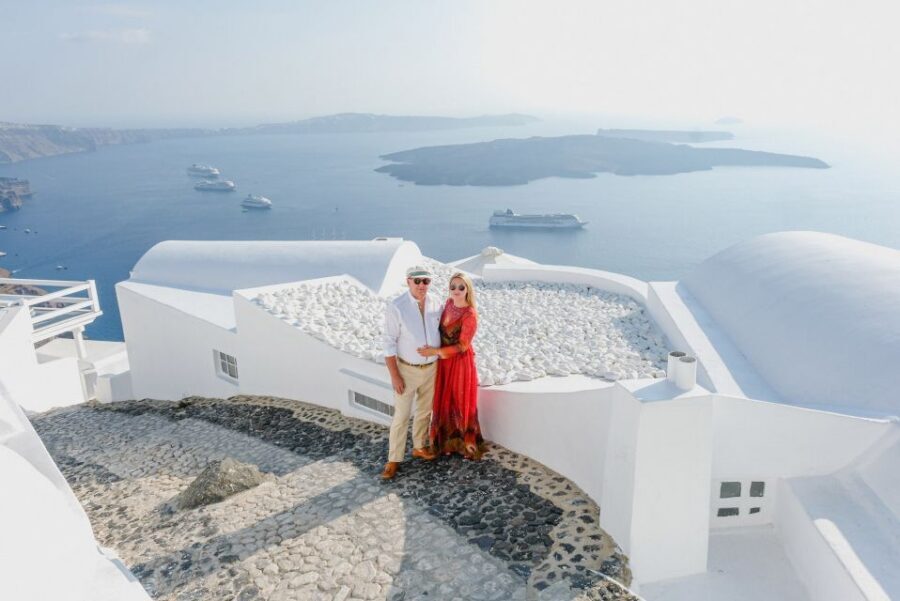
Picking morning or sunset is not just about being awake. It’s about the look of the white buildings, the depth of the blue tones, and how forgiving the light is for skin and shadows.
A morning photoshoot often feels calmer. Streets can be busier later, and you generally get a more relaxed pace for walking, posing, and finding angles without constant interruption. If you’re the type who likes to explore after your shoot, morning can be a clean setup: you get your photos, then you still have most of the day.
A sunset photoshoot is the obvious crowd-pleaser. The sky and the caldera can create that cinematic glow people want from Santorini. The tradeoff is you’ll likely feel the “everything is happening right now” energy, which means you want a photographer who can read the light and move you quickly.
What helps you either way: the photographer isn’t just counting steps. They’re framing shots against the island’s scenery so you don’t end up with generic views. In multiple positive comments, the photographer’s eye for detail came up—especially around how shots were composed with the iconic architecture and sea.
Oia Marble Streets to the Castle to the Blue Domes
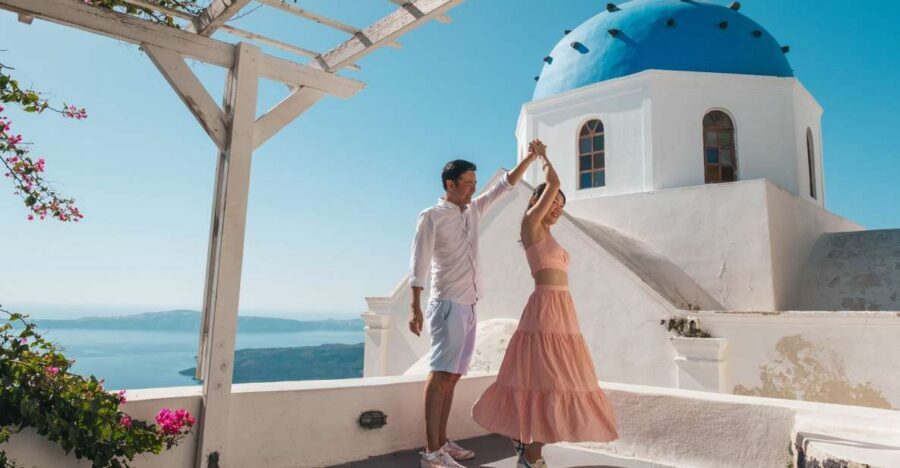
The heart of this experience lives in Oia. The common route you’ll likely follow (depending on your choices) goes something like this: stroll the main marble streets of Oia, head toward the Castle area, then finish with views of the famous blue domes over the caldera.
Let’s make that real.
The marble streets of Oia
This is where you get the “I’m actually in Santorini” feeling. White walls, curves of doorways, and that classic stair-and-arch look create strong backgrounds even when the angle is simple.
The practical upside: your photographer can guide you through spots where the lines and spacing look natural, not staged. The practical drawback: if you pick a busy time, you can feel the crowd pressure. A private shoot helps because you’re not waiting for strangers to clear your frame—you’re moving with purpose.
The Castle area views
The Castle zone is more about perspective. You’re often higher, with broader sightlines over the town and out toward the sea. This is where your photos start to look bigger and more intentional.
The tradeoff: stairs and uneven ground can slow you down, so the shoot pace is key. Since you’re booking private, it’s easier to keep things smooth and adjust if your feet aren’t in “tourist athlete” mode.
The blue domes finish
Ending near the blue domes is the payoff. It’s the symbol, it’s the color, and it instantly reads as Santorini.
The key thing to understand: the blue dome photos are popular for a reason, which means they can be visually crowded. A good photographer chooses framing that hides distractions and captures the domes in a way that still feels personal—like it belongs to your story, not a souvenir shop.
In strong reviews, people specifically called out shots that felt cinematic and personal, not just posed. That’s usually the difference between standing somewhere and actually getting guided directions and timing.
Hidden Photospots: Where the “Wow” Usually Comes From
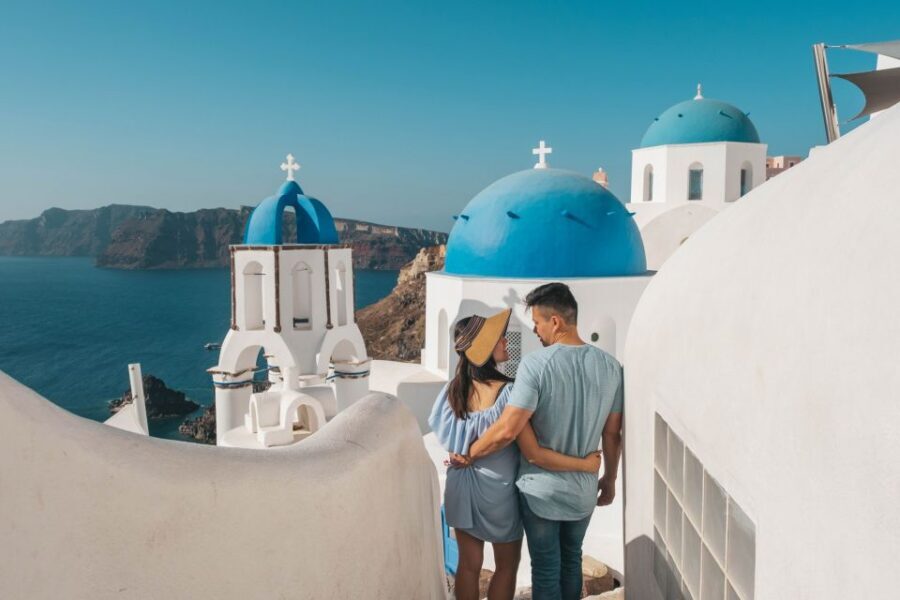
If you’ve visited Oia without a plan, you know the trap: you see the postcard street view, you take a quick photo, then you move on with only okay results. Hidden photospots fix that by shifting you to angles and corners most people never find.
Here, the experience explicitly includes hidden photospots and “hidden gems” language is used in the materials. I’d interpret that as a mix of less-photographed angles, back paths, and quieter viewpoints that make your set of images feel varied instead of repetitive.
What I like about this approach is variety. A set of photos that includes:
- iconic domes,
- sea and caldera views,
- and calmer alley backgrounds
…feels like a mini story. Several positive comments highlighted that the photographer took people to places that were both hidden and still beautiful, often via back paths to get better compositions.
That said, there’s one consideration: hidden spots usually mean walking more. Even when the route is short on paper, you might be on uneven steps or narrow lanes. If your priority is minimal walking, tell your photographer early so they can choose spots that match your comfort level.
What You Actually Get: Editing, Image Count, and Delivery
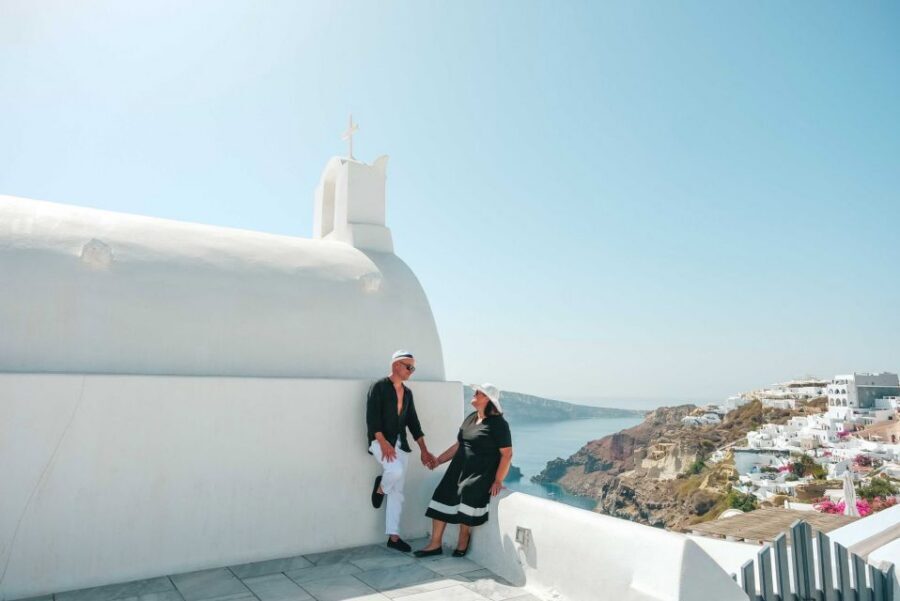
Let’s talk about the part you’ll care about after the trip: the final photos.
This experience includes 50 professionally edited photos in high resolution. That number matters because it suggests you won’t just get a big pile of blurry images. Edited files typically mean color correction, cleanup, and careful adjustments so your pictures match the setting—not just your phone camera’s limitations.
In one detailed account, the photographer also shared about 400 unedited photos on top of the 50 edited. That’s not something to assume will happen every time, but it’s a reassuring sign that you may end up with extra options if you want to choose favorites later.
There’s also a realistic timeframe point. People report waiting about a week for final images. So if you’re the type who wants to post immediately after returning home, you’ll probably plan your social media timeline around that.
The one “watch this” area
A low rating mentioned styling/editing that made the person look older, fatter, and something like a shortcut effect. Another lower rating said the quality did not meet expectations for a wedding renewal ceremony. That’s not enough to label the service as consistently unreliable, but it is enough to highlight the importance of communication.
Practical fix: before the shoot, tell your photographer what you like. If you want natural skin tones, confirm that. If you hate heavy retouching, say so. A private setting is the advantage—use it.
Value and Price: $165 for a Group Up to 5
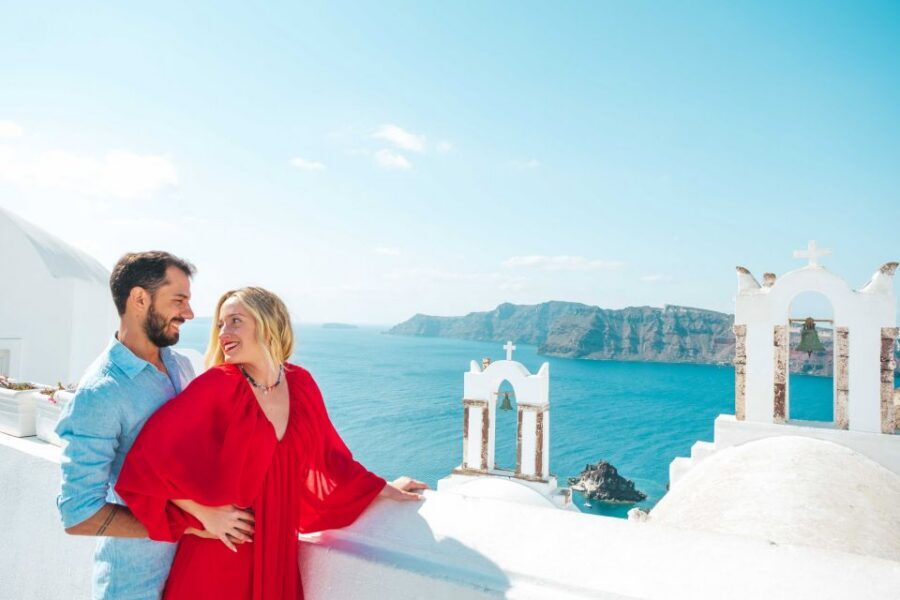
The price is listed as $165 per group up to 5, with a private photographer included. On paper, that can sound high if you think “I’m only getting photos.” But here’s the value math that usually makes sense:
- You’re paying for time (guided shooting, not wandering).
- You’re paying for expert framing in a place where lighting and angles matter.
- You’re getting 50 edited high-res photos, which is a real deliverable.
- You get a route that mixes iconic and less-obvious views.
For couples, this price often works out better than paying individually for multiple people to shoot at the same time—plus you get consistent direction and a cohesive style across the set.
For solo travelers, it can be a smart move if you’re tired of selfie angles and want photos that look like someone else worked for them. The “up to 5” detail also makes it usable for small groups who want shared backgrounds (friends celebrating, family mini-session, etc.).
One more value note: Santorini is famous, which means the best spots are also the most chaotic. Private time is how you buy back sanity.
How to Prep So Your Photos Look Like You
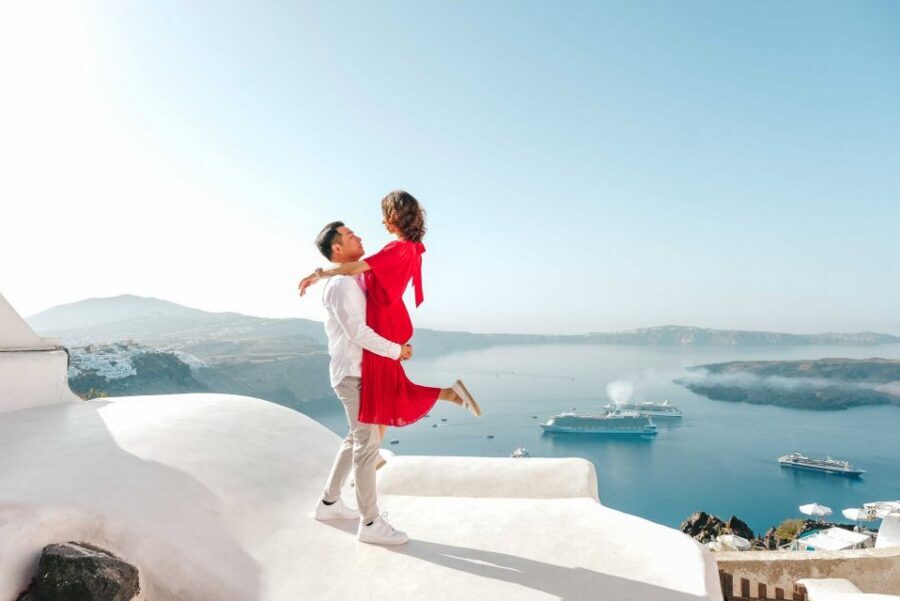
You don’t need a suitcase of outfits, but you do need a plan that matches your photoshoot’s goals.
- Bring the look you want to be known for. If you want that classic Oia feel, go with colors that pop against white walls. If you want softer tones, pick lighter shades that won’t clash with blue elements.
- Wear shoes you can walk in. The route involves marble streets and possibly stairier Castle-area ground. Comfort helps you look relaxed.
- Think about the vibe: morning calm or sunset glow. Decide based on how you want to feel during the shoot.
- Tell your photographer your photo priorities. If you want more close-ups, say it. If you want wide shots with domes and caldera views, say it.
This is where the “personal photographer” idea becomes more than a slogan. When the photographer is directing you, your job is mainly to show up, stay present, and follow directions without fighting them.
Who This Santorini Photoshoot Is Best For
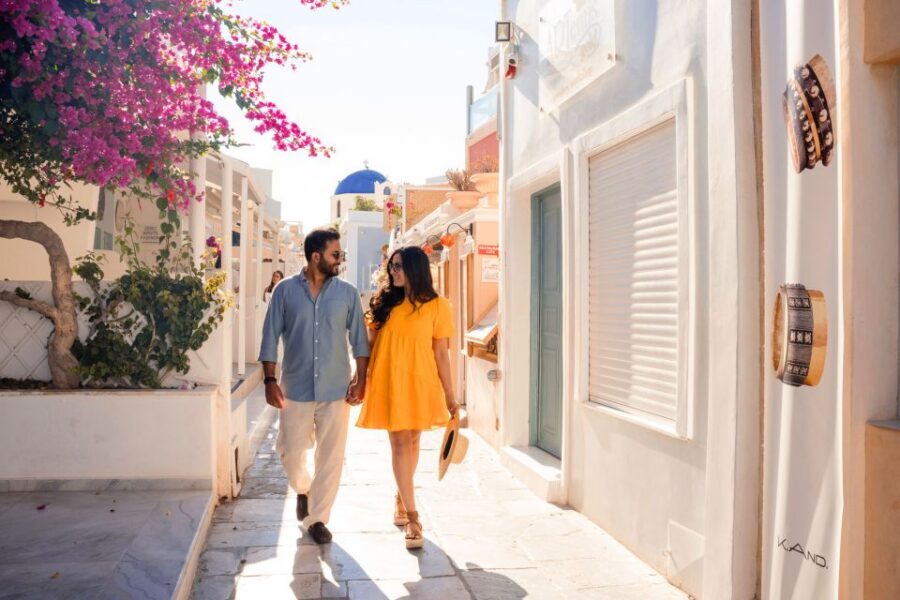
This is the kind of activity that makes sense when you want photos that look intentional without spending your entire trip chasing the perfect angle.
Best fit:
- Couples who want a set of photos with natural connection
- Solo travelers who want more than selfie-style pictures
- People who appreciate Oia architecture and want iconic dome shots plus extras
- Cruise passengers who need one highlight that fits into a tight schedule (one booking described the shoot as a trip highlight after arriving from a cruise boat)
It may not be the best fit if:
- You don’t want to walk around for photos.
- You’re extremely sensitive to editing style and retouching changes and can’t communicate preferences.
- You’re planning something that depends on photos for an exact moment and you’re not comfortable with final delivery timing.
Should You Book It?
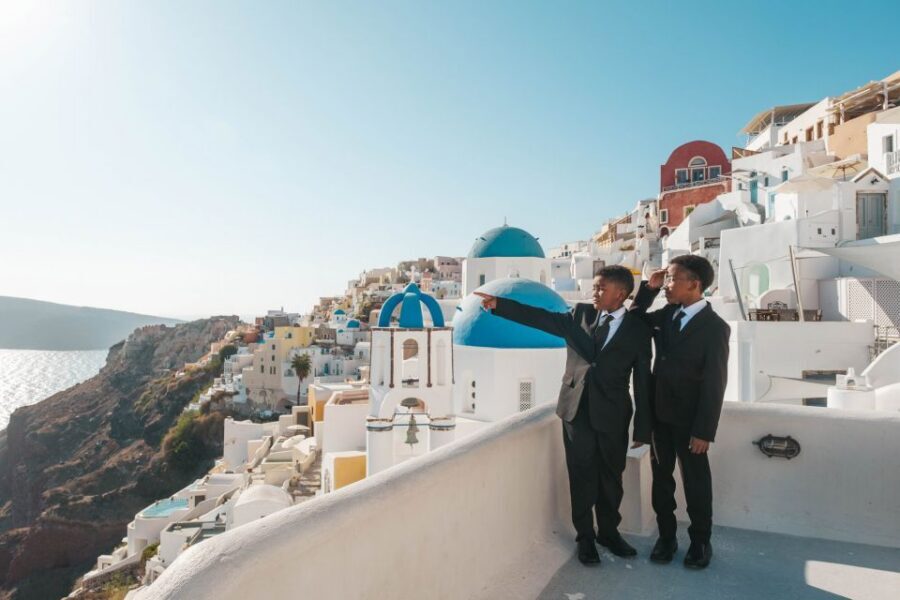
If your goal is to leave Santorini with a folder of images that actually feel like your trip—Oia streets, Castle views, and blue domes included—then yes, you should seriously consider booking.
I think it’s a strong value when you want a private photographer who can:
- guide posing,
- frame shots against the scenery,
- and bring you to both classic and quieter viewpoints.
Just do one thing before you go: set expectations about the look you want in the edited photos. With that, this can be one of the most satisfying “take-home souvenirs” on the island—photos that look like memories, not like missed opportunities.
FAQ
How much does the Santorini private photoshoot cost?
The price is listed as $165 per group, up to 5 people.
How many photos will I receive?
The package includes 50 professionally edited photos in high resolution.
Can I choose between morning and sunset?
Yes. You can choose between a morning or sunset photoshoot.
Where is the meeting point?
The meeting point may vary depending on the option you booked.
How long is the photoshoot?
The duration is listed as 20 minutes to 40 hours, and you can check availability for starting times.
Is the activity wheelchair accessible?
Yes, the photoshoot is listed as wheelchair accessible.
]]>You’ll start from Vlychada and move through the classic sights: Red Beach, White Beach, and the Akrotiri lighthouse area, then out toward the volcanic hot springs. After that, you head to Thirasia for swimming and a full BBQ-style meal with drinks, all while the crew handles the boat, food, and gear. It’s a great fit if you want comfort and views without spending your whole day ferry-hopping.
Key Highlights You’ll Actually Feel
- Caldera sightseeing from the water with big-window views and photo-friendly angles
- Multiple swim stops including Mesa Pigadia and the volcano hot springs
- Red Beach + White Beach photo stops that give you the look without needing to hike
- Thirasia BBQ lunch and open bar with time to cool off again
- Snorkelling gear, towels, and life jackets included so you can travel light
- Hotel pickup/drop-off around the island helps you avoid car logistics
Vlychada to Thirasia: How the Day Flows on a 5-Hour Cruise
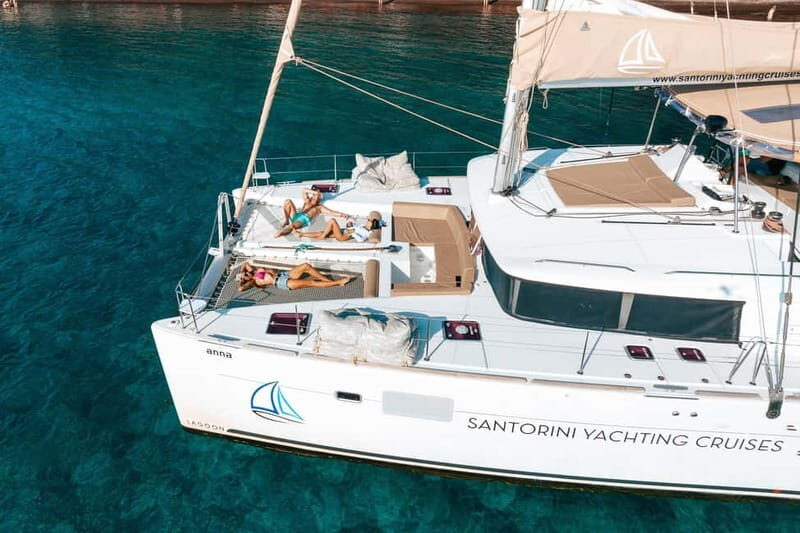
This is a 5-hour catamaran cruise, and the timing matters. You get enough time on the water to feel like you had a sea day, but it’s still short enough that you’re not stranded feeling exhausted by the afternoon. The big win is how the route mixes sightseeing with actual swimming breaks.
The day starts with pickup options around Santorini, then you head to Vlychada Port. Once onboard, you’re mostly settled in: sailing, scenic stops, and the kind of water time that’s hard to recreate if you’re planning on your own.
You’ll also notice the cruise is designed for comfort. Restrooms are on board, you have Wi‑Fi, and you don’t have to manage swim gear hunting or beach-chair logistics.
Getting Picked Up: Pickup Areas and the Easiest Way to Join
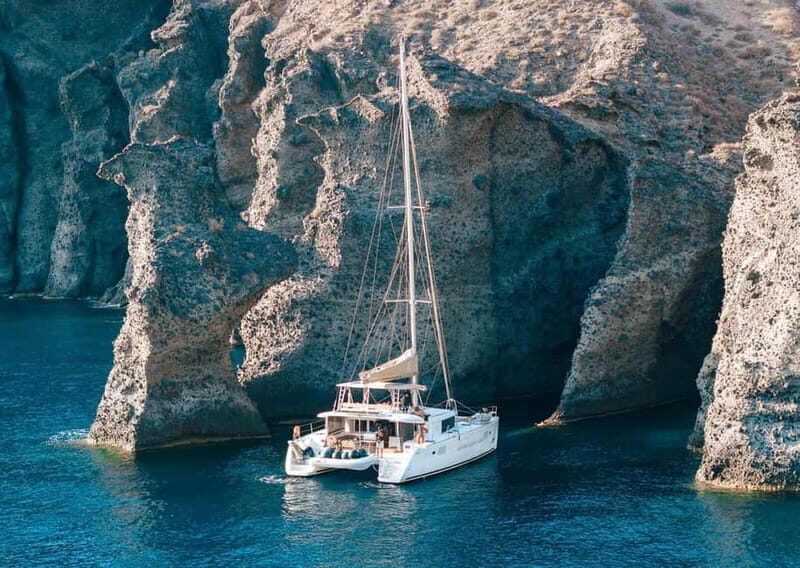
You’ll be collected from nine areas around the island (including Oia, Imerovigli, Fira/Thera area, Perissa, Kamari, and Akrotiri). That’s a big deal in Santorini, where driving and parking can eat your time.
Most departures are timed around 10:00 AM from Vlychada Port, with later start times in late autumn and winter. Plan to be ready in the lobby about 10 minutes before pickup. The driver waits up to 10 minutes after the scheduled pickup time, so I’d treat that like a real appointment.
Once you’re on the boat, you’ll also follow a simple rule: you take off your shoes before boarding, and everyone attends a safety briefing. It’s the kind of small, practical thing that keeps the day smooth.
Cruising the Caldera Views: Red Beach, White Beach, and Akrotiri Lighthouse
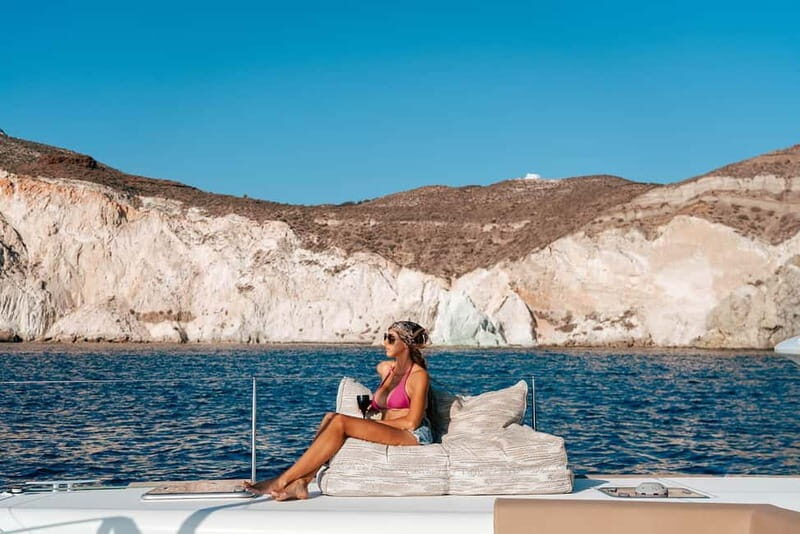
Right away, you’re moving through the visuals Santorini is famous for—without standing in lines on land. Your route includes the coastline sights near Red Beach and White Beach, plus the Akrotiri lighthouse area.
The Red and White Beach stops are described as photo stops with sightseeing and then you’re back on the water quickly. That works well if you want the iconic look without spending time managing sand, sun, and logistics.
The lighthouse stop adds a different texture to the day. You’re out at sea where the coastline looks dramatic and sculpted, and you get the chance to frame the caldera views in a way that’s tough from shore. Even if you’ve seen pictures before, the angles from the water make it feel fresh.
Mesa Pigadia Beach Stop: Your First Proper Swim Moment
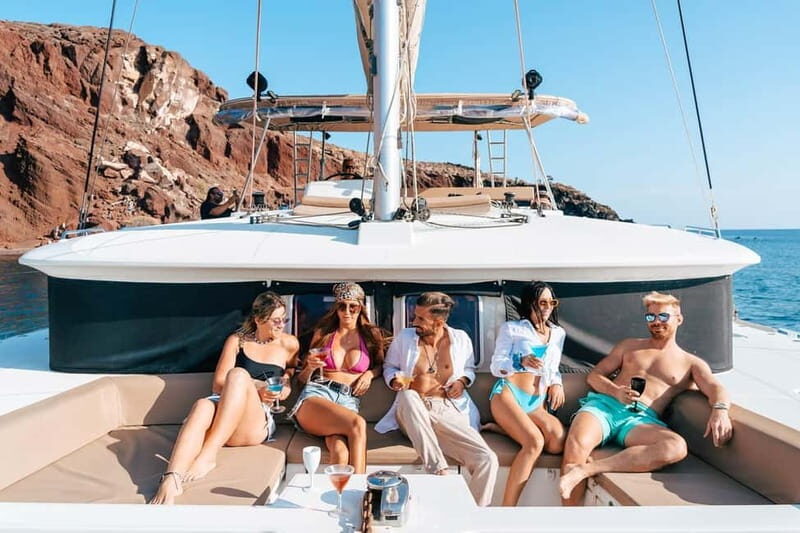
Your first swim-focused stop is at Mesa Pigadia Beach in the south. This is where the day turns from sightseeing into something more physical: you can jump in for a refreshing swim and do snorkeling if you want.
This stop is a smart early break. It’s the kind of water time that helps you shake off the heat you’ll feel once the sun climbs. Also, it’s a reminder that Santorini isn’t only viewpoints. The coast is built for swimming too.
Practical note: snorkeling gear and towels are included, so you don’t need to rent or pack more than you already planned for a beach day.
Volcanic Hot Springs at Palea Kameni: The Sulphur-Water Trick
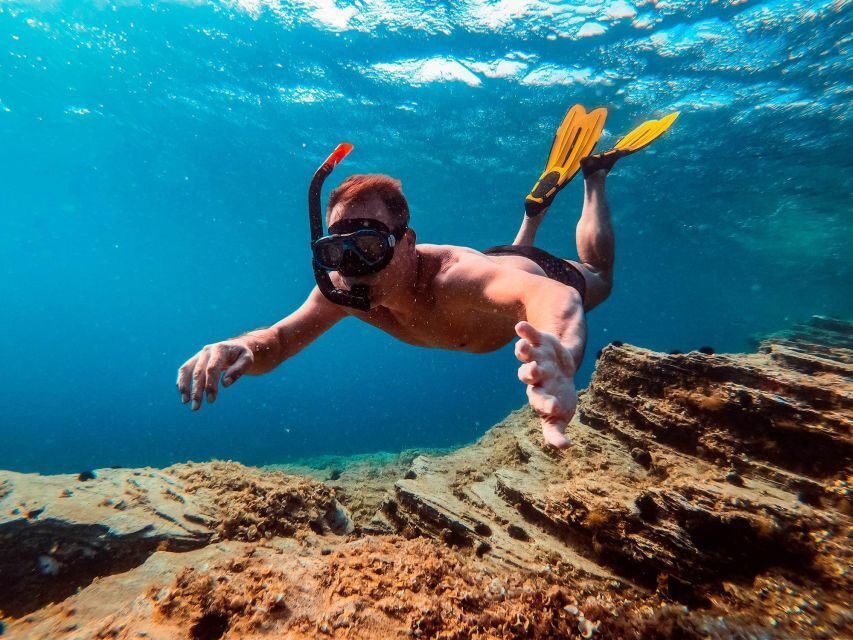
The next highlight is the volcano hot springs at Palea Kameni. This is the stop most people picture when they imagine Santorini’s sea story: volcanic heat, therapeutic water, and the odd-feeling calm of floating in a geothermal spot.
You’ll be able to swim and snorkel here, but do pay attention to the cruise’s own clothing tip. If you’re planning to swim in the sulphur waters, choose dark-colored swimwear. Iron and sulphur can stain light-colored clothing, and it’s one of those annoyances that can ruin a fresh white top.
Also, remember that hot springs don’t mean swimming is always effortless. One guest pointed out that wind can get strong enough that bathing becomes difficult, including at the warm-springs stop. That doesn’t mean the stop disappears, but it does mean you should come prepared to be flexible—think quick in-and-out swims rather than a long, relaxed soak if conditions aren’t cooperating.
If you’re sensitive to wind, bring something that cuts it down (a light layer or cover-up can help).
Thirasia Island: BBQ, Drinks, and Another Chance to Swim
Then comes Thirasia. This is the island adjacent to Santorini, and it’s a great contrast to the busier main island vibe. You get a stop with a mix of scenery, swimming/snorkeling, and time for lunch.
After your swim, you’ll enjoy an elaborate Greek lunch with BBQ and drinks while you’re surrounded by views from the sea. The cruise adds photo time and scenic sailing on the way, so you’re not only eating—you’re still seeing.
One thing I like about Thirasia as a stop: it’s not just another beach. It adds a sense of stepping sideways into a different feel. You’re still in the same volcanic region, but the day shifts.
Food and Drinks: Greek Buffet + BBQ on a Comfortable Boat
Food is where this cruise earns its keep. You’re getting a Greek buffet lunch plus BBQ, and it’s paired with an included open bar style setup.
On the drink side, the cruise includes:
- white wine
- beer
- soft drinks
- bottled water
The Thirasia portion also specifically mentions beer and wine during the lunch/BBQ time. So you’re covered whether you want something light and refreshing or a more traditional wine-and-sun pairing.
A small but meaningful comfort detail: restrooms are on board. That sounds basic, but for a 5-hour sea day, it makes your afternoon feel less tight and stressful.
What the Included Snorkelling Gear Means for You
Snorkelling gear and life jackets are included, and that changes how you plan your day. You don’t need to pack mask and fins, and you can try it without thinking too hard about whether you’re bringing the right equipment.
Even if you’re not a confident swimmer, the life jacket means you can relax a bit more during short snorkel attempts. You’ll still want to be smart about comfort and water conditions, but it’s a practical safety add-on.
Also, the cruise uses repeated swim windows. That’s important because it lets you match the water time to your energy level. You might snorkel more at one stop and simply float at another.
Price and Value: Is $129 Worth a 5-Hour Sea Day?
At around $129 per person, you’re paying for three things that are hard to DIY in one clean package:
1) Boat access and route across multiple scenic stops
2) Transfers from many parts of Santorini
3) Included food and drinks (Greek buffet + BBQ plus wine/beer/soft drinks)
If you were to do this yourself—boat rental plus fuel plus food plus drink plus transportation—it would likely turn into a budgeting headache quickly. Here, the cruise bundles the costs in a way that feels more predictable.
Is it a “luxury” experience in the five-star hotel sense? Not exactly. It’s luxury as in comfort, ease, and time on a nicer boat setup. The luxury is mostly about not dealing with logistics while you enjoy caldera views and multiple swim stops.
Best For: Who Should Book This Cruise
This cruise is a great fit if you:
- want big scenery without spending the day on land
- care about comfort (restrooms, towels, gear, life jackets)
- want an included lunch and drinks so you’re not budgeting every stop
- plan to swim at least once, and ideally more than once
- like the idea of visiting Thirasia for a calmer feeling than Santorini main areas
It’s also a smart choice if you’re traveling with mixed comfort levels—some people want photos, some want water time, and the day supports both.
When You Might Want a Different Plan
Skip or reconsider if:
- you’re counting on long, relaxed hot-spring swimming. Wind can affect whether swimming is practical, and at least one guest noted that conditions made the hot-springs waters hard to access comfortably.
- you strongly prefer beach time on land. This is sea-first, with shore access kept to short stops.
If the weather forecast looks blustery, you can still go. Just adjust expectations and focus on what you can control: views, short swims, and snorkeling when it’s comfortable.
Practical Tips That Make This Day Better
Here’s how I’d set yourself up for an easy cruise day:
- Bring sunscreen and a hat. The sun hits hard on the water.
- Pack a towel and beachwear, but remember: towels are included, so you don’t need to overpack.
- Wear comfortable clothes for the boat ride between stops.
- If you plan to swim in the sulphur springs, choose dark swimwear to avoid staining.
- If you’re cruising in spring or autumn, bring a light jacket or sweater for cooler breezes.
- Be ready for the shoe-off rule before boarding and expect the safety briefing.
One last tip: take advantage of the photo stops, but don’t treat them like a race. If you want photos, pause and frame them. If you want swimming, commit to your water window and let the rest of the scenery come to you.
Should You Book This Santorini Catamaran Day?
I’d book it if you want a 5-hour Santorini experience with minimal friction: pickup handled, boat handled, gear handled, lunch handled. The combination of caldera sailing, Red/White Beach photo moments, the hot springs, and Thirasia time makes it feel like you actually covered the region instead of just doing one scenic stop.
I’d hesitate only if your main goal is a long, wind-free soak in the sulphur waters. Because if the breeze turns up, swimming can be less comfortable than you hoped. If that’s your top priority, keep an eye on conditions and be prepared to prioritize quick water moments over a slow floating session.
FAQ
How long is the cruise?
It runs for about 5 hours.
Are hotel pickup and drop-off included?
Yes. Pickup and drop-off are included, with service to multiple areas around Santorini. Most departures start around 10:00 AM from Vlychada Port.
What food and drinks are included?
You’ll get a Greek buffet lunch and BBQ. Drinks included include white wine, beer, soft drinks, and bottled water.
Is snorkelling gear provided?
Yes. Snorkelling gear is included, along with life jackets, towels, and Wi‑Fi on board.
Will there be swimming stops during the cruise?
Yes. You’ll have swim opportunities at stops including Mesa Pigadia Beach, the volcano hot springs (Palea Kameni), and Thirasia.
What should I bring for a comfortable day?
Bring a hat, sunscreen, a towel, comfortable clothes, and beachwear. If you plan to swim in the sulphur hot springs, choose dark-colored swimwear to reduce staining risk.
If you tell me your travel month and where you’re staying (Oia, Imerovigli, Perissa, etc.), I can suggest what to prioritize on this day and how to time your swim moments with the conditions you’re likely to face.
]]>What I like most is how focused it feels for a short day. You get real time in the places most people come to Santorini for, plus a guided walk through Megalochori, which is a big mood shift from the postcard cliffs.
One thing to consider: this tour isn’t suitable for people with mobility impairments or wheelchair users, since you’ll be on foot during the village sections and you’re moving around from stop to stop.
Key Highlights You’ll Actually Use
- Oia for 80 minutes, timed for sunset vibes from the best-known viewpoints
- Firostefani Blue Dome photo stop (20 minutes), the one everyone recognizes
- Megalochori walking tour, a quieter, more local-feeling village experience
- Perivolos Black Beach for 1.5 hours, with a break for lunch and free time
- Local English-speaking guides and a proven track record (4.7/5 from 42 reviews)
- Air-conditioned minivan with pickup and drop-off across multiple convenient meeting points
Why This 5-Hour Santorini Route Makes Sense
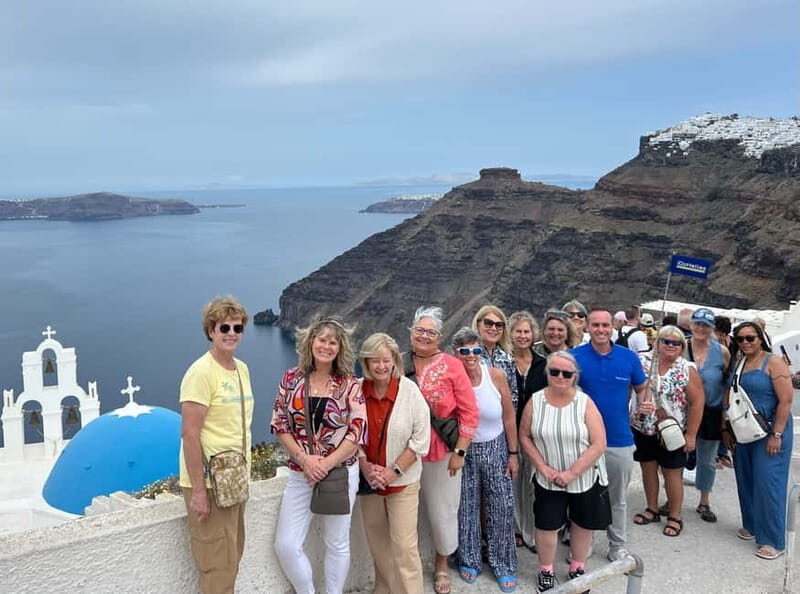
Santorini can be tricky if you only have a half day. Distances aren’t huge on a map, but time slips away fast when you’re transferring, parking, and walking between viewpoints. This tour solves that by using an air-conditioned minivan and a tight sequence of stops that match what most visitors want most: iconic views, a real village, and a beach.
You also get the practical benefit of structure. Having a guide matters here because the island is visually loud. Without a plan, it’s easy to spend your limited time chasing the wrong angle of the same view. With a guided flow, you can spend your energy on photos, strolls, and actual time in each place.
Getting Oriented in Oia: Views First, Then Time to Shop and Stroll
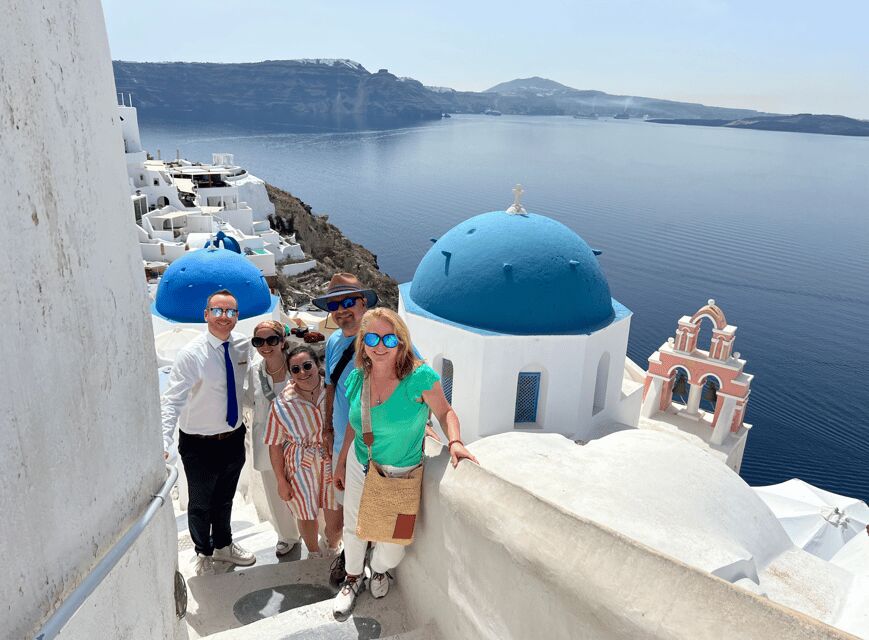
Oia is where the day kicks off, and for good reason. You arrive for about 80 minutes of guided sightseeing, shopping, and photo-friendly time. This is enough time to see the architecture up close, orient yourself, and still wander without feeling rushed.
Oia’s Cycladic look is part of the experience: whitewashed buildings, blue accents, and the way the town climbs toward the viewpoints. If you’ve only ever seen Santorini from far away, this is where it clicks. You can study the details on streets and small lanes instead of just staring at a skyline picture.
My advice: treat Oia like a choose-your-own-adventure. Spend the first stretch doing the guided portion for context. Then use the rest of your time to go where your eye keeps returning. If you’re into photos, you’ll want to pause frequently. People underestimate how much walking it takes just to find the right spot to stand.
Also, this stop is flagged for sunset timing. Even if the exact light depends on the day, the schedule is built to give you the chance for that golden-hour feeling from Oia’s famed viewpoints.
Firostefani’s Blue-Dome Church: The Photo Stop That Actually Has Time
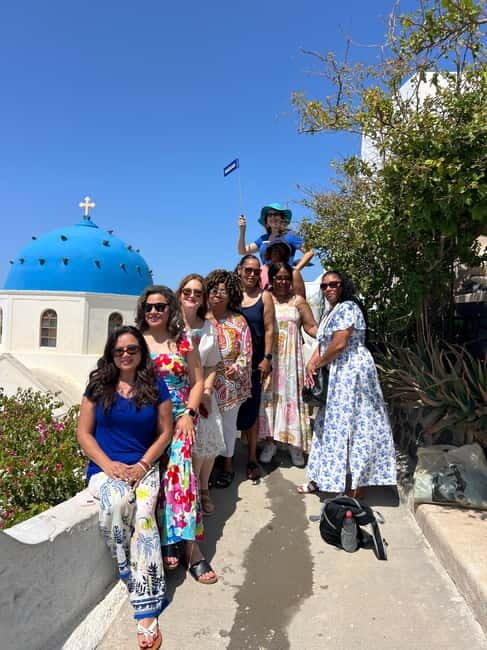
After Oia, you head to Firostefani, where the highlight is a 20-minute photo stop at the famous blue-domed church. Yes, it’s the view you’ve seen online. But here’s the key: you’re there long enough to take multiple angles and adjust your timing for crowds.
The biggest mistake people make with this kind of stop is treating it like a quick photo-and-run. That’s how you end up with one awkward shot and no options. Here, you get a short window, not a lightning strike. Use it to experiment—different distances, different angles, and a different position for each shot.
Pro tip: bring your camera settings ready before you arrive. If you’re shooting on your phone, switch to portrait or grid lines ahead of time. With just 20 minutes, tiny delays add up.
And while the schedule is brief, Firostefani itself helps. It sits in that in-between zone where you can feel the island’s structure without spending the whole day in pure “tourist panorama mode.”
Megalochori Walking Tour: A Different Side of Santorini
Next comes Megalochori, and this is where the tour gains character. You get a 30-minute guided tour and walking through one of the island’s most beautiful villages, which is a nice break from the big-view intensity of Oia and Firostefani.
If Oia is all about dramatic postcard scenery, Megalochori is more about the village rhythm. You’ll get to see Cycladic architecture in a different context—less about the “look at me from above” angle, and more about everyday-looking streets and spaces. Even the guided component helps you notice details you’d otherwise skip.
This stop is also a good mental reset. It’s shorter than Perivolos time, but it’s long enough to step away from the constant viewpoint hunt and just experience a place on foot with direction.
One consideration: this part is still walking. The tour isn’t suitable for wheelchair users, and people with mobility concerns should look carefully at how much foot time they can manage.
Perivolos Black Beach: Time to Rest, Eat, and Actually Enjoy the Coast
Then it’s down to Perivolos Black Beach, with about 1.5 hours for a break, lunch, and free time. Even if you don’t feel like swimming, this stop is still worth it. Black sand changes the whole look of the coast. You’re not just seeing blue water and white cliffs—you’re seeing a different texture and light.
The timing matters. This isn’t a “see it for one minute and go” stop. You have enough space to sit, take photos, and decide whether you want to cool off. You’ll also likely want a meal here, since the itinerary includes time for lunch.
Just a heads-up: food and drinks are not included. So plan to buy what you want at the beach. This is one of those moments where budgeting a few extra euros (or dollars, depending on what’s easiest for you) makes the day feel complete.
My practical tip: bring something for sun comfort—hat, water bottle (you’ll have bottled water from the tour), and casual clothes you’re fine with on sand. If you want to swim, bring a swimsuit and a small towel.
Price and What You Get for $72
At $72 per person for a 5-hour outing, this tour is priced in a pretty sensible midrange for Santorini. You’re not paying for a long private day, but you also aren’t just buying a bus ticket and hoping you land near the right places.
Here’s what you’re getting for the money:
- Pickup and drop-off from designated meeting points
- Transportation in an air-conditioned minivan
- A local English-speaking guide
- Bottled water
What’s not included:
- Entry fees
- Food and drinks
So the value comes from three things: the guide, the ride, and the time management. The guide helps you hit the right stops in the right order. The minivan saves you decision fatigue and wasted hours. And the time allocation means you still have enough freedom to wander a bit at each location.
If you’re comparing options, think about your “hidden costs.” A DIY day means ferrying yourself around, finding parking (or dealing with it), and losing time between viewpoints. This tour bundles that into a clean timeline.
Pickup and Drop-Off: Make It Easy on Yourself
This tour is built around convenience points, with five pickup options:
- Museum of Prehistoric Thira
- Firostefani Central Square
- Cable car
- Santorini Airport
- McDonald’s
And you’ll also have five drop-off locations:
- McDonald’s
- Santorini Airport
- Firostefani Central Square
- Cable car
- Museum of Prehistoric Thira
This matters because Santorini hotels can be spread out. If you pick a pickup point that’s close to where you’re staying, the day feels lighter. You’re not burning energy before the tour even starts.
Also note the duration: 5 hours, with starting times that depend on availability. That’s a good sign if you’re trying to line this up with your sunset timing and your dinner plans.
Guide Quality: The Real Difference Between Good and Great Tours
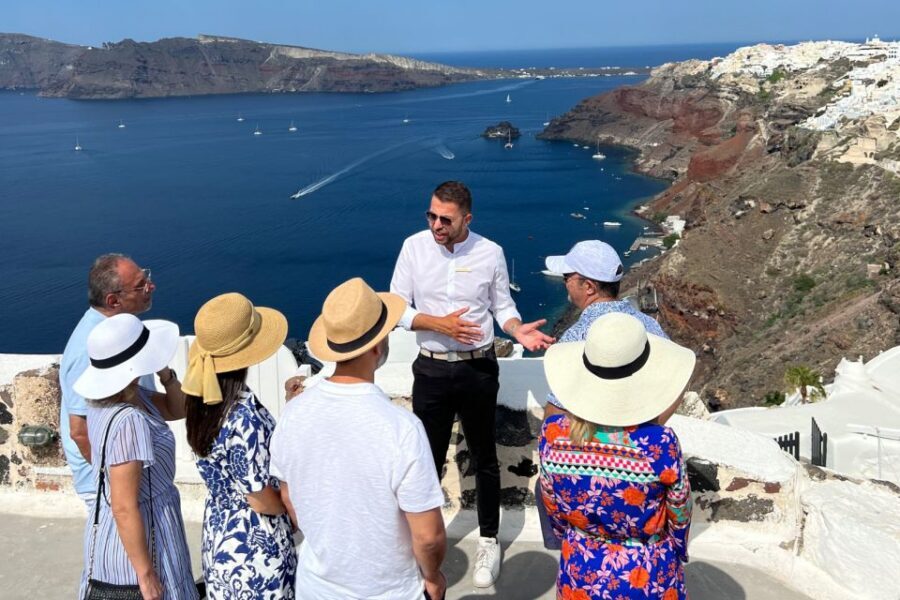
In Santorini, the route can look similar from tour to tour. The difference is the guide.
This experience benefits from consistently high praise for guides like Maria (and her professionalism and care for the group), Ioannis (for island knowledge and friendly energy), John (mentioned alongside Maria), and Mattheo (recognized for thoroughness and flexibility). What stands out is less about big speeches and more about how the guide handles the practical stuff.
You can see how that translates on the ground:
- getting the group to the right spots without chaos
- helping everyone navigate busy areas on crowded days
- keeping things organized while still leaving room for photos and personal wandering
- sharing context so the places feel more meaningful than just scenery
A solid guide also helps you decide how long to linger in each spot. With just a few hours total, you want that kind of timing support.
Who Should Book This Tour (And Who Should Skip It)
This tour fits best if you:
- want a high-impact Santorini day without a full-day commitment
- like guided context but still want time to wander
- are focused on the big names: Oia, Firostefani, and Perivolos
- prefer group logistics handled for you, especially for pickup and transportation
It’s not a great match if you:
- use a wheelchair or need mobility-focused accommodations (it’s not suitable for mobility impairments or wheelchair users)
- need a lot of downtime between stops
- want a long, slow-paced, deep exploration day
Should You Book This Santorini Best-Of Tour?
If your goal is to see Santorini’s greatest hits in just 5 hours, I think this is an easy yes. You’re getting the classic views, a meaningful village walk, and a beach break—all with transportation and an English-speaking local guide included.
I’d book it now if:
- you’re only in Santorini for a short stay
- you want structure (especially around Oia and photos)
- you don’t want to plan routes, parking, and transfers
I’d reconsider if:
- walking time is a problem for you
- you already feel confident navigating the island and prefer to drive your own schedule
- you want food fully included (it’s not—your Perivolos lunch will be on you)
If you do book, pack comfortable clothes, plan for beach time, and be ready for quick photo windows. This tour rewards people who show up with a camera and a relaxed mindset.
FAQ
How long is the tour?
The tour duration is 5 hours.
Where does the tour pick me up?
Pickup is available from five designated points: Museum of Prehistoric Thira, Firostefani Central Square, Cable car, Santorini Airport, and McDonald’s.
Where will I be dropped off?
Drop-off is available at: McDonald’s, Santorini Airport, Firostefani Central Square, Cable car, and Museum of Prehistoric Thira.
What’s included in the price?
Included are pickup and drop-off from designated points, transportation in an air-conditioned minivan, a local English-speaking guide, and bottled water.
Is food included?
No. Entry fees, food, and drinks are not included. The Perivolos stop includes time for lunch, but you’ll need to buy your own food.
Which stops are part of the experience?
You’ll visit Oia, Firostefani (photo stop), Megalochori, and Perivolos Black Beach.
Is there a photo stop?
Yes. There is a photo stop at the Blue Dome Church in Firostefani.
Is the tour suitable for wheelchair users or mobility impairments?
No. The tour is not suitable for people with mobility impairments or wheelchair users.
What should I bring?
Wear comfortable clothes. If you plan to swim at the beach, you might want swimwear, though the tour is still good even if you just sit and enjoy the water.
Can I cancel and get a refund?
Yes. You can cancel up to 24 hours in advance for a full refund.
]]>I love the practical way the shoot is run: you get clear posing guidance, but it’s still about real expressions, not stiff “stand here and smile” energy. I also like the focus on light and timing, since sessions run in early morning or at sunset—when Santorini looks its best and your photos tend to do more storytelling than showing off.
One possible drawback: the session length is 30 minutes to 1 hour, and that can feel short if you want lots of outfit changes or a huge checklist of locations.
Key takeaways before you book
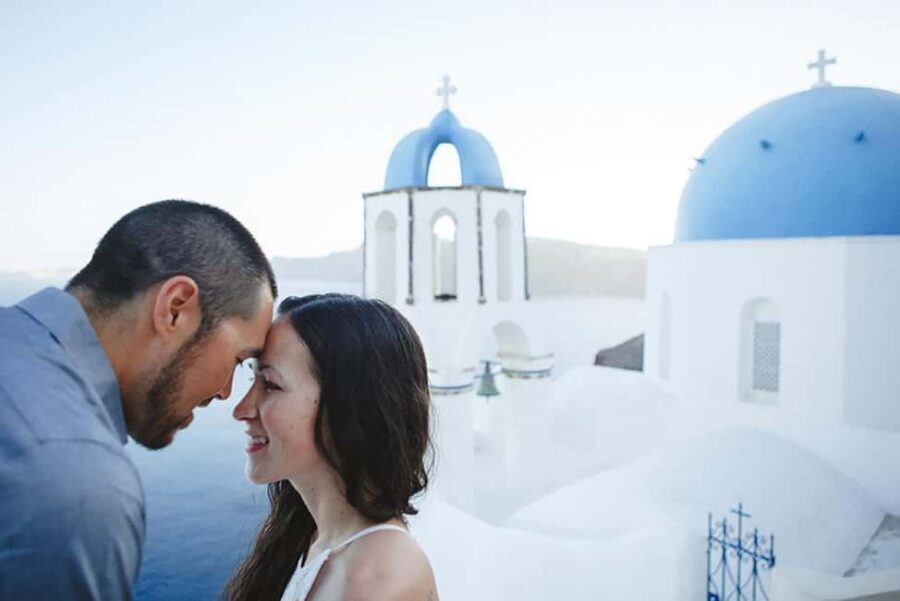
- Private, tailored direction: you’ll be guided to look natural, not posed.
- More than the obvious spots: you’ll get a stop for off-the-beaten-path views beyond the busiest streets.
- Oia Castle included: the route includes Oia Castle, with a separate entrance mentioned to save time.
- Best-light scheduling: early morning and sunset availability helps your photos look cinematic.
- Edited photos included: you’re not just leaving with phone shots—you’ll get finished images.
Santorini Unfiltered in Oia: why this works for real portraits
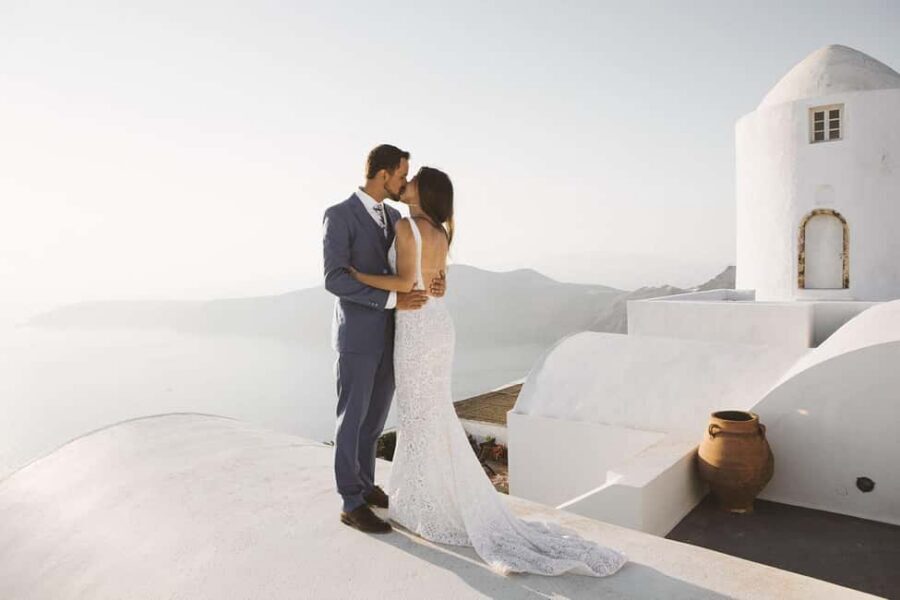
Santorini can turn into a photo factory fast. Everyone is hunting the same angles, everyone is standing in the same spots, and somehow your pictures still end up looking like they came from the same template.
This is different because the goal is portrait storytelling. The description emphasizes bold, natural moments—frames that use the island’s whitewashed buildings, volcanic cliffs, and sea views as background, not as the whole point. That mindset matters. If you’re hoping your photos actually feel like you, not just you in front of a view, this format is made for that.
Also, you get a private group. That’s a big deal in Oia, where crowds can steamroll your patience. In a private setup, you’re not competing for space or waiting for strangers to step out of your shot.
Meeting outside Pliatsani Church: the start that helps you stay relaxed
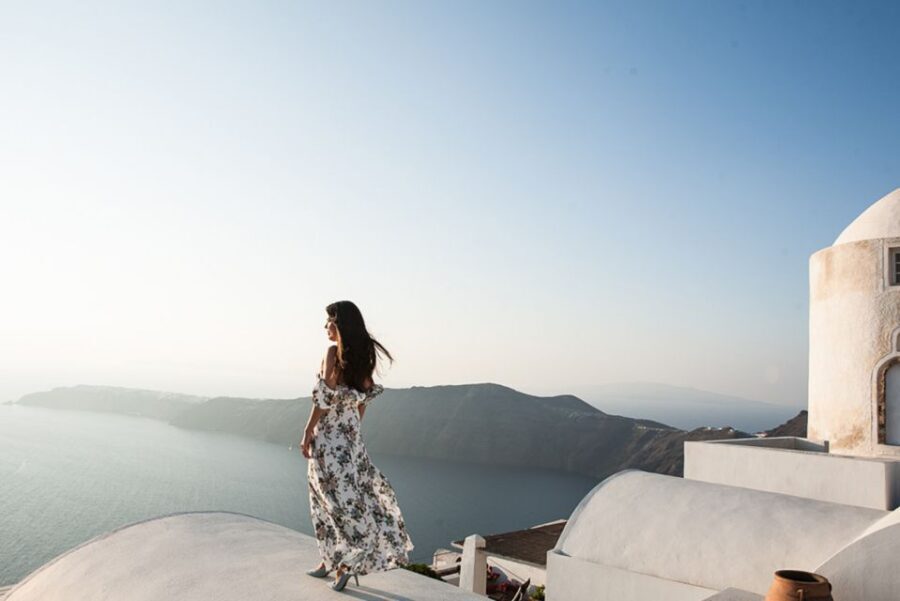
Your session starts outside Pliatsani church in Oia, described as the central church across the pharmacy. The end is back at the meeting point, so you don’t have to solve logistics mid-shoot.
I like this kind of start because it keeps things simple. When you’re in a place that’s easy to get turned around, “meet here, shoot here, return here” reduces stress. Less stress usually equals better photos, since you’re not constantly checking your phone, recalculating routes, or trying to remember where you’re supposed to be next.
Because it’s a private shoot with guided direction, you’ll also feel more “in control” of the time. You’re not wandering aimlessly while the light changes.
Stop 1 and Stop 2 in Oia: whitewashed streets with room to breathe
The itinerary includes an Oia photo stop (about 10 minutes), after the start point outside Pliatsani church.
Ten minutes doesn’t sound like much until you’re actually in Oia and realize how quickly the best angles get crowded. In that short window, the photographer can set a rhythm—finding good wall textures, clean sightlines, and spots where the street curves don’t hide you behind other people.
What this stop does well:
- It gives you a strong opening set of photos in the heart of Oia’s look: white surfaces, narrow lanes, and classic Cycladic geometry.
- It’s a good chance to get comfortable with the process early—so later stops don’t feel like you’re still learning how to stand and move.
A practical tip: wear something you can move in. Oia’s streets are pretty, but they’re also tight and uneven. You’ll get better results if you’re not fighting your shoes or your outfit while trying to look relaxed.
The secret stop: where your photos stop looking like everyone else’s
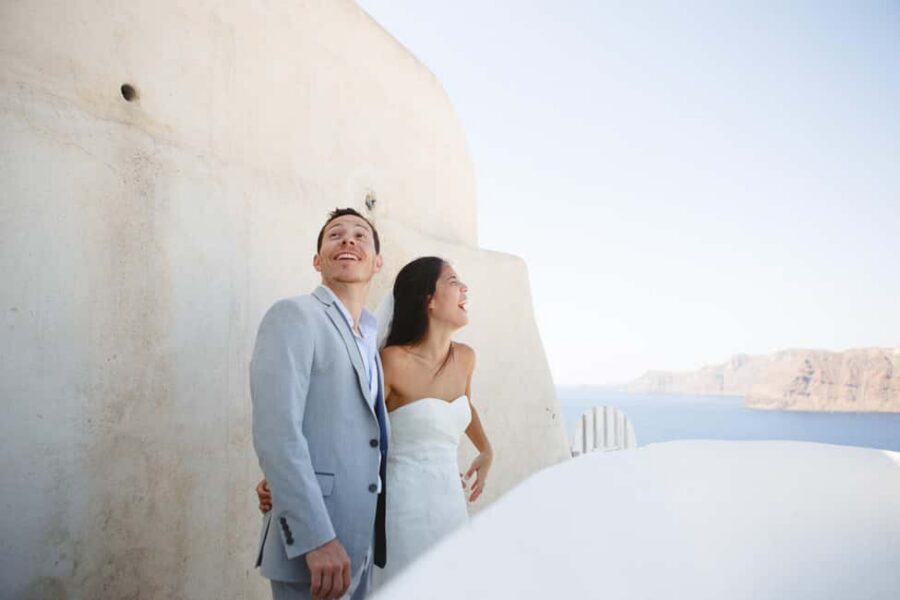
Next up is a secret stop (around 10 minutes). The whole point is to get beyond the most obvious tourist spots and into settings that feel more personal and less repetitive.
This is where I’d expect the biggest “wow” difference for most people. The description calls out hidden alleys, volcanic cliffs, and Aegean views—so the secret stop is likely where the photographer is hunting for compositions that feel more cinematic than postcard.
Why this is valuable:
- It breaks the monotony of the usual Oia route.
- It gives you variety—different textures and sightlines in a short time.
- It helps your set look curated, even though you’re not doing a staged, slow “photoshoot day.”
If you’re the type who doesn’t want to come home with 20 photos that all look like the same angle, this stop is the reason to book.
Oia Castle stop: the payoff of smart timing and a separate entrance
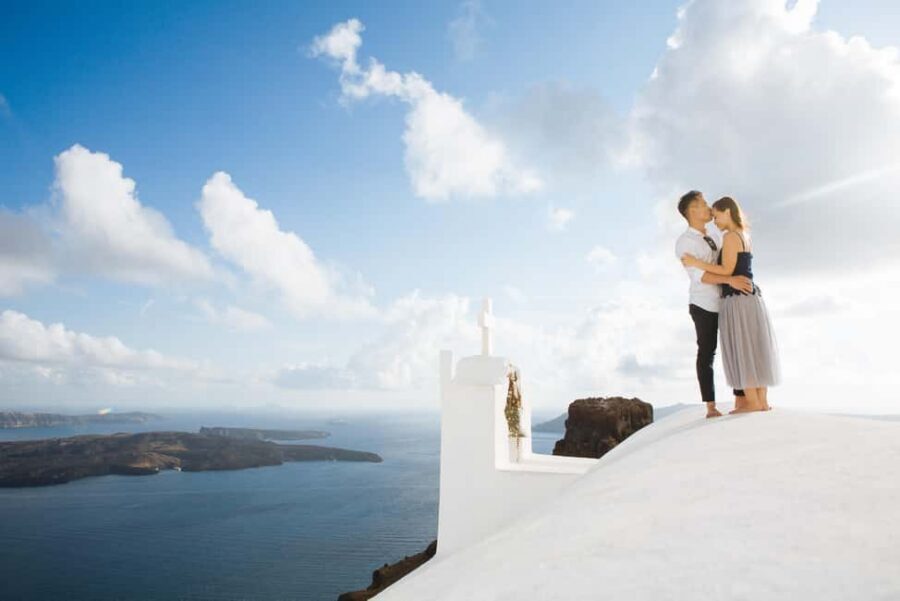
Then you arrive at Oia Castle for another photo stop (about 10 minutes).
Oia Castle is a magnet for people, so anything that helps you avoid extra waiting is worth something. The experience info specifically mentions skip-the-line through a separate entrance, which suggests the photographer’s route is designed to reduce time spent stuck behind other groups.
What you’re aiming for here is a shift in mood. Earlier streets give you tight, graphic backgrounds. Castle-area framing tends to bring more open views and stronger structure—often closer to “editorial portrait over dramatic backdrop.”
One caution: since this stop happens in a crowded area, keep your pace steady. If you’re trying to stop constantly for phone selfies, you’ll slow the flow and reduce how many good frames the photographer can capture. Let the shoot stay “guided,” and you’ll get more keepers.
Early morning or sunset: choosing the timing that fits your vibe
The session offers early morning and sunset availability. This is more than a convenience—it affects how Santorini photographs.
In general terms:
- Early morning tends to mean calmer streets and softer light with fewer people.
- Sunset tends to bring that warm glow and a more romantic atmosphere, but it can also be busier in the popular corridors.
I recommend thinking about what you want your photos to feel like:
- If you want fewer distractions and a calmer walk, lean early.
- If you want that classic Santorini mood, choose sunset.
Also, since the total time is 30 minutes to 1 hour, timing is your “multiplier.” You don’t have hours to wait for ideal light, so pick a time window that already does the heavy lifting for you.
Direction without stiffness: what the photographer does that matters
Here’s the real value in this kind of shoot: the photographer isn’t just showing up with a camera. You’re getting direction for posing and movement, with an emphasis on looking natural.
The experience description explicitly says no stiff poses—just real moments and real emotion. And the standout theme in the feedback is that the photographer knows poses and the best spots, then guides you through them.
Two names show up in feedback tied to this process: Gesti and Konstantina. In both cases, the common thread is confidence. You don’t have to figure out how to pose on your own while you’re also trying to admire the view.
What to expect from that direction:
- Quick adjustments, so you don’t waste time guessing.
- Guidance on where to stand relative to light and backgrounds.
- Movement prompts—so you look like you’re living in the scene, not freezing inside it.
If you’re camera-shy, that can be reassuring. You’re not expected to perform. You’re given small instructions and allowed to react naturally.
The edited photos part: why “finished images” beats quick snapshots
You get edited photos as part of the experience. That matters because Santorini’s light can be intense—strong contrast, bright whites, and deep blues. Phone photos often struggle with that balance.
Also, feedback indicates delivery can be quick; one person mentioned receiving photos within five days. Even if your timeline ends up different, the point stands: you’re not just taking pictures and hoping.
Before you book, decide what kind of outcome you want:
- If you’re happy with casual vacation photos, you might not need a professional edit.
- If you want your images to look polished and consistent (one set, same vibe), edited results are a real upgrade.
Price and value: $203 for up to 2 people is the tradeoff
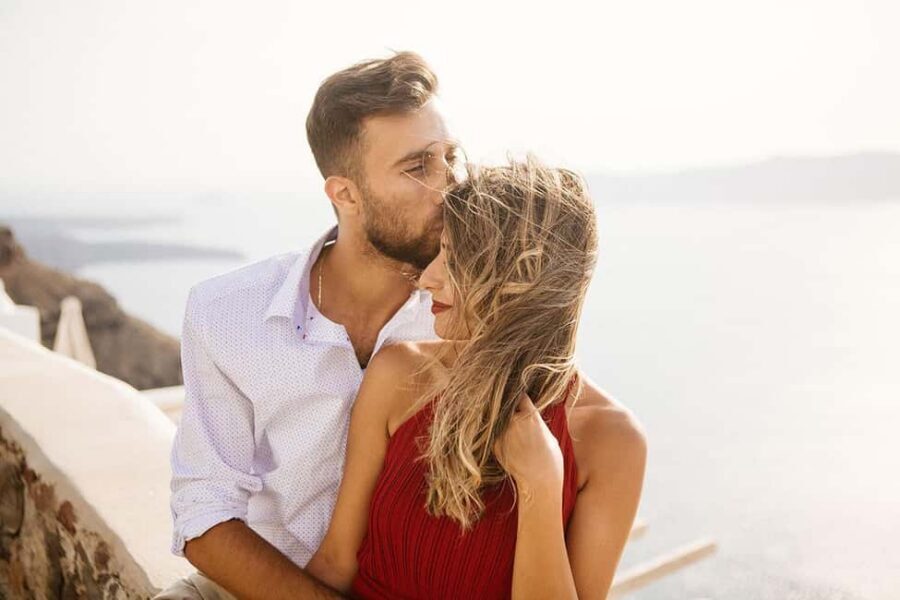
The price is listed as $203 per group up to 2. So the value depends on your situation.
Think of it this way:
- You’re paying for a private session, not a shared group activity.
- You’re paying for a pro photographer and editing.
- You’re paying for time spent in better spots and with better light, without you having to plan every angle.
Where you might question value:
- If you’re solo and only want a handful of pictures, you may feel it’s pricey versus random street photography.
- If you want a longer “wander and shoot” day, 30 minutes to 1 hour could feel like the session hits the main beats but doesn’t leave room for endless experimentation.
Still, if you’re traveling with a partner or you want portraits that don’t look like everyone else’s, it can be a strong spend. Especially because it’s a short shoot that fits into a sightseeing day without eating the whole afternoon.
Practical mismatch to watch: Venice mentioned in included details
One small but important thing to double-check: the included section mentions photo shooting around Venice, while the itinerary and meeting point are clearly in Oia, Santorini.
That doesn’t automatically mean something is wrong—it could be a template detail. But it’s enough of a mismatch that I’d message the provider before you show up. Ask what locations you’ll actually cover on the day, so there are no surprises when you arrive.
Who should book this photoshoot?
This is a good fit if you want:
- Couples photos that feel like your relationship, not a staged background.
- Solo portraits with cinematic framing and more emotion than a tourist snapshot.
- Anyone who doesn’t want to leave Santorini with only selfies and the same “blue dome” look.
It may be less ideal if:
- You want a full sightseeing tour with a lot of walking between far-apart locations.
- You’re expecting a long, multi-hour shoot with lots of outfit changes.
- You want totally candid documentation only, with no posing direction. This experience is built around being guided toward stronger portraits.
Should you book Santorini Unfiltered?
If you want Santorini photos that look intentional—bold, natural, and tailored—this is a great bet. The private format, the hidden stop, and the Oia Castle segment make it more than a quick click session. And the repeated praise for direction tells me you won’t be left figuring it out alone.
I’d book it if you can commit to the timing (early morning or sunset) and if you’re okay with a tight session length. If you’re trying to cram in a huge shot list, consider whether 30–60 minutes will be enough, and ask about the best option for your goals.
FAQ
FAQ
Where does the photoshoot start in Santorini?
The session starts outside Pliatsani church in Oia, described as the central church across the pharmacy.
How long is the Santorini Unfiltered photoshoot?
It runs about 30 minutes to 1 hour, with starting times depending on availability.
Is this a private experience or shared group?
It’s a private group experience.
How much does it cost?
The price is listed as $203 per group up to 2.
What’s the basic route in Oia?
The stops listed are Oia (photo stop), a secret stop (photo stop), and Oia Castle (photo stop). It ends back at the meeting point.
What languages are supported?
The instructor lists English, Greek, German, and Italian.
Are edited photos included?
Yes, edited photos are included.
Do you offer early morning and sunset times?
Yes. Early morning and sunset availability is mentioned.
Is there a separate entrance for Oia Castle?
The experience info mentions skip the line through a separate entrance.
What’s the cancellation and payment flexibility?
The experience includes free cancellation up to 24 hours in advance for a full refund, and reserve now & pay later is offered.
]]>Two things I especially appreciate: the 30 professionally edited photos you receive digitally (not blurry guesses), and the female assistant who helps the dress “fly” so you get movement instead of a stiff costume photo. One thing to plan for: you’ll be walking stairs and short distances between photo spots, and you’ll want to manage sun exposure.
Key things I noticed about the experience
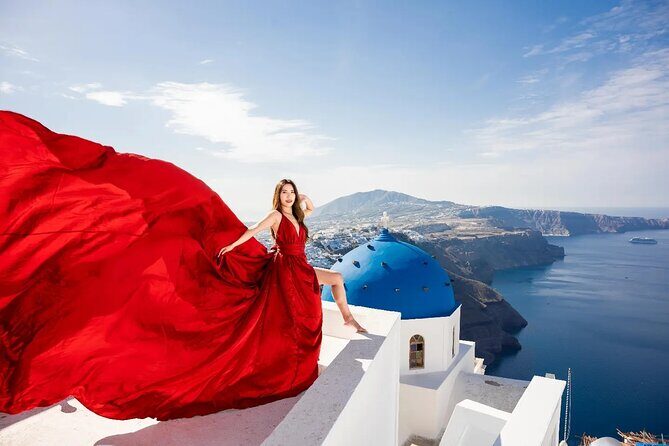
From what I’ve gathered, the best results come from how the shoot is run. The photographers (I’ve seen names like Gesti and Nick, with team members like Jenny, Lucy, Lori, and Pina supporting) help you with posing, timing, and finding good angles while places can be crowded. They’re also good at keeping the session moving so you still have time to enjoy Oia after your shoot.
Key things to know before you book
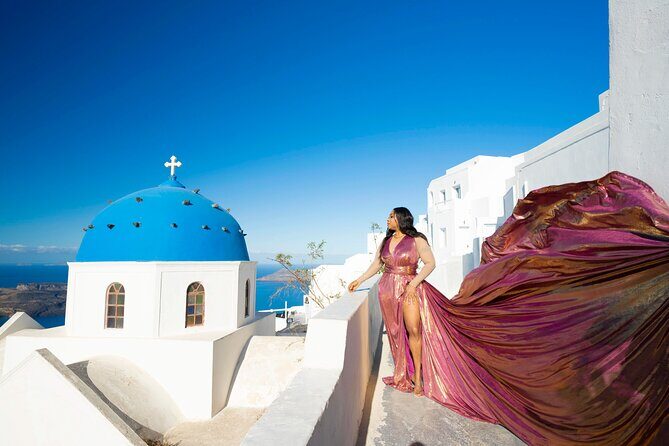
- Flying-dress action is supported, not left to chance, thanks to a female assistant
- You get 30 edited photos digitally, delivered by a link within 7 days
- The shoot is short and focused at about 45 minutes to 1 hour
- Expect stair walking between the most scenic stops in Oia
- Dress rental is separate (100€), so budget that if you want the signature look
Why Oia’s cliffs + blue domes make this photoshoot click
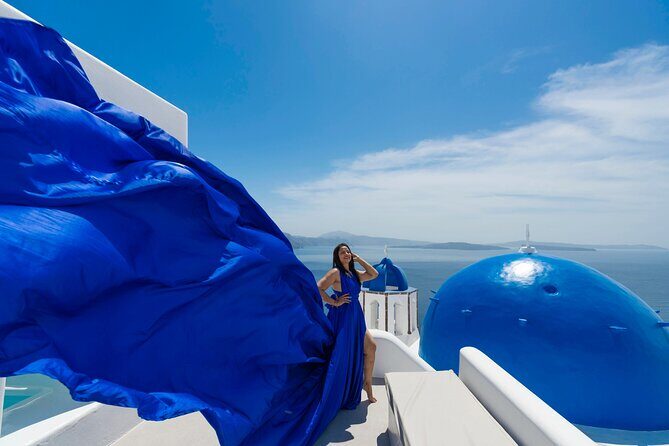
Oia is basically a photography cheat code. The whitewashed buildings and the blue-domed churches aren’t just pretty in person; they’re high-contrast shapes that photograph well in daylight. Add cliffside viewpoints and the sea behind you, and suddenly your photos don’t look like generic travel snapshots. They look like Santorini.
The flying dress concept works because the outfit is designed for motion. When you’re on a cliff with sea air and you’re guided into the right poses, the dress can show sweep and lift. That’s the whole point: you’re not just standing in front of landmarks; you’re creating an image with energy.
This is also why the quick timing matters. A 45-minute to 1-hour session keeps you from burning your whole trip waiting around. You hit multiple photogenic angles without losing a day to “let’s find the perfect spot” wandering.
Getting started in Oia: where you actually meet
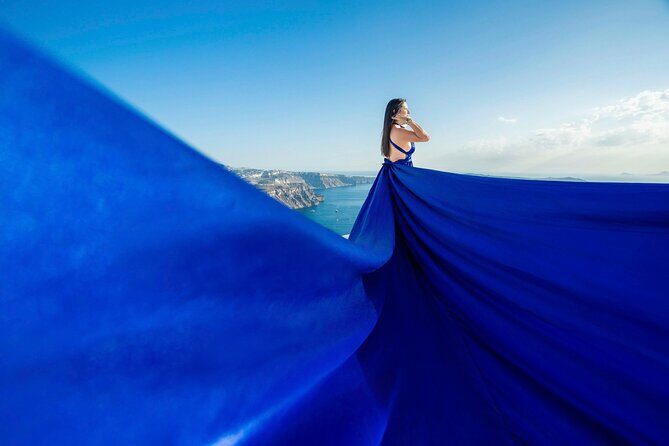
Your meeting point is in central Oia: the Terminal bus station area, the taxi station, and the main square zone. That’s helpful because it means you’re not trying to find some remote trailhead with one dead sign and a prayer.
What I suggest: arrive a bit early, especially if you’re doing this as a solo or couple shoot. Oia streets can be narrow, and you’ll likely be navigating steps even before the photographer takes over. Once you meet, the session moves quickly—so being ready saves stress.
Also, since this is a private group, you’re not doing a cattle-call lineup. You’re meeting your photographer and assistant for your slot, then following their plan for the most scenic stops.
The 45–60 minute flow: how the shoot moves between spots
This experience is built around efficient choreography. You meet your photographer, get quick guidance on how to take better photos, then follow them to photogenic locations. The goal is to keep you in the right light and angles without dragging the session.
Here’s the rhythm you can expect:
- Meet, then learn the basics
The photographer shows you how to pose and where to place your body so your photos look natural. You’re not expected to be a model. You’re expected to follow directions.
- Move to scenic spots
You’ll walk stairs and short distances between photo areas. This matters because Oia’s best visuals aren’t all on the same flat stretch. You’re going to change viewpoints.
- Multiple poses, with real attention to the dress
A female assistant helps you with the dress so it looks like it’s floating and not just hanging. In practice, this means more than one “take” and more than one pose direction.
- Finish and get your digital gallery link
After the shoot, you receive a link with your high-quality photos within 7 days (by email or phone).
The “private group” setup is a big deal for quality. You get time to adjust between shots instead of being rushed off-camera.
Dress reality check: what costs extra and how to choose
The base price ($117 per person) covers the professional photographer and the editing. But the dress is not included in that price.
If you want the signature flying dress look, plan for:
- Dress rental: 100€
- Makeup artist: not included
- Male outfits: not included (this is for solo or couple photos)
After booking, you receive a catalog of available dresses so you can pick what you like. That’s smart because you’re not arriving and guessing. If you’re a couple, you can also plan the coordination early so you’re not stuck making style decisions while you’re in Oia under sun and timing pressure.
A small practical note from the way the shoot is run: some couples have brought their own clothing choices and asked for extra photos beyond the rented dress. If that’s something you want, ask your photographer during your session setup so expectations are clear.
Walking Oia’s stairs: shoes, sun, and crowds that the team manages
Even if you’re athletic, Oia is still Oia. You’ll be walking stairs and short distances between spots. That’s not just about comfort; it affects the photos too. The best angles are often higher up, and the light shifts while you’re moving.
So pack like you mean it:
- Comfortable shoes
- Sunglasses
- Water
- Towel (especially helpful in strong sun)
Sun is a big deal here. Even a quick photoshoot can feel longer when you’re standing still in bright light. The team will help with timing and posing, but you’ll feel better if you arrive prepared.
One more thing: Oia can be busy at key times. The shoot team’s advantage is that they know where to position you and how to keep the session practical—so you spend your time taking pictures, not waiting in the wrong spot.
What’s delivered: 30 edited photos in 7 days (and no raw files)
After your shoot, you’ll get a digital gallery link within 7 days via email or phone. Your package includes 30 edited, high-resolution photos, and the editing is the part that turns “nice scene” into “photo you want to print.”
What you should know:
- You’ll receive edited images (so you’re not doing post-processing)
- Raw files are not included
- You’re getting a curated set of finished photos, not an overwhelming dump of everything shot
For most people, that’s ideal. Raw files can look flat until edited, and sorting through them becomes a chore. Here, you’re paying for the workflow: taking the shots, then refining them.
If you’re doing this as a memorable milestone—proposal, honeymoon/babymoon, birthday, or just a once-in-Santorini trip—edited photos delivered quickly are worth real money. You’re buying time and polish.
Price and value: is $117 per person a good deal?
Let’s do the math in a way that helps you decide.
Your stated price is $117 per person for:
- Professional photographer
- 30 edited photos
- A female assistant to help the dress fly
Then there’s what’s not included:
- Dress rental (100€)
- Transportation
- Makeup artist
- Raw files
So your all-in cost depends on whether you rent the dress. If you do, you’re paying roughly the base price plus the rental fee. If you don’t, you’d likely still want a nice outfit—just know the flying-dress signature effect is tied to that rented dress setup.
Is it good value? For me, the answer is yes if:
- You want classic Oia imagery in a short time window
- You want someone to manage positioning, posing, and the dress motion
- You’d rather pay for editing than handle it yourself
It’s less ideal if you:
- Hate stairs and sun exposure
- Want a long, relaxed roaming photography session
- Expect transportation to be included
But for most people planning a tight Santorini schedule, the short duration + edited delivery is a strong trade.
Who this flying dress photoshoot is best for
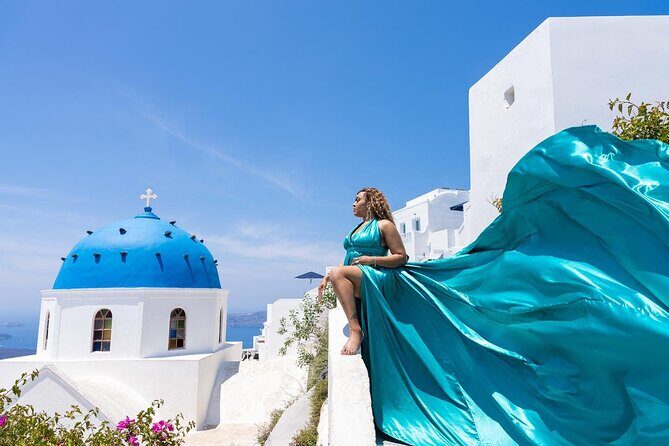
This is designed for solo travelers and couples who want a clear, iconic Santorini memory with minimal effort on their end.
I’d especially recommend it if:
- You’re visiting Oia for a limited amount of time and want your “wow photo” early
- You want your photos to look professionally finished, not just “we stood here”
- You like guided instruction and a clear plan instead of wandering blindly
It may not be the best fit if:
- You’re traveling with a large group (this is private, but the package described is for solo/couple photo setups)
- You’re very sensitive to sun or mobility issues, since you’ll be walking stairs
Practical tips to look good fast (no modeling required)
You’ll get the best photos when you work with the photographer, not against the plan. Here are the things that usually help most:
- Wear shoes you can walk in confidently. Oia stair walking is real.
- Bring sunglasses even if you think you won’t need them. The brightness makes a difference.
- Drink water before you start. A “quick” shoot still includes standing, posing, and movement.
- Pick your dress calmly if you want to rent. Once you’re in Oia, time goes fast and decisions get harder.
- Let the assistant’s dress work happen. The flying effect is part of the technique, so follow their cues.
If you’re worried about nerves, remember: the session is private and focused. The photographer’s job is to tell you what to do next.
Should you book this Santorini flying dress photoshoot in Oia?
Book it if you want a high-impact Santorini memory without spending hours hunting for the right angle or learning how to pose. The mix of guided stops, a team that helps the dress fly, and 30 edited photos delivered within 7 days is exactly what makes this feel like a real experience rather than a casual snapshot.
Skip it or reconsider if you don’t want to deal with stairs, sun, and a timed session. Also double-check the budget if you want the dress rental, since the 100€ fee sits on top of the $117 base price.
If you’re visiting Oia and you want one polished, iconic set of photos to show your family and keep for years, this is a solid way to do it.
]]>